
Feds to Designate 9.6 Million Acres as Critical Habitat for Spotted Owl
Jeff Barnard, Associated Press
GRANTS PASS, Oregon — The last building block of the Obama administration’s strategy, to keep the northern spotted owl from extinction, nearly doubles the amount of Northwest national forest land dedicated to protecting the bird by the Bush administration four years ago.
Still, conservation groups that went to court to force the overhaul said key gaps remain, such as an exemption for private forest lands and most state forests.
The full critical habitat plan will not be published until next week, but the U.S. Fish and Wildlife Service announced that 9.6 million acres of Oregon, Washington and Northern California will come under its provisions, almost all of it federal lands.
Climate change could force grazing cuts in West
Washington Examiner – Associated Press
Significant reductions in grazing on public land — in some places outright elimination of the activity — is justified because of the impacts of a warming climate, scientists say in a new report. Read more>
Climate change increases stress, need for restoration on grazed public lands
Contact: Robert Beschta: 541-737-4292 or robert.beschta@oregonstate.edu
CORVALLIS, Ore. – Eight researchers in a new report have suggested that climate change is causing additional stress to many western rangelands, and as a result land managers should consider a significant reduction, or in some places elimination of livestock and other large animals from public lands.
Climate Denial Has Faded
Bill Bradbury figures you don’t have to be a climate-change expert to know which way the wind is blowing. The former Oregon secretary of state, who will discuss “Climate Reality” Thursday evening at Southern Oregon University, said he has seen denial over climate change slowly fade since he began giving talks about it in 2006.
“When I first started giving presentations, it was very normal to have a small group of deniers attending,” said Bradbury, 63. “Now I don’t need to convince anyone that climate change is happening.” more>
Benefit of thinning forests for spotted owls is not so clear-cut
Guest Column by Dominick DellaSala, PhD
The July 26 Oregonian editorial “Logging for spotted owls” dismisses decades of scientific research by touting one new study that suggests “heavy thinning” (aka, clear-cut lite) of forests could benefit spotted owls. Based on a single computer simulation, the new study suggests that intensive logging will magically prevent “catastrophic fires” such as the Biscuit that “wiped out” owls and other wildlife. This is unfounded.
The Biscuit fire did not destroy spotted owl territories, nor did it “consume” half a million acres of forests. More than half of the fire area actually burned with no, low or moderate fire severity, while a third was deliberately torched in what are called back burns set by firefighters trying to “control” the blaze. This fire was weather-driven, not fuel-driven, and occurred during a severe drought with gusting winds that created fire plumes up to 30,000 feet. Thinned areas burned as hot as those not thinned.
Klamath-Siskiyou country is no stranger to large fires. In fact, a Biscuit-like fire burned through the area in the late 1800s, and since then, fires of mixed severities (low, moderate, high) have repeatedly visited the landscape every 15 to 75 years. The renewal of plant communities — many of which are rare and fire-dependent — from repeat fires is part of the region’s globally distinct plant and wildlife richness. Mature evergreen forests with madrone and oak understories also have been shown to burn less severely than open forests, presumably because over time understory trees in these closed-canopy forests shade out flammable shrubs.
Ten years following the Biscuit fire, the landscape is a vibrant snag forest full of wildflowers, conifer seedlings, woodpeckers, songbirds and butterflies that began populating the fire area as the embers cooled (from nature’s rain, not firefighting). It was certainly not an ecological catastrophe. And while the fire influenced owl territories, its patchiness created a beneficial mixture of shrubby owl foraging areas with large dead and live trees left standing for nesting. Such snag forests are richer in plants and wildlife than even old-growth forests, and unlogged areas are rare because salvage logging, the true catastrophe in burned forests, typically damages them.
Decades of research on spotted owls and prey shows that logging is not as short-lived an impact as some might hope. This is because the owls roost and nest in closed-canopy, dense forests and so do many of the species’ prey. Opening up forests may encourage barred owls, a more aggressive competitor of spotted owls, thereby negating efforts by the U.S. Fish and Wildlife Service to contain this invading owl.
We agree with social reasons for thinning forests to reduce fuels, especially near buildings, and ecological reasons in highly flammable tree plantations. A recent report released by conservation groups and forestry experts, in fact, recommended a 44 percent annual increase in log volume as a byproduct of ecologically restorative actions in primarily tree plantations west of the Cascades. Until scientists have more definitive information on thinning effects on owls and prey, land managers would do best to stick with less ecologically risky and more scientifically supportable actions.
Dominick A. DellaSala is chief scientist of the Geos Institute in Ashland and was a member of the U.S. Fish and Wildlife Service spotted owl recovery team (2006-08). Also contributing to this essay: Monica L. Bond, principal scientist of the Wild Nature Institute and a member of the dry forest landscapes work group for the Northern Spotted Owl Recovery Plan; Dennis Odion, fire ecologist at the University of California at Santa Barbara; Randi Spivak, vice president of government affairs of the Geos Institute.
© 2012 OregonLive.com
SCB Board Members Travel to DC to Protect the Northern Spotted Owl
Society of Conservation Biology www.conbio.org
The U.S. Fish & Wildlife Service is strongly considering excluding up to five million acres from its proposal to designate nearly 14 million acres of critical habitat for the Northern Spotted Owl. Two SCB board members briefed Congressional staff and federal agency officials on why these exclusions would likely set back recovery efforts for the owl.
North America Section President Dominick DellaSala and board member Barry Noon visited Washington, DC to discuss the U.S. Fish and Wildlife Service’s critical habitat proposal. In three days of meetings, Dominick and Barry briefed Congressional staff from the House of Representatives and the Senate on portions of the critical habitat proposal MORE>
Fighting fire with … what?
by Paul Fattig of the Medford Mail Tribune
Contrary to common belief, wildfires popping up in the dry forests of the West in recent years are not bigger and badder than those in the distant past. That is according to findings by scientists at the University of Wyoming at Laramie.
Based on studies of copious notes written by General Land Office surveyors around 1880 in Oregon, Colorado and Arizona, fire and landscape ecology professor William Baker and Mark Williams, who recently completed his doctorate in ecology at the university, conclude that many wildfires back in the day were as intense as those in the latter part of the 20th century and early 21st century. In addition to determining that more highly intense fires are not occurring now, they found much more forest diversity, in part from the areas having experienced a wide range of wildfire behavior over time, Baker told the Mail Tribune. MORE>
Conservationists Say Thinning On Federal Lands Could Provide Steady Timber Supply
Oregon Public Broadcasting / Earthfix News
The U.S. Forest Service has made forest thinning one of its top priorities, particularly in fire-prone and unhealthy dry forests. But environmental groups say dense Douglas fir plantations on the wet side of the Cascades need to be thinned too. And that could help increase the lumber supply.
On a steep slope in the Siuslaw National Forest, Douglas fir trees are packed in like matchsticks. Dan Segotta, the U.S. Forest Service’s timber operations manager in the Siuslaw, says these woods were clear-cut in 1965, and then densely replanted. 20 years ago, forest managers in the Siuslaw began a thinning experiment on the site. They left this stand alone to serve as an experimental control. more >
Conservationists Call for More Logging under NW Forest Plan
New study finds non-controversial timber volume
Contacts:
Jim Furnish: (240) 271-1650
Marc Barnes: (541) 609-0322
Andy Kerr: (503) 701-6298
Portland, Oregon—A new report by conservation organizations finds that logging volume on federal lands in the Pacific Northwest can increase substantially over the next two decades without controversy if carried out with specific ecological criteria.
The report, titled Ecologically Appropriate Restoration Thinning in the Northwest Forest Plan Area, finds that annual federal timber volume could increase 44% over what has been produced on average in the last 15 years while maintaining the clean water and wildlife protections of the Northwest Forest Plan. Under a program of science-based and ecologically appropriate thinning of mostly small diameter trees in degraded forests, BLM and U.S. Forest Service lands could produce 774 million board feet (mmbf) annually, compared to an average of 537 mmbf than has been produced since the Northwest Forest Plan was put into place (1995-2010).
Latest News
Stay Updated!
Sign up to stay updated on our current initiatives and receive information you can use to build resilience in your community.
 Briana Carbajal (they/she) was born and raised in South Central Los Angeles. In 2019, Briana was an active Youth Climate Councilmember working with the City of Los Angeles. Their purpose was to inform Mayor Garcetti of the concerns raised by young voices in their neighborhood and propose solutions to work toward resolving them. Briana holds a dual BA degree in Political Science and Geography/Environmental Studies from the University of California, Los Angeles.
 Michelle Lewis is a community engagement and outreach associate for the Heat Policy Innovation Hub. Before her work at the Nicholas Institute, she served as the Agent of Thriving for Climate and Environmental Justice at the Ormond Center at Duke Divinity School. She earned her doctoral degree from Emory University’s Candler School of Theology. Lewis holds a Master of Environmental Science from Yale School of the Environment and a Master of Divinity from Yale Divinity School, along with a certificate from Yale Institute of Sacred Music and the Arts. She studied film at Regent University, where she completed a Master of Arts in communication. Lewis has worked in both rural and urban contexts and has led community-based participatory research. Her research has focused on how faith communities connect with the environment through their existing cosmologies, the effects of green space on patient outcomes, and the environmental theologies of Black coastal communities.
 Lauren Graham is a strategic ecosystems thinker and cross-pollinator who creates impact in the areas of climate and democracy by transforming how mission-driven organizations are designed, led, and evolved. She holds Master’s degrees from University of Pennsylvania in Nonprofit Leadership, Yale in Environmental Management, and Stanford University in Sociology and teaches Strategic Management and Leadership for Nonprofits among other courses at the University of Pennsylvania School of Social Policy & Practice. Lauren is founder of Velvet Frame, a social impact strategy and communications consultancy for mission-driven organizations, and has extensive nonprofit experience including roles as Chief of Staff for Hunger Free America and Director of Innovation for Climate Access.
 Robert Macnee, Ph.D. is Deputy Director of Resilience Services at Climate Resilience Consulting, where he helps governments, institutions, and communities reduce climate risk in equitable and practical ways. He holds a Ph.D. in Environmental Management focused on climate change impacts on health and communities, and brings over a decade of experience spanning economic development, resilience planning, and implementation.
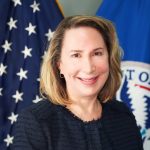 Samantha Medlock is President of Climate Risk Advisors, helping communities and organizations advance equity, sustainability, and resilience. Her career began chasing floods as a local official in Texas Flash Flood Alley—a hands-on experience that still shapes her approach to climate and disaster risk management.
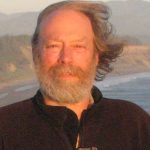 Jim is a multilingual world traveler. Based in Bavaria during the 1970s, Jim spent most of this period in India, Afghanistan and Nepal, where he founded and operated a charitable medical clinic serving Tibetan Refugees. He settled in Oregon in 1983 on a forested ranch in the Umpqua National Forest.
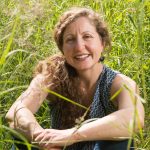 Dr. Micah Hahn is an Associate Professor of Environmental Health in the Institute for Circumpolar Health Studies at the University of Alaska-Anchorage. She received her joint PhD in Epidemiology / Environment and Resources from the University of Wisconsin-Madison and her MPH in Global Environmental Health from Emory University. Subsequently, she was a postdoctoral fellow for the CDC Climate and Health Program, and in this position worked collaboratively with the CDC Division of Vector-borne Diseases and the National Center for Atmospheric Research. Her research focuses on understanding the health impacts of climate change and working with communities to develop locally-relevant adaptation and resilience-building strategies. Dr. Hahn is also on the Management Team of the Alaska Climate Adaptation Science Center.
 Michael is a former Founding Principal of Resilient Cities Catalyst, a global non-profit helping cities and their partners tackle their toughest challenges. He is currently the Executive Director of Climate Resilience Academy at the University of Miami.
 Dr. Quintus Jett is a consultant, educator, and strategist for public causes. He has a doctorate in Organizations & Management from Stanford University, and a two-decade faculty career which spans schools, departments, and programs of business, engineering, liberal studies, divinity, and public and nonprofit management. Following Hurricane Katrina in 2005, Dr. Jett launched a volunteer project in New Orleans, which enlisted residents, students from over a dozen colleges and universities, and hundreds of others to field map the city’s Gentilly district, Lower Ninth Ward, and New Orleans East. Dr. Jett is an innovator in higher education, bridging the divide between academic research and the other priorities of the modern university, including student access and diversity, community engagement, and providing foundations for life-long learning in today’s rapidly changing world.
 Scott is Monfort Professor of Atmospheric Science at Colorado State University. He has written about 100 publications in the peer-reviewed climate literature, is a former editor of the Journal of Climate, and served for five years as founding Science Chair of the North American Carbon Program.
 Linda has many years of experience in disaster preparedness and resilience. She has been an elected official on the Linn County Iowa Board of Supervisors, Chair of the Metropolitan Planning Organization, the East Central Iowa Council of Governments, the statewide Mental Health Developmental Disability and the Linn County Board of Health. Langston is a former president of the National Association of Counties (2013-2014).
 Ken works with families and organizations as a mediator, organizational consultant, trainer and facilitator. Along with his passion for helping people prepare for and reduce climate change, Ken also volunteers as a mediator through Mediation Works and is passionate about supporting youth through mentoring with Boys to Men of Southern Oregon.
 Matthew is a retired high school teacher who was once honored as Oregon High School Social Studies Teacher of the Year. Before his teaching career he was in the restaurant business in Portland. He is also a lawyer who has been a member of the Oregon State Bar Association since 1980.
 Andrea is the Resilience Policy Advisor for the North Carolina Office of Recovery and Resiliency. She works across state agencies and with local governments to increase the state’s resilience to the impacts of climate change.