
Op Ed: Twenty years of the Northwest Forest Plan
by Jim Furnish and Dan Chu
OregonLive
Twenty years ago, the Northwest Forest Plan sought to resolve the timber wars. Has it worked? We think so.
It’s important to recall that gridlock plagued the Northwest during the late 1980s and early 1990s. The old-growth forest that once covered much of the region had been decimated by clearcutting and other logging, threatening the spotted owl and other wildlife. While many stakeholders demanded protections for the remaining forests, the shutdown of logging on federal lands left others facing an uncertain future. Out of this tense situation came the Northwest Forest Plan.
Call To Keep Intact Forests Free Of Roads
Contacts:
Kriton Arsenis, Member of the European Parliament, RoadFree Initiative, +32 22833537, kriton.arsenis@europarl.europa.eu
William Laurance, Distinguished Research Professor and Australian Laureate at James Cook University in Australia, bill.laurance@jcu.edu.au
Dr. Dominick DellaSala, President and Chief Scientist, Geos Institute, United States, +541-482-4459 ext. 302, dominick@geosinstitute.org
Dr. Sean Foley, Fellow & Chairman of the Board, The Samdhana Institute, Indonesia, +62 811 199-7560, +856 20 5872-0379, sean@samdhana.org
Dr. Barbara Zimmerman, Director, Kayapo Project, International Conservation Fund of Canada, +1 416 487 0879, B.zimmerman@wild.org
BRUSSELS – On the eve of the 2nd International Day of Forests on Friday, March 21st, scientists join MEP Kriton Arsenis in calling for an urgent response to the threats from road development to the world’s last intact primary forests.
Less than a third of Earth’s forests remain undisturbed by human activities. Road building, often driven by industrial activities, is one of the main causes of intact forest loss. RoadFree, an initiative by Member of the European Parliament Kriton Arsenis, was specially created to address this issue.
“95% of forest loss occurs within 50 km of a road. Scientific reports and satellite imagery have demonstrated road building is a major driver of deforestation from the Amazon to Indonesian and Congo Basin forests. Keeping our last intact forests free of roads is a cost-efficient way to protect the climate, halt biodiversity loss and keep illegal traffickers at bay”, says Kriton Arsenis. <read more>
Fire severity study challenges conventional wisdom on preventing all severe fires
by Chris Turner, Boulder Weekly
The message behind the results of new wildfire research is clear. It’s time for a new approach to managing wildfire in the West. The study, out of the Earth Research Institute of the University of California at Santa Barbara, says that in many areas, contrary to popular belief among fire managers, there is actually a deficit of the most damaging types of fires.
Fire suppression threatens rare Pacific fishers
by Christi Turner, High Country News
The Pacific fisher, a small, carnivorous forest-dwelling mammal, is a candidate for listing under the federal Endangered Species Act this year, and big wildfire could be to blame – or rather, the lack of it. Ecologist Chad Hanson’s recent research on the fisher population of the southern Sierra Nevada shows that the animals – aptly described as “the love child of a ferret and a wolverine” – actually seek out post-fire habitat, especially areas that have burned at higher severity, where most of the trees are killed.
Northwest Forest Plan provides co-benefits to people and wildlife in coastal rainforests
Contacts:
Dominick A. DellaSala, Ph.D. Geos Institute, 541-482-4459 x 302
Patric Brandt, Ph.D. Karlsruhe Institute of Technology, Garmisch
Partenkirchen, Germany; Leuphana University Lüneburg, Germany;
+49 4131 677 1571; patricbrandt@gmx.de
Ashland, Oregon and Lüneburg, Germany – Scientists from the Pacific Northwest and Germany released new findings in the journal Biological Conservation documenting linkages between the richness of rainforest plants and wildlife and the provisioning of key ecosystem services in coastal rainforests of North America, particularly those managed under the landmark Northwest Forest Plan.
Study questions U.S. policy of forest ‘restoration’
Phil Taylor, E&E reporter
Reprinted from Greenwire with permission from Environment & Energy Publishing, LLC. www.eenews.net 202/628-6500
Western forests today experience fewer high-severity wildfires than they did more than a century ago, depriving some fire-dependent species and stifling biodiversity, according to a new study. The study challenges conventional wisdom held by politicians and the Forest Service that the West is experiencing an unnatural burst in uncharacteristic wildfires as a result of a century of wildfire suppression.
Hundreds of Scientists Back EPA’s Bristol Bay Watershed Assessment
In under two weeks, 360 individuals added their name to the letter to support of the science-based approach the EPA has taken to assess the risks and consequences of proposed large-scale mining in Bristol Bay and encourage the EPA to pursue protective action.
The final letter was handed to the Region 10 Administrator Dennis McLerran on February 4th during his visit to Anchorage, Alaska. He and his colleagues were eager to read it. The letter has also been mailed and emailed to other relevant regional and national EPA officials and caught some attention in the media covering the debate around the proposed Pebble mine and the assessment.
Wyden Gets Pushback On His O&C Timber Bill
By Liam Moriarty, Jefferson Public Radio
Oregon Senator Ron Wyden pledges to do everything he can to get his proposed timber plan passed by Congress and signed into law by President Obama this year. He’s gathered support from key players in both the timber industry and the environmental community, and he’s painting opponents as uncompromising extremists. But, hold-outs on both sides say splitting the baby in half isn’t the wisest choice. Read more
Scientists Question Wyden’s O&C Logging Plan
Contacts: Dominick A. DellaSala, Ph.D. (541-482-4459 x 302; 541-621-7223)
Robert Hughes, Ph.D. (208-354-2632)
Two preeminent scientific societies believe plan increases extinction risks for salmon, other threatened wildlife
Washington, DC —Two international scientific organizations, the Society for Conservation Biology (SCB) and the American Fisheries Society (AFS), are questioning the assumptions behind Senator Ron Wyden’s plan to double logging levels on publicly owned Bureau of Land Management (BLM) lands in Western Oregon. In testimony before the Senate Energy and Natural Resources Committee, the organizations raised serious concerns that the Oregon and California Lands Act of 2013 (S. 1784) abandons science-based management of public lands.
Why our forests need fire, not salvage logging
Medford Mail Tribune
November 24, 2013
By Dominick A. DellaSala
For over two decades, I have studied forests from Oregon’s amazing coastal rainforests to the fire-adapted forests of the West. In dry forests, there are three issues that reoccur every fire season: (1) forests will burn regardless of what we do; (2) politicians will propose unchecked post-fire “salvage” logging, even in national parks, as a quick fix; and (3) scientists will continue to document the incredible regeneration that takes place after fires and how post-fire logging disrupts forest renewal.
Recently, I submitted a letter to Sen. Ron Wyden and other members of Congress signed by 250 prominent scientists summarizing fire ecology studies from around the globe (www.geosinstitute.org). The letter was especially urgent as Wyden and other legislators are currently drafting legislation to increase logging on public lands in response to wildfires and, for economic reasons, on Bureau of Land Management lands in Western Oregon. In the letter, we compared four common fire myths with the evidence from around the globe.
Myth 1 — Fire is catastrophic, and forests cannot recover by themselves.
Latest News
Stay Updated!
Sign up to stay updated on our current initiatives and receive information you can use to build resilience in your community.
 Briana Carbajal (they/she) was born and raised in South Central Los Angeles. In 2019, Briana was an active Youth Climate Councilmember working with the City of Los Angeles. Their purpose was to inform Mayor Garcetti of the concerns raised by young voices in their neighborhood and propose solutions to work toward resolving them. Briana holds a dual BA degree in Political Science and Geography/Environmental Studies from the University of California, Los Angeles.
 Michelle Lewis is a community engagement and outreach associate for the Heat Policy Innovation Hub. Before her work at the Nicholas Institute, she served as the Agent of Thriving for Climate and Environmental Justice at the Ormond Center at Duke Divinity School. She earned her doctoral degree from Emory University’s Candler School of Theology. Lewis holds a Master of Environmental Science from Yale School of the Environment and a Master of Divinity from Yale Divinity School, along with a certificate from Yale Institute of Sacred Music and the Arts. She studied film at Regent University, where she completed a Master of Arts in communication. Lewis has worked in both rural and urban contexts and has led community-based participatory research. Her research has focused on how faith communities connect with the environment through their existing cosmologies, the effects of green space on patient outcomes, and the environmental theologies of Black coastal communities.
 Lauren Graham is a strategic ecosystems thinker and cross-pollinator who creates impact in the areas of climate and democracy by transforming how mission-driven organizations are designed, led, and evolved. She holds Master’s degrees from University of Pennsylvania in Nonprofit Leadership, Yale in Environmental Management, and Stanford University in Sociology and teaches Strategic Management and Leadership for Nonprofits among other courses at the University of Pennsylvania School of Social Policy & Practice. Lauren is founder of Velvet Frame, a social impact strategy and communications consultancy for mission-driven organizations, and has extensive nonprofit experience including roles as Chief of Staff for Hunger Free America and Director of Innovation for Climate Access.
 Robert Macnee, Ph.D. is Deputy Director of Resilience Services at Climate Resilience Consulting, where he helps governments, institutions, and communities reduce climate risk in equitable and practical ways. He holds a Ph.D. in Environmental Management focused on climate change impacts on health and communities, and brings over a decade of experience spanning economic development, resilience planning, and implementation.
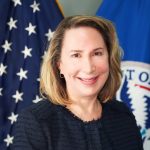 Samantha Medlock is President of Climate Risk Advisors, helping communities and organizations advance equity, sustainability, and resilience. Her career began chasing floods as a local official in Texas Flash Flood Alley—a hands-on experience that still shapes her approach to climate and disaster risk management.
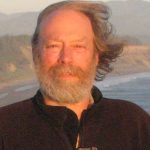 Jim is a multilingual world traveler. Based in Bavaria during the 1970s, Jim spent most of this period in India, Afghanistan and Nepal, where he founded and operated a charitable medical clinic serving Tibetan Refugees. He settled in Oregon in 1983 on a forested ranch in the Umpqua National Forest.
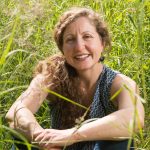 Dr. Micah Hahn is an Associate Professor of Environmental Health in the Institute for Circumpolar Health Studies at the University of Alaska-Anchorage. She received her joint PhD in Epidemiology / Environment and Resources from the University of Wisconsin-Madison and her MPH in Global Environmental Health from Emory University. Subsequently, she was a postdoctoral fellow for the CDC Climate and Health Program, and in this position worked collaboratively with the CDC Division of Vector-borne Diseases and the National Center for Atmospheric Research. Her research focuses on understanding the health impacts of climate change and working with communities to develop locally-relevant adaptation and resilience-building strategies. Dr. Hahn is also on the Management Team of the Alaska Climate Adaptation Science Center.
 Michael is a former Founding Principal of Resilient Cities Catalyst, a global non-profit helping cities and their partners tackle their toughest challenges. He is currently the Executive Director of Climate Resilience Academy at the University of Miami.
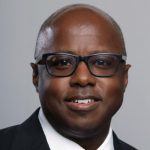 Dr. Quintus Jett is a consultant, educator, and strategist for public causes. He has a doctorate in Organizations & Management from Stanford University, and a two-decade faculty career which spans schools, departments, and programs of business, engineering, liberal studies, divinity, and public and nonprofit management. Following Hurricane Katrina in 2005, Dr. Jett launched a volunteer project in New Orleans, which enlisted residents, students from over a dozen colleges and universities, and hundreds of others to field map the city’s Gentilly district, Lower Ninth Ward, and New Orleans East. Dr. Jett is an innovator in higher education, bridging the divide between academic research and the other priorities of the modern university, including student access and diversity, community engagement, and providing foundations for life-long learning in today’s rapidly changing world.
 Scott is Monfort Professor of Atmospheric Science at Colorado State University. He has written about 100 publications in the peer-reviewed climate literature, is a former editor of the Journal of Climate, and served for five years as founding Science Chair of the North American Carbon Program.
 Linda has many years of experience in disaster preparedness and resilience. She has been an elected official on the Linn County Iowa Board of Supervisors, Chair of the Metropolitan Planning Organization, the East Central Iowa Council of Governments, the statewide Mental Health Developmental Disability and the Linn County Board of Health. Langston is a former president of the National Association of Counties (2013-2014).
 Ken works with families and organizations as a mediator, organizational consultant, trainer and facilitator. Along with his passion for helping people prepare for and reduce climate change, Ken also volunteers as a mediator through Mediation Works and is passionate about supporting youth through mentoring with Boys to Men of Southern Oregon.
 Matthew is a retired high school teacher who was once honored as Oregon High School Social Studies Teacher of the Year. Before his teaching career he was in the restaurant business in Portland. He is also a lawyer who has been a member of the Oregon State Bar Association since 1980.
 Andrea is the Resilience Policy Advisor for the North Carolina Office of Recovery and Resiliency. She works across state agencies and with local governments to increase the state’s resilience to the impacts of climate change.