
Opinion: BLM lands give us clean water
Medford Mail Tribune Opinion by Dominick A. DellaSala
The July 14 guest opinion “Logging didn’t cause water problems” by retired forester Theodore Lorensen digs deep into my report, featured in the Mail Tribune on June 27, to find any contentious points to discredit my message that unlogged Bureau of Land Management lands are important for clean water. Decades of research, and not just modeling studies or one contentious example from Salem that he cites, provide strong evidence that heavily logged and roaded watersheds, most notably those occurring on state and private lands, contribute to significant water quality problems.
It’s simple, really: When you clearcut the trees and bulldoze the ground, heavy rains wash away the soil, leading to more landslides and muddy water. Heavy erosion events stem directly from road-related slope failures. Clearcutting on steep slopes, logging in streamside areas and culvert failures that cumulatively leak sediments into streams are expensive for public water utilities to treat low-quality water, and they damage salmon runs. There are numerous government reports, field studies and water-quality monitoring reports by the Department of Environmental Quality that back my claims. Lorensen is correct that landslides also can occur in healthy watersheds during heavy rains, like the one in Salem years ago, but the evidence is solid that there are many more in logged and roaded watersheds contributing to Oregon’s water quality problems.
On the other hand, well-protected and well-managed watersheds are much better at reducing flood damage and producing clean water, healthy fish and wildlife populations, more resilient local economies and outdoor recreational benefits as fully detailed in my report. Forest thinning, if done judiciously, can also lower fire risks to watersheds by culling overly dense small trees as in the Ashland watershed.
Other restorative actions can put loggers to work removing failing roads and repairing inappropriately sized road culverts. Communities throughout Oregon are doing this right now through Oregon’s Salmon Plan and the restorative work of watershed councils.
I also cite studies documenting the ecosystem benefits of well-managed (unlogged) watersheds that represent an estimated savings to public water utilities and taxpayers in billions of dollars from road-related sediment avoidance costs nationally. From the forest to the faucet, unlogged watersheds are wellsprings of clean water, which will only become increasingly valuable economically and ecologically as many communities in the West struggle with over-allocation of precious water supplies and climate change triggers more intense droughts.
As a conservation scientist, I am inclined to inform the public of what’s at risk to our public lands by using the tools of my trade — computer modeling, literature reviews, fieldwork and publishing in peer-reviewed journals, the gold standard for scientific publication — which I routinely do. Putting all that aside, you only have to look out the window the next time you fly over Oregon’s intensively managed forests to see the maze of roads and shotgun blast of clearcuts, mostly on private lands. In our region alone (Klamath-Siskiyou) there are enough forest roads to drive to Portland and back 50 times. Clearly, this isn’t good for salmon, clean water or wildlife.
It is also my civic duty and responsibility as a parent to advocate for a healthy planet with vibrant salmon runs and clean water and to warn of the dangers of rampant logging as the science clearly shows. Attempting to discredit a solid body of scientific evidence with one contentious finger-pointing episode is not helping. “Get the cut out” forestry myths from decades ago will not give us clean water, healthy wildlife or vibrant communities. They will lead only to more polarization and a return to failed policies of the past.
Sen. Ron Wyden can create a legacy for Oregonians if he protects our remaining mature forests and watersheds for their drinking water, outstanding fish and wildlife habitat and scenic beauty.
———-
Dominick A. DellaSala is chief scientist for the Geos Institute and author of the award-winning book “Temperate and Boreal Rainforests of the World: Ecology and Conservation.” Read more online at ipfieldnotes.org/author/dominickdellasala/
Timber bill could pollute drinking water, study warns
by Paul Fattig, Medford Mail Tribune
An environmental group warns that a substantial portion of the drinking water for some 1.5 million Oregonians could be at risk if a proposed bill to create a timber trust on federal forestlands in Western Oregon becomes law. The computerized study by the Ashland-based Geos Institute released Thursday concluded that nearly 80 communities, including Medford, Rogue River and Grants Pass, could have their drinking water sources polluted by logging sediment if the O&C Trust, Conservation and Jobs Act is approved. READ MORE>
Drinking Water for Over 1.5 Million Oregonians At-Risk If Logging Increased on BLM Holdings
Click here for the June 26, 2013 press release on threats to Oregon’s drinking water supplies.
Click here to see the “Clean Water or Clearcuts?” video (3.5 min.) from Pacific Rivers Council.
Click here to listen to the July 1, 2013 KBOO Radio interview with Dominick DellaSala.
Click here for the October 17, 2013 OpEd (“Decades of evading laws led to timber woes”) by Ron Sadler, retired chief of forest planning for the BLM in Oregon and Washington.
To Us, Every Day is Earth Day
Medford Mail Tribune
Guest Opinion by Dominick DellaSala and Ed Begley, Jr.
One of us is an actor who has devoted much of his life to developing a “low impact” lifestyle and teaching others how to do so. The other is a conservation scientist who works to protect rainforests around the world. The daily work that feeds our passions could hardly be more different — yet we are each responding to the same challenge. What can we do so that Earth Day remains an American legacy to clean air, wild rivers, ancient forests and a stable climate because, after all, aren’t we all in this together?
At the top of our Earth Day agenda is the climate. Nearly a century ago, the downtown Grants Pass sign — “It’s the Climate” — first welcomed tourists to the beauty of our region. But the sign needs a facelift and should read,”The climate is becoming unsafe, so what are you going to do about it?”
A 21st Century Blueprint for Saving Oregon Species from Climate Change
Guest Opinion by Bill Bradbury
OregonLive.com click here
You don’t have to leave western Oregon to witness the escalating impacts of climate change .
On Mount Hood, river-feeding glaciers thousands of years old have shrunk by as much as 60 percent in the past 100 years.
In the often water-starved Klamath Basin, average summer temperatures are projected to increase by more than 10 degrees by 2075, with surrounding snowpack levels expected to decrease by as much as 90 percent.
In the Columbia River, average August and September water temperatures are already pushing levels that disrupt salmon migration, and they’re projected to rise another 4 degrees by midcentury.
Given those pressing realities, I read with great interest the plan just released by the Obama administration to help America’s wildlife adapt to the rapid habitat changes caused by global warming. Much of the plan’s focus is on plants and animals protected under the Endangered Species Act . The act, which turns 40 this year, is not without its critics, and I can be frustrated by how long it can take to get protection for critically imperiled species and, once they’re listed, how long it can take to get a recovery plan in place.
Yet, when we use it as intended, the law can have a tremendous impact. More than 90 percent of the species it protects have been saved from extinction, and hundreds are on the road to recovery. Here in Oregon, some of our most cherished species — from coho salmon to gray whales and bald eagles — owe their existence to the Endangered Species Act.
But as we move through the climate-fueled challenges of the 21st century, we’re entering uncharted waters in the battle to preserve the broad diversity of life critical to our planet’s future.
The Obama administration’s new plan includes a series of mitigation measures for wildlife, including protecting corridors that allow animals to move to more suitable habitat as climate change alters ecosystems. It’s an intriguing idea, but will it be enough? Or is it simply an incremental step in a much longer journey we’ve yet to commit to?
We’re entering uncharted waters in the battle to preserve the broad diversity of life critical to our planet’s future.
What “corridor,” for example, can help coho salmon escape the ever more heated Columbia River? And consider the plight of Oregon’s fast-disappearing wolverines. Scientists have known for some time now that wolverines require at least 5 feet of spring snowpack in the high-mountain terrain where they dig protective dens.
So it was hardly surprising that when proposing Endangered Species Act protections for wolverines earlier this year, U.S. Fish and Wildlife Service scientists cited climate change as the greatest threat to the 300 or so of the solitary predators that remain from Oregon and Washington to the northern Rockies. Unchecked, temperature increases could very likely wipe out wolverines in the Lower 48 before the end of this century.
Yet, just as was the case when polar bears were listed as “threatened” in 2008, federal wildlife managers declared that any protections extended to the wolverine would not include regulation of greenhouse gas pollution — the leading driver of rising global temperatures that are threatening wolverines and degrading the planet we all share. That troubling dichotomy reflects the need for a dramatic change in our current political climate, one in which elected officials can be far too quick to trade critically important long-term conservation and economic benefits for the exaggerated benefits of short-term economic gain.
Whenever we’re ready, even the most challenging policy solutions are within reach. We need only glance back at the confident steps taken to preserve the national bird we now routinely see soaring above the Willamette River for a model of how to move forward. We not only used the Endangered Species Act to protect bald eagles from being killed and captured — much as we’re proposing to do with the wolverine — but we also banned pesticides such as DDT. In the process of protecting the eagle’s habitat, as required by the Endangered Species Act, we cleaned up the waterways critical to our own health and economic stability.
The sooner we realize that protecting our environment and our economy is not an “either-or” proposition, the more quickly we can get down to the work of building a sustainable bridge to the future that’s anchored in the reality of our times.
Only then will we have a real shot at protecting Oregon’s irreplaceable ecosystems, from the high-mountain home of wolverines and our winter sports industries to the rivers critical to the future of our salmon runs, as well as our commercial and recreational fishing interests.
Bill Bradbury, former Oregon Secretary of State, is a member of the NW Power and Conservation Council and is on the board of the Oregon Environmental Council and Geos Institute.
Defazio Logging Trust Proposal – More Harm than Good
CONTACT: Randi Spivak, Vice President of Government Affairs, Geos Institute (310) 779-4894
WASHINGTON, D.C. — Three proposals to address payments to counties were considered today at a hearing of the Public Lands and Environmental Regulation Subcommittee of the House Natural Resources Committee, including H.R. ____, “Restoring Healthy Forests for Healthy Communities Act” (Hastings); and H.R. ____, “O&C Trust, Conservation, and Jobs Act” (DeFazio, Walden, Schrader); and H.R. 1294, “Self-Sufficient Community Lands Act of 2013” (Labrador).
All three would effectively privatize federal public forestlands by creating legally binding fiduciary trusts for the sole purpose of providing revenues to counties, resulting in industrialized clearcuts across the landscape. The DeFazio-Walden-Schrader proposal would effectively privatize 1.5 million acres of public forests Western Oregon.
Lawmakers like plan to revamp O & C lands
Co-authors of the O&C Trust Conservation and Jobs Act say it will help former timber receipt beneficiaries.
by Paul Fattig, Medford Mail Tribune
A trio of Oregon congressmen expressed optimism over a plan to revamp management of the O&C lands in Western Oregon, following a House Natural Resources subcommittee hearing Thursday morning. read more >
Study: Bark beetles not a factor in High Park Fire, wildfire spread
By Bobby Magill in the Coloradoan
It was a common theme in statements from both firefighters and public officials when the High Park Fire was scorching Larimer County: Dead trees killed by mountain pine beetles are responsible for the rapid spread and intensity of wildfires in Northern Colorado.
But a new study, echoing many studies before it, says that’s not true. Bark beetles are not responsible for Colorado’s most notorious wildfires. The real culprit: climate change-fueled drought.
The study (click here for the full text), co-authored by Colorado State University wildlife ecology professor Barry Noon and scientists at Clark University, Xerces Society, and Geos Institute, shows that fire risk is tied to primarily to drought conditions. read more >
Study: Bark beetle outbreak not the culprit in recent rash of western fires
CONTACTS:
Scott Black, Xerces Society for Invertebrate Conservation; (503) 449-3792, sblack@xerces.org
Dominik Kulakowski, Clark University; (508) 793-7383, dkulakowski@clark.edu
Barry Noon, Colorado State University; (970) 491-7905, brnoon@warnercnr.colostate.edu
Dominick DellaSala, Chief Scientist and President of Geos Institute (541) 621-7223
PORTLAND, Ore.—A new paper published today in the Natural Areas Journal (click here for the full text) indicates that bark beetle outbreaks that have turned millions of acres of forests in the Inter-mountain West a noticeable red coloration (from tree death) do not substantially increase the risk of active crown fire in lodgepole pine and spruce forests as commonly assumed. Instead, “Do Bark Beetle Outbreaks Increase Wildfire Risks in the Central U.S. Rocky Mountains? Implications from Recent Research” documents evidence that active crown fires in these forest types are primarily triggered by dry conditions exacerbated by climate change.
9.6 Million Acres Protected as Critical Habitat for Northern Spotted Owls
Contacts: Noah Greenwald, Center for Biological Diversity, (503) 484-7495
Joseph Vaile, Klamath-Siskiyou Wildlands Center, (541) 488-5789
Dominick A. DellaSala, Geos Institute, (541) 621-7223
Decision Reverses Controversial Bush Administration Cuts to Habitat
WASHINGTON — Conservation groups today hailed protection of 9.6 million acres of critical habitat for the threatened northern spotted owl across federal lands in Washington, Oregon and Northern California, but were deeply disappointed by the exclusion of all private and most state lands, resulting in a 4.2 million cut from the proposed designation. The owl has continued to decline since being protected under the Endangered Species Act in 1990, in part because of continued loss of habitat on private and state lands.
Latest News
Stay Updated!
Sign up to stay updated on our current initiatives and receive information you can use to build resilience in your community.
 Briana Carbajal (they/she) was born and raised in South Central Los Angeles. In 2019, Briana was an active Youth Climate Councilmember working with the City of Los Angeles. Their purpose was to inform Mayor Garcetti of the concerns raised by young voices in their neighborhood and propose solutions to work toward resolving them. Briana holds a dual BA degree in Political Science and Geography/Environmental Studies from the University of California, Los Angeles.
 Michelle Lewis is a community engagement and outreach associate for the Heat Policy Innovation Hub. Before her work at the Nicholas Institute, she served as the Agent of Thriving for Climate and Environmental Justice at the Ormond Center at Duke Divinity School. She earned her doctoral degree from Emory University’s Candler School of Theology. Lewis holds a Master of Environmental Science from Yale School of the Environment and a Master of Divinity from Yale Divinity School, along with a certificate from Yale Institute of Sacred Music and the Arts. She studied film at Regent University, where she completed a Master of Arts in communication. Lewis has worked in both rural and urban contexts and has led community-based participatory research. Her research has focused on how faith communities connect with the environment through their existing cosmologies, the effects of green space on patient outcomes, and the environmental theologies of Black coastal communities.
 Lauren Graham is a strategic ecosystems thinker and cross-pollinator who creates impact in the areas of climate and democracy by transforming how mission-driven organizations are designed, led, and evolved. She holds Master’s degrees from University of Pennsylvania in Nonprofit Leadership, Yale in Environmental Management, and Stanford University in Sociology and teaches Strategic Management and Leadership for Nonprofits among other courses at the University of Pennsylvania School of Social Policy & Practice. Lauren is founder of Velvet Frame, a social impact strategy and communications consultancy for mission-driven organizations, and has extensive nonprofit experience including roles as Chief of Staff for Hunger Free America and Director of Innovation for Climate Access.
 Robert Macnee, Ph.D. is Deputy Director of Resilience Services at Climate Resilience Consulting, where he helps governments, institutions, and communities reduce climate risk in equitable and practical ways. He holds a Ph.D. in Environmental Management focused on climate change impacts on health and communities, and brings over a decade of experience spanning economic development, resilience planning, and implementation.
 Samantha Medlock is President of Climate Risk Advisors, helping communities and organizations advance equity, sustainability, and resilience. Her career began chasing floods as a local official in Texas Flash Flood Alley—a hands-on experience that still shapes her approach to climate and disaster risk management.
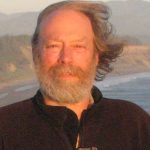 Jim is a multilingual world traveler. Based in Bavaria during the 1970s, Jim spent most of this period in India, Afghanistan and Nepal, where he founded and operated a charitable medical clinic serving Tibetan Refugees. He settled in Oregon in 1983 on a forested ranch in the Umpqua National Forest.
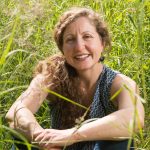 Dr. Micah Hahn is an Associate Professor of Environmental Health in the Institute for Circumpolar Health Studies at the University of Alaska-Anchorage. She received her joint PhD in Epidemiology / Environment and Resources from the University of Wisconsin-Madison and her MPH in Global Environmental Health from Emory University. Subsequently, she was a postdoctoral fellow for the CDC Climate and Health Program, and in this position worked collaboratively with the CDC Division of Vector-borne Diseases and the National Center for Atmospheric Research. Her research focuses on understanding the health impacts of climate change and working with communities to develop locally-relevant adaptation and resilience-building strategies. Dr. Hahn is also on the Management Team of the Alaska Climate Adaptation Science Center.
 Michael is a former Founding Principal of Resilient Cities Catalyst, a global non-profit helping cities and their partners tackle their toughest challenges. He is currently the Executive Director of Climate Resilience Academy at the University of Miami.
 Dr. Quintus Jett is a consultant, educator, and strategist for public causes. He has a doctorate in Organizations & Management from Stanford University, and a two-decade faculty career which spans schools, departments, and programs of business, engineering, liberal studies, divinity, and public and nonprofit management. Following Hurricane Katrina in 2005, Dr. Jett launched a volunteer project in New Orleans, which enlisted residents, students from over a dozen colleges and universities, and hundreds of others to field map the city’s Gentilly district, Lower Ninth Ward, and New Orleans East. Dr. Jett is an innovator in higher education, bridging the divide between academic research and the other priorities of the modern university, including student access and diversity, community engagement, and providing foundations for life-long learning in today’s rapidly changing world.
 Scott is Monfort Professor of Atmospheric Science at Colorado State University. He has written about 100 publications in the peer-reviewed climate literature, is a former editor of the Journal of Climate, and served for five years as founding Science Chair of the North American Carbon Program.
 Linda has many years of experience in disaster preparedness and resilience. She has been an elected official on the Linn County Iowa Board of Supervisors, Chair of the Metropolitan Planning Organization, the East Central Iowa Council of Governments, the statewide Mental Health Developmental Disability and the Linn County Board of Health. Langston is a former president of the National Association of Counties (2013-2014).
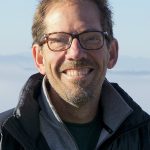 Ken works with families and organizations as a mediator, organizational consultant, trainer and facilitator. Along with his passion for helping people prepare for and reduce climate change, Ken also volunteers as a mediator through Mediation Works and is passionate about supporting youth through mentoring with Boys to Men of Southern Oregon.
 Matthew is a retired high school teacher who was once honored as Oregon High School Social Studies Teacher of the Year. Before his teaching career he was in the restaurant business in Portland. He is also a lawyer who has been a member of the Oregon State Bar Association since 1980.
 Andrea is the Resilience Policy Advisor for the North Carolina Office of Recovery and Resiliency. She works across state agencies and with local governments to increase the state’s resilience to the impacts of climate change.