
Environmental Groups Say It Will Take 20 Years To Thin Northwest Forests
by Amelia Templeton, Oregon Public Broadcasting
EUGENE — A coalition of environmental groups has released a report on the potential for restoration thinning in overcrowded northwest forests. The groups say thinning alone could generate a steady supply of timber for 20 years and allow federal forests to increase logging yields.
Four Northwest environmental groups commissioned the study: Conservation Northwest, The Geos Institute, Klamath-Siskiyou Wildlands Center, and Oregon Wild.
The groups say they wanted to put a number on how much non-controversial logging could take place on the federal forests in the range of the spotted owl. The bird is protected under the Endangered Species Act.
The report examines the potential for thinning out young Douglas fir plantations and other types of young dense stands on 17 national forests and on a handful of Bureau of Land Management forest lands in Oregon, Washington, and Northern California. read more>
Scientists Urge BC to Speed up Protection of Iconic Rainforest
Half of Great Bear Rainforest remains open to logging
Epoch Times by Justina Reichel
A group of international scientists is urging B.C. Premier Christy Clark to accelerate the fulfillment of an agreement to protect the Great Bear Rainforest that was first announced six years ago.
Currently half of Great Bear, nestled between the Pacific Ocean and the Coast Mountain Range on B.C.’s west coast, remains open to logging, although a 2006 agreement recommended that 70 percent of the natural old-growth forest be set aside.
A letter to Clark, signed by 54 scientists from nine countries, said the Great Bear Rainforest Agreement will be highlighted at the 2012 Earth Summit taking place in Rio de Janeiro this week as a potential model for global forest sustainability.
Dominick DellaSala, the chief scientist at Oregon’s Geos Institute and an expert on temperate and boreal rainforests, says the issue provides an opportunity for Clark to demonstrate leadership by getting the agreement fully implemented within the next year. more >
Scientists call on BC’s Premier Clark to speed protection of Great Bear Rainforest
by Linda Solomon in the Vancouver Observer
Scientists from Canada and the United States are asking British Columbia Premier Christy Clark to speed up protection of the Great Bear Rainforest.
 click here to see the letter to B.C. Premier, Christy Clark
Dominick DellaSala, Chief Scientist and President of the Geos Institute in Ashland, Oregon, and Lead author of Temperate and Boreal Rainforests of the World, leads the signatories of the letter which says the Great Bear Rainforest plays an essential role in stablizing the earth’s climate.”
The signatories are all contributors to DellaSala’s book. Others include scientists from the zoology department of University of British Columbia, the biology department of University of Victoria, as well as UBC’s Biodiversity Research Centre. They also reprsent conservation organizations like Northwest Institute and Skeena Wild Conservation Trust in Smithers, British Columbia, and Raincoast Conservation Foundation of Sydney, British Columbia. more >
NW Forest Plan Scientists Letter
229 SCIENTISTS DECLARE SUPPORT FOR NORTHWEST FOREST PLAN
click here to see the scientists’ letter
Contacts:
Dominick A. DellaSala, Ph.D., Geos Institute, Chief Scientist (541-621-7223)
Jim Karr, Ph.D., University of Washington, Professor Emeritus (360-681-3163)
Ashland, OR – Today 229 scientists called on the Forest Service to uphold the protections afforded hundreds of species, clean water, and salmon, which were established under the landmark Northwest Forest Plan in 1994. While still in formal environmental review, the Forest Service is proposing a plan revision on the Okanogan-Wenatchee National Forest in Washington that includes undoing protective reserves and weakening the Aquatic Conservation Strategy of the plan. Citing “new science” and climate change concerns, the agency proposes moving to “whole-landscape level management,” where protective reserves are eliminated and mandatory stream protections become discretionary1. This is the first forest plan revision to pose such radical shifts in the protective elements of the Northwest Forest Plan.
Great Bear Rainforest Scientists Letter
For Immediate Release on 14 June 2012
Contacts: Dominick DellaSala, Chief Scientist and President of Geos Institute, Ashland, Oregon; 541-621-7223 (cell); In Rio: Kyle Gracey, Research Scientist and Science Coordinator, Global Footprint Network
SCIENTISTS AROUND THE WORLD CONCERNED OVER LENGTHY DELAYS TO FULLY IMPLEMENT
THE PROTECTION AGREEMENTS IN THE GREAT BEAR RAINFOREST
EXPERTS TAKE MESSAGE TO EARTH SUMMIT IN RIO
Rainforest scientists from around the world, supported by prominent experts speaking at the Earth Summit in Rio, today sent a letter to the Premier of British Columbia, Christy Clark, calling on her government to fully implement the agreements to protect the world renowned Great Bear Rainforest – announced more than six years ago.
Why the O&C Trust Act Can’t See the Forest for the Trees
KBOO Radio interview by Barbara Bernstein on her weekly Locus Focus program
Three members of Oregon’s congressional delegation (Peter De Fazio, Kurt Schraer and Greg Walden) are proposing legislation that would create a timber trust on two thirds of the O&C lands’ 2.6 million acres, managed for the sole purpose of maximizing revenues from logging for the benefit of the 18 O&C counties in Western Oregon. In this episode of Locus Focus we talk with Randi Spivak, Vice President of Government Affairs with the Geos Institute in Ashland, about why Oregon’s conservation movement is not pleased with this proposed legislation and what are some alternative solutions to the O&C counties’ fiscal crisis. Click here for the audio file and more >
Protecting Old Growth Forests: Keys to Prepare for Climate Change
Interview by Barbara Bernstein for KBOO Radio
This past winter the Forest Service released its long anticipated final planning rule for the nation’s 155 national forests and 20 national grasslands. The plan validates what many scientists have been saying for years: mature and old-growth forests play a critical role in reducing climate change and providing clean drinking water to millions of Americans. On this 44 minute episode of Locus Focus, we talk with Dominick DellaSala about why we need to remain vigilant about protecting our precious forest resources, especially in this current political climate in which amped up logging is being promoted as job creation.
To listen, click here and scroll down to the “download audio file” link.
Opinion: Is there still time to save spaceship Earth?
Medford Mail Tribune
by Dominick DellaSala
“We’re not the center of the universe; we’re way out in left field on a tiny dust mote, but it is our home and we need to take care of it.” — Apollo 8 Astronaut William Anders, commenting on his December 1968 “Earthrise” photo, the first image ever taken of Earth from the moon
Rivers on fire, toxic chemicals and other environmental calamities awakened America’s environmental consciousness in the 1960s. Back then, Earth Day was born out of the passion of peace activist John McConnell and U.S. Sen. Gaylord Nelson and first celebrated in San Francisco on March 21, 1970. Comments from the Apollo astronauts helped to inspire changing public perceptions. Today, Earth Day is celebrated in more than 175 countries around the globe. read more >
Klamath-Siskiyou Study: Protecting old-growth can stave off global warming
If global warming occurs in the coming years as many scientists predict, the stands of big mature trees on local public forestlands could help save our bacon. That’s the upshot of a recently released peer-reviewed study of the Klamath-Siskiyou region in southwest Oregon and northwestern California by a University of Central Florida scientist and the Ashland-based Geos Institute. MORE>
Opinion: Saving an Owl from Politics
The imperiled northern spotted owl faces extinction if efforts enacted to save it continue to put politics ahead of science.
The Scientist, Magazine of Life Sciences
By Dominick A. DellaSala, Ph.D.
No other species symbolizes the “war-in-the woods” over logging vs. forest protections better than the northern spotted owl. The owl was listed under the Endangered Species Act (ESA) in 1990 due to destruction of its forest habitat by logging. Unchecked logging at the time, as well as ongoing mechanization of mills that accelerated the speed at which trees could be processed by fewer workers, would have soon eliminated nearly all older forests along with forestry jobs. Historic logging levels also would have severely impacted the owl population, possibly eliminating it altogether, throughout most of its range. MORE>
 Briana Carbajal (they/she) was born and raised in South Central Los Angeles. In 2019, Briana was an active Youth Climate Councilmember working with the City of Los Angeles. Their purpose was to inform Mayor Garcetti of the concerns raised by young voices in their neighborhood and propose solutions to work toward resolving them. Briana holds a dual BA degree in Political Science and Geography/Environmental Studies from the University of California, Los Angeles.
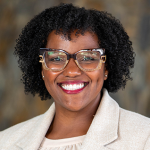 Michelle Lewis is a community engagement and outreach associate for the Heat Policy Innovation Hub. Before her work at the Nicholas Institute, she served as the Agent of Thriving for Climate and Environmental Justice at the Ormond Center at Duke Divinity School. She earned her doctoral degree from Emory University’s Candler School of Theology. Lewis holds a Master of Environmental Science from Yale School of the Environment and a Master of Divinity from Yale Divinity School, along with a certificate from Yale Institute of Sacred Music and the Arts. She studied film at Regent University, where she completed a Master of Arts in communication. Lewis has worked in both rural and urban contexts and has led community-based participatory research. Her research has focused on how faith communities connect with the environment through their existing cosmologies, the effects of green space on patient outcomes, and the environmental theologies of Black coastal communities.
 Lauren Graham is a strategic ecosystems thinker and cross-pollinator who creates impact in the areas of climate and democracy by transforming how mission-driven organizations are designed, led, and evolved. She holds Master’s degrees from University of Pennsylvania in Nonprofit Leadership, Yale in Environmental Management, and Stanford University in Sociology and teaches Strategic Management and Leadership for Nonprofits among other courses at the University of Pennsylvania School of Social Policy & Practice. Lauren is founder of Velvet Frame, a social impact strategy and communications consultancy for mission-driven organizations, and has extensive nonprofit experience including roles as Chief of Staff for Hunger Free America and Director of Innovation for Climate Access.
 Robert Macnee, Ph.D. is Deputy Director of Resilience Services at Climate Resilience Consulting, where he helps governments, institutions, and communities reduce climate risk in equitable and practical ways. He holds a Ph.D. in Environmental Management focused on climate change impacts on health and communities, and brings over a decade of experience spanning economic development, resilience planning, and implementation.
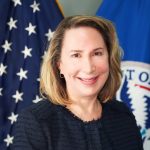 Samantha Medlock is President of Climate Risk Advisors, helping communities and organizations advance equity, sustainability, and resilience. Her career began chasing floods as a local official in Texas Flash Flood Alley—a hands-on experience that still shapes her approach to climate and disaster risk management.
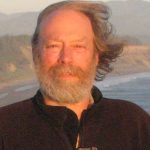 Jim is a multilingual world traveler. Based in Bavaria during the 1970s, Jim spent most of this period in India, Afghanistan and Nepal, where he founded and operated a charitable medical clinic serving Tibetan Refugees. He settled in Oregon in 1983 on a forested ranch in the Umpqua National Forest.
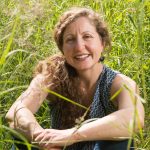 Dr. Micah Hahn is an Associate Professor of Environmental Health in the Institute for Circumpolar Health Studies at the University of Alaska-Anchorage. She received her joint PhD in Epidemiology / Environment and Resources from the University of Wisconsin-Madison and her MPH in Global Environmental Health from Emory University. Subsequently, she was a postdoctoral fellow for the CDC Climate and Health Program, and in this position worked collaboratively with the CDC Division of Vector-borne Diseases and the National Center for Atmospheric Research. Her research focuses on understanding the health impacts of climate change and working with communities to develop locally-relevant adaptation and resilience-building strategies. Dr. Hahn is also on the Management Team of the Alaska Climate Adaptation Science Center.
 Michael is a former Founding Principal of Resilient Cities Catalyst, a global non-profit helping cities and their partners tackle their toughest challenges. He is currently the Executive Director of Climate Resilience Academy at the University of Miami.
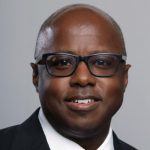 Dr. Quintus Jett is a consultant, educator, and strategist for public causes. He has a doctorate in Organizations & Management from Stanford University, and a two-decade faculty career which spans schools, departments, and programs of business, engineering, liberal studies, divinity, and public and nonprofit management. Following Hurricane Katrina in 2005, Dr. Jett launched a volunteer project in New Orleans, which enlisted residents, students from over a dozen colleges and universities, and hundreds of others to field map the city’s Gentilly district, Lower Ninth Ward, and New Orleans East. Dr. Jett is an innovator in higher education, bridging the divide between academic research and the other priorities of the modern university, including student access and diversity, community engagement, and providing foundations for life-long learning in today’s rapidly changing world.
 Scott is Monfort Professor of Atmospheric Science at Colorado State University. He has written about 100 publications in the peer-reviewed climate literature, is a former editor of the Journal of Climate, and served for five years as founding Science Chair of the North American Carbon Program.
 Linda has many years of experience in disaster preparedness and resilience. She has been an elected official on the Linn County Iowa Board of Supervisors, Chair of the Metropolitan Planning Organization, the East Central Iowa Council of Governments, the statewide Mental Health Developmental Disability and the Linn County Board of Health. Langston is a former president of the National Association of Counties (2013-2014).
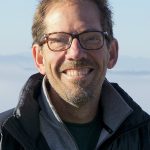 Ken works with families and organizations as a mediator, organizational consultant, trainer and facilitator. Along with his passion for helping people prepare for and reduce climate change, Ken also volunteers as a mediator through Mediation Works and is passionate about supporting youth through mentoring with Boys to Men of Southern Oregon.
 Matthew is a retired high school teacher who was once honored as Oregon High School Social Studies Teacher of the Year. Before his teaching career he was in the restaurant business in Portland. He is also a lawyer who has been a member of the Oregon State Bar Association since 1980.
 Andrea is the Resilience Policy Advisor for the North Carolina Office of Recovery and Resiliency. She works across state agencies and with local governments to increase the state’s resilience to the impacts of climate change.