
Defazio Logging Trust Proposal – More Harm than Good
CONTACT: Randi Spivak, Vice President of Government Affairs, Geos Institute (310) 779-4894
WASHINGTON, D.C. — Three proposals to address payments to counties were considered today at a hearing of the Public Lands and Environmental Regulation Subcommittee of the House Natural Resources Committee, including H.R. ____, “Restoring Healthy Forests for Healthy Communities Act” (Hastings); and H.R. ____, “O&C Trust, Conservation, and Jobs Act” (DeFazio, Walden, Schrader); and H.R. 1294, “Self-Sufficient Community Lands Act of 2013” (Labrador).
All three would effectively privatize federal public forestlands by creating legally binding fiduciary trusts for the sole purpose of providing revenues to counties, resulting in industrialized clearcuts across the landscape. The DeFazio-Walden-Schrader proposal would effectively privatize 1.5 million acres of public forests Western Oregon.
Randi Spivak, VP of Government Affairs of Geos Institute, said: “It is easy to get lured in by the way Rep. DeFazio talks about his logging trust. His proposal can actually harm the very counties he purports to protect.”
“The logging trust would create 32 square miles of new clear cuts every year, dumping tons of sediment into rivers, degrading clean drinking water for 1.8 million Oregonians,” said Randi Spivak. “That could mean millions of dollars in increased water treatments costs. Ironically, the same residents of those counties the bill seeks to support would pay for water treatment upgrades.”
The Oregon Department of Environmental Quality relies on current forest protections under the Northwest Forest Plan (NWFP) to ensure drinking water meets federal water quality standards.
Increased industrial logging in Oregon’s backyard forests could also hurt the state’s recreation economy. The Outdoor Recreation Industry reports that more than 140,000 jobs are supported by outdoor recreation in Oregon, contributing $4 billion in wages and salaries and $955 million in state and local tax revenue.
“People don’t want to hike or camp in clearcuts. The DeFazio logging trust will generate money from logging on the one hand, but it will likely reduce local economic activity on the other hand,” said Spivak.
At the hearing DeFazio discussed some possible changes to his proposal.
“None of the changes DeFazio alluded to today come anywhere close to mitigating the effective privatization of 1.5 million acres of public lands, clearcutting 32 square miles each year, harming clean drinking water for 1.8 million Oregonians, impacting the recreation economy, and harming wildlife,” said Spivak.
In a March 11 letter to the Oregon delegation, the Association of O&C Counties recommended creating a State fund of $200 million over 10 years from the sale of lottery-backed bonds for land conservation.
Spivak said, “If the State of Oregon is willing do to that, why don’t they just dedicate that lottery money directly to the O&C counties? It would be a lot more efficient and less damaging to the environment.” Lottery funds could easily support the county and state’s fair share contribution address O&C fiscal issues.
Contribute
Geos Institute depends on the generous support of caring people who believe we can and must do a better job addressing climate change for our children and those who will follow.
Stay Updated!
Sign up for our eNews to stay updated on our work and receive information you can use to build resilience in your community.
 Robert Macnee, Ph.D. is Deputy Director of Resilience Services at Climate Resilience Consulting, where he helps governments, institutions, and communities reduce climate risk in equitable and practical ways. He holds a Ph.D. in Environmental Management focused on climate change impacts on health and communities, and brings over a decade of experience spanning economic development, resilience planning, and implementation.
 Samantha Medlock is President of Climate Risk Advisors, helping communities and organizations advance equity, sustainability, and resilience. Her career began chasing floods as a local official in Texas Flash Flood Alley—a hands-on experience that still shapes her approach to climate and disaster risk management.
 Jim is a multilingual world traveler. Based in Bavaria during the 1970s, Jim spent most of this period in India, Afghanistan and Nepal, where he founded and operated a charitable medical clinic serving Tibetan Refugees. He settled in Oregon in 1983 on a forested ranch in the Umpqua National Forest.
 Dr. Micah Hahn is an Associate Professor of Environmental Health in the Institute for Circumpolar Health Studies at the University of Alaska-Anchorage. She received her joint PhD in Epidemiology / Environment and Resources from the University of Wisconsin-Madison and her MPH in Global Environmental Health from Emory University. Subsequently, she was a postdoctoral fellow for the CDC Climate and Health Program, and in this position worked collaboratively with the CDC Division of Vector-borne Diseases and the National Center for Atmospheric Research. Her research focuses on understanding the health impacts of climate change and working with communities to develop locally-relevant adaptation and resilience-building strategies. Dr. Hahn is also on the Management Team of the Alaska Climate Adaptation Science Center.
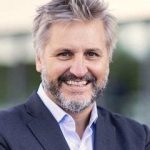 Michael is a former Founding Principal of Resilient Cities Catalyst, a global non-profit helping cities and their partners tackle their toughest challenges. He is currently the Executive Director of Climate Resilience Academy at the University of Miami.
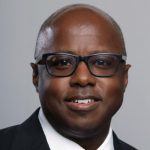 Dr. Quintus Jett is a consultant, educator, and strategist for public causes. He has a doctorate in Organizations & Management from Stanford University, and a two-decade faculty career which spans schools, departments, and programs of business, engineering, liberal studies, divinity, and public and nonprofit management. Following Hurricane Katrina in 2005, Dr. Jett launched a volunteer project in New Orleans, which enlisted residents, students from over a dozen colleges and universities, and hundreds of others to field map the city’s Gentilly district, Lower Ninth Ward, and New Orleans East. Dr. Jett is an innovator in higher education, bridging the divide between academic research and the other priorities of the modern university, including student access and diversity, community engagement, and providing foundations for life-long learning in today’s rapidly changing world.
 Scott is Monfort Professor of Atmospheric Science at Colorado State University. He has written about 100 publications in the peer-reviewed climate literature, is a former editor of the Journal of Climate, and served for five years as founding Science Chair of the North American Carbon Program.
 Linda has many years of experience in disaster preparedness and resilience. She has been an elected official on the Linn County Iowa Board of Supervisors, Chair of the Metropolitan Planning Organization, the East Central Iowa Council of Governments, the statewide Mental Health Developmental Disability and the Linn County Board of Health. Langston is a former president of the National Association of Counties (2013-2014).
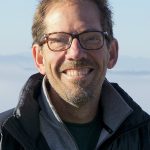 Ken works with families and organizations as a mediator, organizational consultant, trainer and facilitator. Along with his passion for helping people prepare for and reduce climate change, Ken also volunteers as a mediator through Mediation Works and is passionate about supporting youth through mentoring with Boys to Men of Southern Oregon.
 Matthew is a retired high school teacher who was once honored as Oregon High School Social Studies Teacher of the Year. Before his teaching career he was in the restaurant business in Portland. He is also a lawyer who has been a member of the Oregon State Bar Association since 1980.
 Andrea is the Resilience Policy Advisor for the North Carolina Office of Recovery and Resiliency. She works across state agencies and with local governments to increase the state’s resilience to the impacts of climate change.