
Backcountry thinning is not the way to healthy forests
November 20, 2011
By Dennis Odion
and Dominick DellaSala
As scientists who have studied wildfires in our area, we are concerned that information provided to the public about fire management is not based on sound science. This has led to counterproductive actions and left the most important fire management needs unaddressed. Read more…
New Zealand science event to feature DellaSala speech
Ashland man to make opening address at science symposium
November 14, 2011
By Paul Fattig
Mail Tribune
Ashland-area resident Dominick DellaSala will talk about the forest in his backyard when he gives the opening address during an international science symposium early next month in Auckland, New Zealand. Read more…
Court Upholds Roadless Rule in Forests
The Associated Press
OCTOBER 21, 2011
DENVER—A federal appeals court on Friday upheld a rule prohibiting roads on nearly 50 million acres of land in national forests across the U.S., a ruling hailed by environmentalists as one of the most significant in decades. Read more…
Evidence builds that scientists underplay climate impacts
Tuesday, Oct. 18, 2011
Far from being “alarmist,” predictions from climate scientists in many cases are proving to be more conservative than observed climate-induced impacts.
By Douglas Fischer
Daily Climate editor
The warnings were dire: 188 predictions showing that climate-induced changes to the environment would put 7 percent of all plant and animal species on the globe – one out of every 14 critters – at risk of extinction. Read more…
The Dollar Lake Fire: Looking Back at the Fire Season
KBOO
10/3/11
The fires this summer on the northface of Mt. Hood struck a dark chord for many of us who know and love the trails, basins and ridges of this rugged and least-accessible face of the mountain. Yet while we may feel great sadness imagining our favorite places scorched and blackened by the fires, it’s important to remember the vital role that fire plays in regenerating the woods. Read more…
Should this owl be killed so another owl can live?
Effort to save northern spotted owl helped preserve old-growth forests but now the owl faces a new threat
By Francesca Lyman
Special to The Bee
Published: Sunday, Sep. 18, 2011
It’s a warm sunny day in early August and wildlife biologist Eric Forsman heads up to the Willamette National Forest in Oregon’s Cascades mountains to climb trees. In this land of 200-foot Douglas firs, Forsman will hoist himself up in a harness to check the nests of red tree-voles, a staple of the northern spotted owl’s diet. Read more…
Temperate and boreal forests can help fight global warming; but without better management, they may become part of the problem
National Wildlife Federation
John Carey- 9/15/11
THE TROPICAL RAIN FOREST gets most of the press. After all, it has become the symbol of primeval wilderness and a poster child for protecting the natural world. But it’s worth also taking a look at woodlands closer to home. Forests are growing all around us: stately white pines and spreading oaks in the Northeast; delicate longleaf pine and rich bottomland hardwoods in the South; silvery aspen and gnarled pinyon pine in the Southwest; magnificent redwoods in California and a vast expanse of spruce and fir all across Canada. Read more…
Related Links: International Year of Forests
Prominent speakers featured at Rainforest Festival
KFSK
PETERSBURG-AK (2011-09-08) Petersburg hosts a variety of visiting scientists, artists and educators during its annual Tongass Rainforest Festival this week. They include the editor of a new book about temperate and boreal rainforests, a flying squirrel researcher, and an artist who draws her inspiration from the forest. Matt Lichtenstein has more…
Back where it belongs
Contractors, including Tom Ratnour, pictured above, work to restore Little Butte Creek to its historic channel through the Denman Wildlife Area
August 22, 2011
By Mark Freeman
Mail Tribune
WHITE CITY — Biologist Jay Doino dodges backhoes and dump trucks as he makes his way toward a nothing patch of dirt and grass deep within the Denman Wildlife Area, a couple hundred yards away from the banks of Little Butte Creek. Read more…
Professor challenges pilot project in Applegate Valley
‘Their ideas don’t match up with forests that were there’
August 02, 2011
By Paul Fattig
Mail Tribune
A University of Wyoming professor is challenging the assumptions of two leading Pacific Northwest forestry professors spearheading a pilot project on public forestlands in the Applegate Valley. Read more…
Latest News
Stay Updated!
Sign up to stay updated on our current initiatives and receive information you can use to build resilience in your community.
 Briana Carbajal (they/she) was born and raised in South Central Los Angeles. In 2019, Briana was an active Youth Climate Councilmember working with the City of Los Angeles. Their purpose was to inform Mayor Garcetti of the concerns raised by young voices in their neighborhood and propose solutions to work toward resolving them. Briana holds a dual BA degree in Political Science and Geography/Environmental Studies from the University of California, Los Angeles.
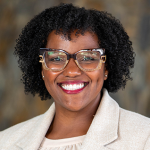 Michelle Lewis is a community engagement and outreach associate for the Heat Policy Innovation Hub. Before her work at the Nicholas Institute, she served as the Agent of Thriving for Climate and Environmental Justice at the Ormond Center at Duke Divinity School. She earned her doctoral degree from Emory University’s Candler School of Theology. Lewis holds a Master of Environmental Science from Yale School of the Environment and a Master of Divinity from Yale Divinity School, along with a certificate from Yale Institute of Sacred Music and the Arts. She studied film at Regent University, where she completed a Master of Arts in communication. Lewis has worked in both rural and urban contexts and has led community-based participatory research. Her research has focused on how faith communities connect with the environment through their existing cosmologies, the effects of green space on patient outcomes, and the environmental theologies of Black coastal communities.
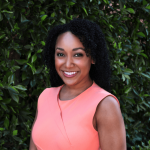 Lauren Graham is a strategic ecosystems thinker and cross-pollinator who creates impact in the areas of climate and democracy by transforming how mission-driven organizations are designed, led, and evolved. She holds Master’s degrees from University of Pennsylvania in Nonprofit Leadership, Yale in Environmental Management, and Stanford University in Sociology and teaches Strategic Management and Leadership for Nonprofits among other courses at the University of Pennsylvania School of Social Policy & Practice. Lauren is founder of Velvet Frame, a social impact strategy and communications consultancy for mission-driven organizations, and has extensive nonprofit experience including roles as Chief of Staff for Hunger Free America and Director of Innovation for Climate Access.
 Robert Macnee, Ph.D. is Deputy Director of Resilience Services at Climate Resilience Consulting, where he helps governments, institutions, and communities reduce climate risk in equitable and practical ways. He holds a Ph.D. in Environmental Management focused on climate change impacts on health and communities, and brings over a decade of experience spanning economic development, resilience planning, and implementation.
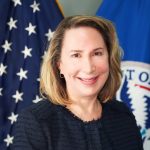 Samantha Medlock is President of Climate Risk Advisors, helping communities and organizations advance equity, sustainability, and resilience. Her career began chasing floods as a local official in Texas Flash Flood Alley—a hands-on experience that still shapes her approach to climate and disaster risk management.
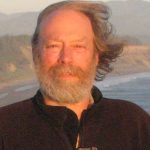 Jim is a multilingual world traveler. Based in Bavaria during the 1970s, Jim spent most of this period in India, Afghanistan and Nepal, where he founded and operated a charitable medical clinic serving Tibetan Refugees. He settled in Oregon in 1983 on a forested ranch in the Umpqua National Forest.
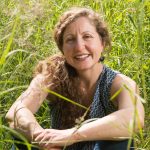 Dr. Micah Hahn is an Associate Professor of Environmental Health in the Institute for Circumpolar Health Studies at the University of Alaska-Anchorage. She received her joint PhD in Epidemiology / Environment and Resources from the University of Wisconsin-Madison and her MPH in Global Environmental Health from Emory University. Subsequently, she was a postdoctoral fellow for the CDC Climate and Health Program, and in this position worked collaboratively with the CDC Division of Vector-borne Diseases and the National Center for Atmospheric Research. Her research focuses on understanding the health impacts of climate change and working with communities to develop locally-relevant adaptation and resilience-building strategies. Dr. Hahn is also on the Management Team of the Alaska Climate Adaptation Science Center.
 Michael is a former Founding Principal of Resilient Cities Catalyst, a global non-profit helping cities and their partners tackle their toughest challenges. He is currently the Executive Director of Climate Resilience Academy at the University of Miami.
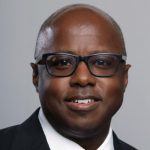 Dr. Quintus Jett is a consultant, educator, and strategist for public causes. He has a doctorate in Organizations & Management from Stanford University, and a two-decade faculty career which spans schools, departments, and programs of business, engineering, liberal studies, divinity, and public and nonprofit management. Following Hurricane Katrina in 2005, Dr. Jett launched a volunteer project in New Orleans, which enlisted residents, students from over a dozen colleges and universities, and hundreds of others to field map the city’s Gentilly district, Lower Ninth Ward, and New Orleans East. Dr. Jett is an innovator in higher education, bridging the divide between academic research and the other priorities of the modern university, including student access and diversity, community engagement, and providing foundations for life-long learning in today’s rapidly changing world.
 Scott is Monfort Professor of Atmospheric Science at Colorado State University. He has written about 100 publications in the peer-reviewed climate literature, is a former editor of the Journal of Climate, and served for five years as founding Science Chair of the North American Carbon Program.
 Linda has many years of experience in disaster preparedness and resilience. She has been an elected official on the Linn County Iowa Board of Supervisors, Chair of the Metropolitan Planning Organization, the East Central Iowa Council of Governments, the statewide Mental Health Developmental Disability and the Linn County Board of Health. Langston is a former president of the National Association of Counties (2013-2014).
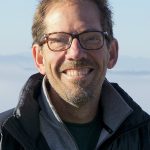 Ken works with families and organizations as a mediator, organizational consultant, trainer and facilitator. Along with his passion for helping people prepare for and reduce climate change, Ken also volunteers as a mediator through Mediation Works and is passionate about supporting youth through mentoring with Boys to Men of Southern Oregon.
 Matthew is a retired high school teacher who was once honored as Oregon High School Social Studies Teacher of the Year. Before his teaching career he was in the restaurant business in Portland. He is also a lawyer who has been a member of the Oregon State Bar Association since 1980.
 Andrea is the Resilience Policy Advisor for the North Carolina Office of Recovery and Resiliency. She works across state agencies and with local governments to increase the state’s resilience to the impacts of climate change.