
Wildfire safety starts at home
By Annette McGee Rasch / for the Mail Tribune
 After such a smoke-filled summer, many are fatigued by wildfire and hope next year’s fire season will be less intense.
But fire officials and scientists say if future impacts are to be minimized, the public must take personal responsibility on their own properties, embrace common-sense rural development plans and support science-based forest policy.
“Especially in the wildland-urban interface zones, people need to become more responsible for their own survivability,” said Illinois Valley Fire District Chief Dennis Hoke. “We can’t look for the government to solve everything. People should ask themselves, ‘What would it take to create the defensible space that can spell the difference between losing or saving my home if a wildfire runs through?’ ”
Video recordings of two recent talks at UNBC
Watch and listen to two recent talks given by Dr. Dominick DellaSala at the University of British Columbia (UNBC) Natural Resources and Environmental Studies Institute. Videos are available on the UNBC website, or click below to go directly to Dominick’s talks.
- If a Tree falls in a forgotten Rainforest does anybody hear? (Sept 14, 2017)
- Primary Forest and Roadless Areas: Why we need Wild Places in the Anthropocene (Sept 15, 2017)
Why does this famous protector of trees now want to cut some down?
By Warren Cornwall, Oct. 5, 2017, for Science Magazine
WESTERN OREGON—Jerry Franklin has spent much of his life in the company of giants. From his childhood in the woods of Washington state to a scientific career that catapulted him to international prominence, the towering trees of the U.S. Pacific Northwest have shaped his world. In the 1980s, the forest ecologist became a hero to many conservationists thanks to research that helped lead to a controversial 1994 plan protecting millions of hectares of old-growth forests in the Pacific Northwest from logging.
Today, in the twilight of his life, the 80-year-old scientist has become a champion of this far different landscape, which he sees as vital to supporting a full range of forest species. That change has again thrust Franklin, a professor at the University of Washington in Seattle, to the center of a debate over the future of the northwest’s forests—including a potential rewrite of that seminal 1990s Northwest Forest Plan. This time, Franklin is drawing the ire of conservationists for promoting forest management techniques—including targeted logging—designed to create more of the scraggly patches of protoforest that ecologists call “early seral” communities.
Forest ecologist Dominick DellaSala, president of the Ashland-based Geos Institute, is convinced that logging is a poor substitute for natural disturbances, which leave a complex jumble of live and dead trees. DellaSala was Franklin’s co-author on the 2011 paper about the importance of early seral habitat, but he has become Franklin’s chief scientific critic. Franklin, he says, “thinks you can recreate [seral habitat] from nothing. And I think you can’t recreate it from nothing. You’ve got to start with something and just not salvage log it.”
Read the full article at sciencemag.org
How climate change turned personal for this scientist
Go to Yale Climate Connections to listen to commentary by Dominick DellaSala on how his daughter contracted Lyme disease from ticks, which may be spreading because of climate change.

Yale Climate Connections consists of 90-second stories about how people are responding to our warming world.
Geos scientist testifies in congress on climate change and forest fires
On Wednesday September 27, 2017 the House Natural Resources Subcommittee on Oversight and Investigations held a hearing on wildfire policy. Geos Institute’s President and Chief Scientist Dr. Dominick DellaSala testified. You can read his full testimony here, read his Questions for the Record statement, watch a video of the hearing, and read coverage by E&E Daily below.
Geos scientist testifies in congress on climate change and forest fires
On Wednesday September 27, 2017 the House Natural Resources Subcommittee on Oversight and Investigations held a hearing on wildfire policy. Geos Institute’s President and Chief Scientist Dr. Dominick DellaSala testified. You can read his full testimony here, read his Questions for the Record statement, watch a video of the hearing, and read coverage by E&E Daily below.
Facts trump alternative facts
Letter to the Editor, Medford Mail Tribune
Published September 2, 2017
David Schott’s guest opinion criticizing let-burn fire policies in the Aug. 25 Mail Tribune smacks of alternative facts that would probably land him a job with the Trump administration.
First, the Chetco fire was a “suppress” fire from the get-go. Firefighters had to rappel into steep, remote terrain. The fire in July burned in a healthy pattern, increasing in intensity as the summer heated up and Chetco high winds kicked in. Putting more firefighters into that situation would have been a disaster. No amount of logging can slow down a weather-driven fire, as we learned from the Biscuit fire.
Second, his “sensible forest projects” have turned hillsides into flammable tree plantations that include mounds of slash as high as three-story buildings. Both the Douglas Complex and Oregon Gulch fires burned hottest when fire hit densely packed tree plantations just like thousands of other fires that have blown up when encountering plantations.
And finally, no one likes smoke. But the best way to deal with fire in general is to clear vegetation from the home outward, stop clearcutting native forests, and thin the existing plantations to reduce fire hazards. When it comes to fire preparation, facts trump hyperbole.
Dominick A. DellaSala, Ph.D., chief scientist, Geos Institute
Details emerge on proposed monument cutbacks
 From High Country News, August 24, 2017
Interior Secretary Ryan Zinke has completed his long-awaited review of 21 national monuments and recommending a handful be reduced in size including the Cascade-Siskiyou National Monument in Oregon. Climate change was a main reason to expand the Cascade-Siskiyou, as researchers pressed the Obama administration to protect whole watersheds and reduce habitat fragmentation between the Cascade and Siskiyou mountains.
“It’s the only functional land bridge making that connection,” says Dominick DellaSala, president and chief scientist at the Geos Institute, who was involved with research on the monument’s role in climate resilience. He describes Cascade-Siskiyou, which encompasses a wide variety of habitats including oak woodlands, mixed conifer stands and chaparral, as the first monument to biodiversity. “Traditional uses like logging are land-use stressors that are incompatible with the monument’s biodiversity.”
In fact, researchers pushed for a far larger expansion than the one Obama enacted. “This is the last place any kind of monument reduction should be attempted,” DellaSala says. “Reducing the boundaries is not scientifically defensible.”
Details emerge on proposed monument cutbacks
From High Country News, August 24, 2017
Interior Secretary Ryan Zinke has completed his long-awaited review of 21 national monuments and recommending a handful be reduced in size including the Cascade-Siskiyou National Monument in Oregon. Climate change was a main reason to expand the Cascade-Siskiyou, as researchers pressed the Obama administration to protect whole watersheds and reduce habitat fragmentation between the Cascade and Siskiyou mountains.
“It’s the only functional land bridge making that connection,” says Dominick DellaSala, president and chief scientist at the Geos Institute, who was involved with research on the monument’s role in climate resilience. He describes Cascade-Siskiyou, which encompasses a wide variety of habitats including oak woodlands, mixed conifer stands and chaparral, as the first monument to biodiversity. “Traditional uses like logging are land-use stressors that are incompatible with the monument’s biodiversity.”
In fact, researchers pushed for a far larger expansion than the one Obama enacted. “This is the last place any kind of monument reduction should be attempted,” DellaSala says. “Reducing the boundaries is not scientifically defensible.”
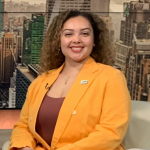 Briana Carbajal (they/she) was born and raised in South Central Los Angeles. In 2019, Briana was an active Youth Climate Councilmember working with the City of Los Angeles. Their purpose was to inform Mayor Garcetti of the concerns raised by young voices in their neighborhood and propose solutions to work toward resolving them. Briana holds a dual BA degree in Political Science and Geography/Environmental Studies from the University of California, Los Angeles.
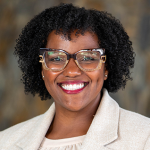 Michelle Lewis is a community engagement and outreach associate for the Heat Policy Innovation Hub. Before her work at the Nicholas Institute, she served as the Agent of Thriving for Climate and Environmental Justice at the Ormond Center at Duke Divinity School. She earned her doctoral degree from Emory University’s Candler School of Theology. Lewis holds a Master of Environmental Science from Yale School of the Environment and a Master of Divinity from Yale Divinity School, along with a certificate from Yale Institute of Sacred Music and the Arts. She studied film at Regent University, where she completed a Master of Arts in communication. Lewis has worked in both rural and urban contexts and has led community-based participatory research. Her research has focused on how faith communities connect with the environment through their existing cosmologies, the effects of green space on patient outcomes, and the environmental theologies of Black coastal communities.
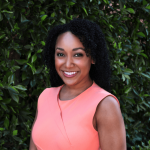 Lauren Graham is a strategic ecosystems thinker and cross-pollinator who creates impact in the areas of climate and democracy by transforming how mission-driven organizations are designed, led, and evolved. She holds Master’s degrees from University of Pennsylvania in Nonprofit Leadership, Yale in Environmental Management, and Stanford University in Sociology and teaches Strategic Management and Leadership for Nonprofits among other courses at the University of Pennsylvania School of Social Policy & Practice. Lauren is founder of Velvet Frame, a social impact strategy and communications consultancy for mission-driven organizations, and has extensive nonprofit experience including roles as Chief of Staff for Hunger Free America and Director of Innovation for Climate Access.
 Robert Macnee, Ph.D. is Deputy Director of Resilience Services at Climate Resilience Consulting, where he helps governments, institutions, and communities reduce climate risk in equitable and practical ways. He holds a Ph.D. in Environmental Management focused on climate change impacts on health and communities, and brings over a decade of experience spanning economic development, resilience planning, and implementation.
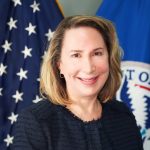 Samantha Medlock is President of Climate Risk Advisors, helping communities and organizations advance equity, sustainability, and resilience. Her career began chasing floods as a local official in Texas Flash Flood Alley—a hands-on experience that still shapes her approach to climate and disaster risk management.
 Jim is a multilingual world traveler. Based in Bavaria during the 1970s, Jim spent most of this period in India, Afghanistan and Nepal, where he founded and operated a charitable medical clinic serving Tibetan Refugees. He settled in Oregon in 1983 on a forested ranch in the Umpqua National Forest.
 Dr. Micah Hahn is an Associate Professor of Environmental Health in the Institute for Circumpolar Health Studies at the University of Alaska-Anchorage. She received her joint PhD in Epidemiology / Environment and Resources from the University of Wisconsin-Madison and her MPH in Global Environmental Health from Emory University. Subsequently, she was a postdoctoral fellow for the CDC Climate and Health Program, and in this position worked collaboratively with the CDC Division of Vector-borne Diseases and the National Center for Atmospheric Research. Her research focuses on understanding the health impacts of climate change and working with communities to develop locally-relevant adaptation and resilience-building strategies. Dr. Hahn is also on the Management Team of the Alaska Climate Adaptation Science Center.
 Michael is a former Founding Principal of Resilient Cities Catalyst, a global non-profit helping cities and their partners tackle their toughest challenges. He is currently the Executive Director of Climate Resilience Academy at the University of Miami.
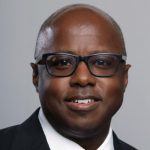 Dr. Quintus Jett is a consultant, educator, and strategist for public causes. He has a doctorate in Organizations & Management from Stanford University, and a two-decade faculty career which spans schools, departments, and programs of business, engineering, liberal studies, divinity, and public and nonprofit management. Following Hurricane Katrina in 2005, Dr. Jett launched a volunteer project in New Orleans, which enlisted residents, students from over a dozen colleges and universities, and hundreds of others to field map the city’s Gentilly district, Lower Ninth Ward, and New Orleans East. Dr. Jett is an innovator in higher education, bridging the divide between academic research and the other priorities of the modern university, including student access and diversity, community engagement, and providing foundations for life-long learning in today’s rapidly changing world.
 Scott is Monfort Professor of Atmospheric Science at Colorado State University. He has written about 100 publications in the peer-reviewed climate literature, is a former editor of the Journal of Climate, and served for five years as founding Science Chair of the North American Carbon Program.
 Linda has many years of experience in disaster preparedness and resilience. She has been an elected official on the Linn County Iowa Board of Supervisors, Chair of the Metropolitan Planning Organization, the East Central Iowa Council of Governments, the statewide Mental Health Developmental Disability and the Linn County Board of Health. Langston is a former president of the National Association of Counties (2013-2014).
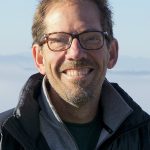 Ken works with families and organizations as a mediator, organizational consultant, trainer and facilitator. Along with his passion for helping people prepare for and reduce climate change, Ken also volunteers as a mediator through Mediation Works and is passionate about supporting youth through mentoring with Boys to Men of Southern Oregon.
 Matthew is a retired high school teacher who was once honored as Oregon High School Social Studies Teacher of the Year. Before his teaching career he was in the restaurant business in Portland. He is also a lawyer who has been a member of the Oregon State Bar Association since 1980.
 Andrea is the Resilience Policy Advisor for the North Carolina Office of Recovery and Resiliency. She works across state agencies and with local governments to increase the state’s resilience to the impacts of climate change.