
Scientists speak out for Tongass roadless and old growth protections
For Immediate Release January 26, 2018
Contact: Dr. Dominick A. DellaSala, Geos Institute, (541) 482-4459 x 302 or (541) 621-7223 cell, dominick@geosinstitute.org
ASHLAND, OR – 220 leading scientists, researchers, and university professors spoke out in unison today in support of protecting the Tongass National Forest from rollbacks to roadless area and old-growth forest protections proposed by Alaska Sen. Lisa Murkowski (attached letter).
Dr. Dominick A. DellaSala, Chief Scientist of the Ashland-based Geos Institute, author of “temperate and boreal rainforests of the world: ecology and conservation,” and co-author of the scientist letter, said “The Tongass is the crown jewel of the national forest system and one of the world’s last remaining intact temperate rainforests. Alaska is on the front lines of climate impacts from melting glaciers, rapid thawing of permafrost, and rising temperatures. It makes no sense to open up old growth logging wounds when the Forest Service can be transitioning to more climate friendly young forest logging.”
DellaSala added, When old-growth rainforests are cut down up to two-thirds of their stored carbon is released to the atmosphere as a global warming pollutant. Old-growth logging on the Tongass is estimated to release the carbon dioxide equivalent of adding over 2 million vehicles per year to Alaska’s climate impacts (See: https://geosinstitute.org/wp-content/uploads/2016/01/tongass-report-emissions-2016-01.pdf).
The Tongass is the only national forest still clearcutting old-growth forests. Most have moved on to logging smaller less controversial trees.
Old growth, new fight: Tongass timber slows wildfire bill
By Marc Heller, E&E News reporter
Originally Published: Friday, January 26, 2018, E&E Newswire
The old-growth timber industry’s fight for survival in Alaska may be complicating congressional efforts to reach a long-term solution to costly wildfires.
Senate aides and lobbyists told E&E News that Sen. Lisa Murkowski’s focus on protecting southeast Alaska’s shrinking old-growth timber business is one potential wrinkle as lawmakers balance environmental and forest industry interests in search of a compromise, possibly in a spending bill covering the rest of this fiscal year.
As the Republican chairwoman of the Energy and Natural Resources Committee, and often a swing vote on issues in the Senate, Alaska’s senior senator is a key player in the wildfire and forest management debate. She told E&E News on Wednesday she’s still working toward including a wildfire measure in a broader bill but didn’t elaborate.
Cumulative Impacts Research Consortium Panel Presentation: Wildfire preparedness and Cumulative Impacts
 Watch a recording from January 19, 2018 from the University of Northern British Columbia “Cumulative Impacts Research Consortium Panel Presentation: Wildfire preparedness and Cumulative Impacts“.
Presenters are: Dominick DellaSala, Madeline Maley, Raina Fumerton, and Sonja Leverkus.
Guest Opinion: All the king’s horses can’t make wildfires go away
Published in the Medford Mail Tribune on December 31, 2017
By Dominic DiPaolo, Dominick A. DellaSala and Dennis Odion
State Sen. Alan DeBoer recently convened town hall meetings in Medford and Ashland on last summer’s wildfires and actions under consideration at the state Legislature. What we hoped would be an informed discussion became a venue for DeBoer to promote unfounded theories, point fingers and dismiss real dialogue. As ecologists who have studied forest ecosystems for decades, we realize that wildfire is alarming, smoke unhealthy, and everyone is looking for solutions. However, we take issue with DeBoer’s unhelpful ideas and offer caution about using forest thinning as a panacea to all issues surrounding wildfires.
DeBoer started both meetings by giving the floor to William Simpson, who proposes introducing feral horses to control flammable vegetation in the Siskiyou Mountains. In doing so, DeBoer privileged a position that is not only unscientific and unworkable, but already proven ineffective. In the 1910s, the Forest Service studied livestock use of shrub-dominated areas in the Siskiyous and found that livestock were unsuccessful at converting large swaths of shrubs to grass. Simpson’s proposal is unlikely to pass the federal permitting process and valuable time should not be wasted on it. Yet, Congressman Greg Walden and Curry County Commissioner Court Boice have endorsed it.
Guest Opinion: All the king’s horses can’t make wildfires go away
Published in the Medford Mail Tribune on December 31, 2017
By Dominic DiPaolo, Dominick A. DellaSala and Dennis Odion
State Sen. Alan DeBoer recently convened town hall meetings in Medford and Ashland on last summer’s wildfires and actions under consideration at the state Legislature. What we hoped would be an informed discussion became a venue for DeBoer to promote unfounded theories, point fingers and dismiss real dialogue. As ecologists who have studied forest ecosystems for decades, we realize that wildfire is alarming, smoke unhealthy, and everyone is looking for solutions. However, we take issue with DeBoer’s unhelpful ideas and offer caution about using forest thinning as a panacea to all issues surrounding wildfires.
DeBoer started both meetings by giving the floor to William Simpson, who proposes introducing feral horses to control flammable vegetation in the Siskiyou Mountains. In doing so, DeBoer privileged a position that is not only unscientific and unworkable, but already proven ineffective. In the 1910s, the Forest Service studied livestock use of shrub-dominated areas in the Siskiyous and found that livestock were unsuccessful at converting large swaths of shrubs to grass. Simpson’s proposal is unlikely to pass the federal permitting process and valuable time should not be wasted on it. Yet, Congressman Greg Walden and Curry County Commissioner Court Boice have endorsed it.
Summary of Oregon’s forest carbon findings
Geos Institute partnered with the Center for Sustainable Economy in 2015 on a ground-breaking report that identified Oregon’s forestry practices as among the top global warming polluters in the state. That report triggered the formation of a task force on carbon appointed by Governor Kate Brown to which our Chief Scientist sits on. The task force recently released its forest carbon findings and Geos Institute sent a summary to Oregon state legislatures. Read it here.
Murkowski targets roadless rule in spending talks
Marc Heller, E&E News reporter
Originally Published by E&E on Wednesday, December 6, 2017
A fight over road construction in the Tongass National Forest may flare up in spending negotiations.
Sen. Lisa Murkowski (R-Alaska) sponsored a provision in draft Senate appropriations legislation for Interior and related agencies that would exempt Alaska from federal rules that restrict building of roads in national forests.
Murkowski’s move against the “roadless rule” marks another line in a battle that’s been playing out, mainly in federal courts, since the Clinton administration handed down the regulations in 2001.
A U.S. District Court for the District of Columbia judge in September dismissed a lawsuit by Alaska seeking to overturn the rule.
Murkowski, chairwoman of the Interior and Environment Appropriations Subcommittee, is also pushing a provision that would slow the Forest Service’s transition from old-growth logging to young-growth logging in Tongass and Chugach national forests.
The thinning debate: Does logging help or hurt fire mitigation?
Politicians say thinning forests will help prevent ‘catastrophic’ fires. But ecologists say this season wasn’t the worst, and logging won’t stop it from happening again.
According to peer-reviewed studies on the overall likelihood of a thinned area of forest being hit with fire and on historical fire trends, the argument that thinning is the best way to address future fire seasons like the one we just had is profoundly flawed.
For one, proposals to remove trees, or “fuels,” are based on the idea that fires burn more intensely in unlogged forests, making them more severe and quicker to spread.
But a recently published examination of the intensity of 1,500 forest fires over the past 40 years in 11 Western states found the opposite. Its authors, scientists at the Project Earth Institute, Geos Institute and Earth Island Institute, found fires burned most intensely in previously logged areas. In contrast, in wilderness, parks and roadless ares, the fires burned in mosaic patterns – which maintain healthy, resilient forests.
Both sides of the thinning debate frequently point to one-off incidents to show how thinning either is or is not effective.
“You have to be careful about anecdotal information,” warned Dominick DellaSala, a renowned fire ecologist and chief scientist at the Geos Institute. “Wind speed can change, humidity levels can change, and if you don’t account for all those factors, you could conclude either way. Either the thinning helped, or the thinning didn’t help, depending on what was going on with the fire climate.”
Read the full article at streetrootsnews.org
After the Smoke Clears – PDX Fire Forum

Geos Institute Chief Scientist speaks to packed house in Portland’s Revolution Hall on the ecology of wildfires and attempts by the Trump administration and congressional allies to radically increase logging on public lands.
- Download his presentation “If a tree burns in a forest, does anybody hear?“
- Read the letter urging opposition to Rep. Walden’s post-fire logging bill, delivered the House Natural Resources Committee staff on December 11, 2017
After the Smoke Clears – PDX Fire Forum
Geos Institute Chief Scientist speaks to packed house in Portland’s Revolution Hall on the ecology of wildfires and attempts by the Trump administration and congressional allies to radically increase logging on public lands.
- Download his presentation “If a tree burns in a forest, does anybody hear?“
- Read the letter urging opposition to Rep. Walden’s post-fire logging bill, delivered the House Natural Resources Committee staff on December 11, 2017
 Briana Carbajal (they/she) was born and raised in South Central Los Angeles. In 2019, Briana was an active Youth Climate Councilmember working with the City of Los Angeles. Their purpose was to inform Mayor Garcetti of the concerns raised by young voices in their neighborhood and propose solutions to work toward resolving them. Briana holds a dual BA degree in Political Science and Geography/Environmental Studies from the University of California, Los Angeles.
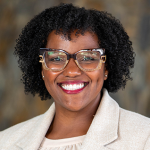 Michelle Lewis is a community engagement and outreach associate for the Heat Policy Innovation Hub. Before her work at the Nicholas Institute, she served as the Agent of Thriving for Climate and Environmental Justice at the Ormond Center at Duke Divinity School. She earned her doctoral degree from Emory University’s Candler School of Theology. Lewis holds a Master of Environmental Science from Yale School of the Environment and a Master of Divinity from Yale Divinity School, along with a certificate from Yale Institute of Sacred Music and the Arts. She studied film at Regent University, where she completed a Master of Arts in communication. Lewis has worked in both rural and urban contexts and has led community-based participatory research. Her research has focused on how faith communities connect with the environment through their existing cosmologies, the effects of green space on patient outcomes, and the environmental theologies of Black coastal communities.
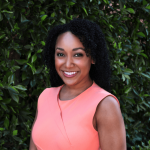 Lauren Graham is a strategic ecosystems thinker and cross-pollinator who creates impact in the areas of climate and democracy by transforming how mission-driven organizations are designed, led, and evolved. She holds Master’s degrees from University of Pennsylvania in Nonprofit Leadership, Yale in Environmental Management, and Stanford University in Sociology and teaches Strategic Management and Leadership for Nonprofits among other courses at the University of Pennsylvania School of Social Policy & Practice. Lauren is founder of Velvet Frame, a social impact strategy and communications consultancy for mission-driven organizations, and has extensive nonprofit experience including roles as Chief of Staff for Hunger Free America and Director of Innovation for Climate Access.
 Robert Macnee, Ph.D. is Deputy Director of Resilience Services at Climate Resilience Consulting, where he helps governments, institutions, and communities reduce climate risk in equitable and practical ways. He holds a Ph.D. in Environmental Management focused on climate change impacts on health and communities, and brings over a decade of experience spanning economic development, resilience planning, and implementation.
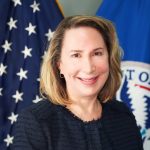 Samantha Medlock is President of Climate Risk Advisors, helping communities and organizations advance equity, sustainability, and resilience. Her career began chasing floods as a local official in Texas Flash Flood Alley—a hands-on experience that still shapes her approach to climate and disaster risk management.
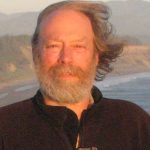 Jim is a multilingual world traveler. Based in Bavaria during the 1970s, Jim spent most of this period in India, Afghanistan and Nepal, where he founded and operated a charitable medical clinic serving Tibetan Refugees. He settled in Oregon in 1983 on a forested ranch in the Umpqua National Forest.
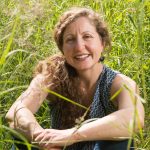 Dr. Micah Hahn is an Associate Professor of Environmental Health in the Institute for Circumpolar Health Studies at the University of Alaska-Anchorage. She received her joint PhD in Epidemiology / Environment and Resources from the University of Wisconsin-Madison and her MPH in Global Environmental Health from Emory University. Subsequently, she was a postdoctoral fellow for the CDC Climate and Health Program, and in this position worked collaboratively with the CDC Division of Vector-borne Diseases and the National Center for Atmospheric Research. Her research focuses on understanding the health impacts of climate change and working with communities to develop locally-relevant adaptation and resilience-building strategies. Dr. Hahn is also on the Management Team of the Alaska Climate Adaptation Science Center.
 Michael is a former Founding Principal of Resilient Cities Catalyst, a global non-profit helping cities and their partners tackle their toughest challenges. He is currently the Executive Director of Climate Resilience Academy at the University of Miami.
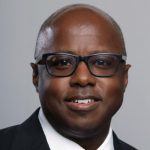 Dr. Quintus Jett is a consultant, educator, and strategist for public causes. He has a doctorate in Organizations & Management from Stanford University, and a two-decade faculty career which spans schools, departments, and programs of business, engineering, liberal studies, divinity, and public and nonprofit management. Following Hurricane Katrina in 2005, Dr. Jett launched a volunteer project in New Orleans, which enlisted residents, students from over a dozen colleges and universities, and hundreds of others to field map the city’s Gentilly district, Lower Ninth Ward, and New Orleans East. Dr. Jett is an innovator in higher education, bridging the divide between academic research and the other priorities of the modern university, including student access and diversity, community engagement, and providing foundations for life-long learning in today’s rapidly changing world.
 Scott is Monfort Professor of Atmospheric Science at Colorado State University. He has written about 100 publications in the peer-reviewed climate literature, is a former editor of the Journal of Climate, and served for five years as founding Science Chair of the North American Carbon Program.
 Linda has many years of experience in disaster preparedness and resilience. She has been an elected official on the Linn County Iowa Board of Supervisors, Chair of the Metropolitan Planning Organization, the East Central Iowa Council of Governments, the statewide Mental Health Developmental Disability and the Linn County Board of Health. Langston is a former president of the National Association of Counties (2013-2014).
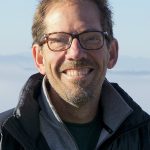 Ken works with families and organizations as a mediator, organizational consultant, trainer and facilitator. Along with his passion for helping people prepare for and reduce climate change, Ken also volunteers as a mediator through Mediation Works and is passionate about supporting youth through mentoring with Boys to Men of Southern Oregon.
 Matthew is a retired high school teacher who was once honored as Oregon High School Social Studies Teacher of the Year. Before his teaching career he was in the restaurant business in Portland. He is also a lawyer who has been a member of the Oregon State Bar Association since 1980.
 Andrea is the Resilience Policy Advisor for the North Carolina Office of Recovery and Resiliency. She works across state agencies and with local governments to increase the state’s resilience to the impacts of climate change.