
Comments on the Chetco Bar post-fire logging environmental assessment
Geos Institute and NGO comments on the Chetco Bar post-fire logging environmental assessment. The Chetco fire took place in an area of extraordinary botanical diversity, spectacular wild rivers, and a potential climate sanctuary along the Oregon-California border that benefited from the fire but will be impacted by extensive post-fire logging by the Forest Service.
Comments on post-fire logging
Geos Institute provided extensive science comments submitted to the Klamath National Forest on behalf of 15 conservation organizations concerned about massive post-fire logging in spotted owl habitat and adjacent to roadless areas in the world-class Klamath-Siskiyou ecoregion.
Scientists’ warning to humanity has Earth Day meaning
By Dominick A. DellaSala, posted April 22, 2018 at Medford Mail Tribune
In 1992, I was one of 1,700 scientists, including Nobel laureates, who issued the “Scientists’ Warning to Humanity” because of damage humans were inflicting on the Earth. This March, I joined 20,000 scientists in sounding a second alarm as humanity is on an even faster collision with Earth’s life-giving systems.
This is not Chicken Little or “fake news.” Scientists read the planet’s life signs like the warning lights on a car’s dashboard. We use satellites, global weather stations and polar ice measurements to document how humans are altering the global climate and destroying the planet’s ecosystems in unprecedented ways. In the years since the first warning, Earth’s dashboard lights are signaling a pending system-wide failure that threatens life on Earth on a scale soon to rival the epic demise of the dinosaurs.
Consider these alarming trends:
Half of all species on Earth could be extinguished by mid- to late century, mainly from habitat destruction and global warming as more and more people consume finite natural resources and our ecological footprint reaches dangerous levels. For the Rogue Valley, summer temperatures will heat up by 7 to 15 degrees Fahrenheit. Coastal towns will experience unprecedented sea-level rise from melting glaciers. Health ailments such as Lyme disease, asthma and heat exhaustion, exacerbated by climate change, will increasingly hurt children, the elderly and the economically disadvantaged. Category 5 hurricanes will become the new norm for east coast residents and Alaska Native villages will be displaced by floods and permafrost melting. It’s hard to put a smiley face on Earth Day celebrations after forecasting such alarming trends. But I am an eternal optimist and a parent, so I have to believe there is still time to act for a better future.
Our forests can make Oregon the first carbon-neutral state
By Dominick A. DellaSala, Posted April 21, 2018 at The Oregonian
As a forest ecologist, I have argued for decades that public forests need to be protected as our irreplaceable natural legacy. New studies from Oregon State University and Oregon’s Global Warming Commission Task Force on Forest Carbon show that there are critically important climate benefits to be added that could make Oregon the nation’s first carbon-neutral state if forestry practices are improved.
It turns out that Oregon’s forests are nature’s cooling towers. Through the process of photosynthesis, forests absorb atmospheric carbon and use it to make their food (sugar), storing excess carbon in tree trunks, plants and soils for centuries. When forests are cut down, most of this stored carbon is released to the atmosphere as a global warming pollutant from decomposing logging slash and the transport and manufacture of wood products. Forest loss globally accounts for some 17 percent of these pollutants. Clearcutting, mainly on private lands, and the sell-off of 320,000 acres of family-owned forests since 1974, is limiting the capacity of forests in Oregon to provide climate savings.
Geos Institute board member Catherine Mater on how the Tongass can transition rapidly out of old-growth logging.
Read the April 11, 2018 article “Alaska’s transition away from old growth logging just got a big step closer” online at JuneauEmpire.com
Everything you wanted to know about wildland fires in forests but were afraid to ask
 Geos Institute releases a new report, “Everything you wanted to know about wildland fires in forests but were afraid to ask: lessons learned, ways forward“, summarizing latest wildfire science and calls on decision makers to develop science-based policies that protect communities from fire and allow wildfires to perform their ecological functions safely in the backcountry.
Media Coverage
- Phys.org highlighted this report on April 9, 2018
Wildfire funding fix confounds omnibus talks
Marc Heller and Geof Koss, E&E News reporters
Published: Wednesday, March 21, 2018
A long-term solution to address the climbing cost of wildfires continued to stymie lawmakers yesterday, despite a near-agreement to loosen some environmental restrictions on timber harvesting.
Lawmakers, congressional aides and industry insiders tracking the issue said top lawmakers were on the cusp of a deal early this week, only to see it dashed for a reason that some hadn’t seen as contentious: how to set up disaster funding so the Forest Service can cover the cost without hurting other programs.
The basic outline of a deal, they said, involved expanding certain categorical exclusions from the National Environmental Policy Act. The exceptions allowed for forest thinning on several thousand acres and expanding “good neighbor” authority that allows the Forest Service to work with states on forest management projects.
Negotiators aim to settle policy fights, post omnibus tonight
George Cahlink and Geof Koss, E&E News reporters
Published: Tuesday, March 20, 2018
Congressional leaders hope to have massive omnibus spending legislation on the House floor by Thursday, assuming they can resolve a few dozen outstanding policy fights.
House Speaker Paul Ryan (R-Wis.) said this morning he’s “hoping” to file the $1.3 trillion spending bill late tonight, paving the way for the House Rules Committee to consider the bill tomorrow and then floor action Thursday.
He said he does not expect to need to pass an interim stopgap spending bill to avert a federal shutdown when current funding runs out Friday.
247 Scientists ask Congress to pass a clean Omnibus appropriations bill free of anti-environmental riders
Open Letter to Congress from Scientists Concerned about Proposals to “Fix” Funding for Wildland Fire Management
Read the final letter delivered to Congress on March 20, 2018
Related articles
- Wildfire funding fix confounds omnibus talks (E&E News)
- Negotiators aim to settle policy fights, post omnibus tonight (E&E News)
Over 200 scientists sign letter to Congress about proposals to “fix” funding for Wildland Fire Management
Congress has included 90 anti-environmental riders on the Omnibus Appropriations bill that it is rushing to pass next week. Measures to address runaway wildfire suppression spending, for instance, include destructive riders to eliminate protections for old-growth forests and roadless areas in Alaska, expand Categorical Exclusions (no environmental review) on logging projects up to 6,000 acres, and weaken protections for endangered species.
I am excited to report that over 200 scientists have signed on so far. The letter will be delivered to Capitol Hill staffers on Friday morning DC time; however, we will continue to accept signatories through Tuesday of next week as we update the final count and resubmit the letter later.
 Briana Carbajal (they/she) was born and raised in South Central Los Angeles. In 2019, Briana was an active Youth Climate Councilmember working with the City of Los Angeles. Their purpose was to inform Mayor Garcetti of the concerns raised by young voices in their neighborhood and propose solutions to work toward resolving them. Briana holds a dual BA degree in Political Science and Geography/Environmental Studies from the University of California, Los Angeles.
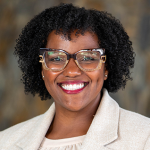 Michelle Lewis is a community engagement and outreach associate for the Heat Policy Innovation Hub. Before her work at the Nicholas Institute, she served as the Agent of Thriving for Climate and Environmental Justice at the Ormond Center at Duke Divinity School. She earned her doctoral degree from Emory University’s Candler School of Theology. Lewis holds a Master of Environmental Science from Yale School of the Environment and a Master of Divinity from Yale Divinity School, along with a certificate from Yale Institute of Sacred Music and the Arts. She studied film at Regent University, where she completed a Master of Arts in communication. Lewis has worked in both rural and urban contexts and has led community-based participatory research. Her research has focused on how faith communities connect with the environment through their existing cosmologies, the effects of green space on patient outcomes, and the environmental theologies of Black coastal communities.
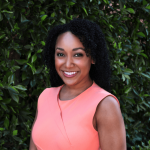 Lauren Graham is a strategic ecosystems thinker and cross-pollinator who creates impact in the areas of climate and democracy by transforming how mission-driven organizations are designed, led, and evolved. She holds Master’s degrees from University of Pennsylvania in Nonprofit Leadership, Yale in Environmental Management, and Stanford University in Sociology and teaches Strategic Management and Leadership for Nonprofits among other courses at the University of Pennsylvania School of Social Policy & Practice. Lauren is founder of Velvet Frame, a social impact strategy and communications consultancy for mission-driven organizations, and has extensive nonprofit experience including roles as Chief of Staff for Hunger Free America and Director of Innovation for Climate Access.
 Robert Macnee, Ph.D. is Deputy Director of Resilience Services at Climate Resilience Consulting, where he helps governments, institutions, and communities reduce climate risk in equitable and practical ways. He holds a Ph.D. in Environmental Management focused on climate change impacts on health and communities, and brings over a decade of experience spanning economic development, resilience planning, and implementation.
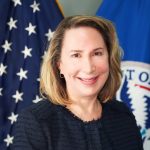 Samantha Medlock is President of Climate Risk Advisors, helping communities and organizations advance equity, sustainability, and resilience. Her career began chasing floods as a local official in Texas Flash Flood Alley—a hands-on experience that still shapes her approach to climate and disaster risk management.
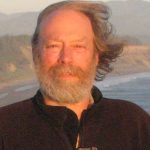 Jim is a multilingual world traveler. Based in Bavaria during the 1970s, Jim spent most of this period in India, Afghanistan and Nepal, where he founded and operated a charitable medical clinic serving Tibetan Refugees. He settled in Oregon in 1983 on a forested ranch in the Umpqua National Forest.
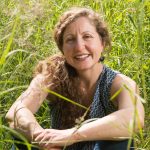 Dr. Micah Hahn is an Associate Professor of Environmental Health in the Institute for Circumpolar Health Studies at the University of Alaska-Anchorage. She received her joint PhD in Epidemiology / Environment and Resources from the University of Wisconsin-Madison and her MPH in Global Environmental Health from Emory University. Subsequently, she was a postdoctoral fellow for the CDC Climate and Health Program, and in this position worked collaboratively with the CDC Division of Vector-borne Diseases and the National Center for Atmospheric Research. Her research focuses on understanding the health impacts of climate change and working with communities to develop locally-relevant adaptation and resilience-building strategies. Dr. Hahn is also on the Management Team of the Alaska Climate Adaptation Science Center.
 Michael is a former Founding Principal of Resilient Cities Catalyst, a global non-profit helping cities and their partners tackle their toughest challenges. He is currently the Executive Director of Climate Resilience Academy at the University of Miami.
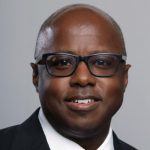 Dr. Quintus Jett is a consultant, educator, and strategist for public causes. He has a doctorate in Organizations & Management from Stanford University, and a two-decade faculty career which spans schools, departments, and programs of business, engineering, liberal studies, divinity, and public and nonprofit management. Following Hurricane Katrina in 2005, Dr. Jett launched a volunteer project in New Orleans, which enlisted residents, students from over a dozen colleges and universities, and hundreds of others to field map the city’s Gentilly district, Lower Ninth Ward, and New Orleans East. Dr. Jett is an innovator in higher education, bridging the divide between academic research and the other priorities of the modern university, including student access and diversity, community engagement, and providing foundations for life-long learning in today’s rapidly changing world.
 Scott is Monfort Professor of Atmospheric Science at Colorado State University. He has written about 100 publications in the peer-reviewed climate literature, is a former editor of the Journal of Climate, and served for five years as founding Science Chair of the North American Carbon Program.
 Linda has many years of experience in disaster preparedness and resilience. She has been an elected official on the Linn County Iowa Board of Supervisors, Chair of the Metropolitan Planning Organization, the East Central Iowa Council of Governments, the statewide Mental Health Developmental Disability and the Linn County Board of Health. Langston is a former president of the National Association of Counties (2013-2014).
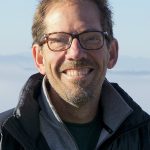 Ken works with families and organizations as a mediator, organizational consultant, trainer and facilitator. Along with his passion for helping people prepare for and reduce climate change, Ken also volunteers as a mediator through Mediation Works and is passionate about supporting youth through mentoring with Boys to Men of Southern Oregon.
 Matthew is a retired high school teacher who was once honored as Oregon High School Social Studies Teacher of the Year. Before his teaching career he was in the restaurant business in Portland. He is also a lawyer who has been a member of the Oregon State Bar Association since 1980.
 Andrea is the Resilience Policy Advisor for the North Carolina Office of Recovery and Resiliency. She works across state agencies and with local governments to increase the state’s resilience to the impacts of climate change.