
Report Slams Colorado Roadless Rule
KUNC Community Radio for Northern Colorado
Fri July 8, 2011
By Kirk Siegler
Conservationists are raising concerns that a proposed “roadless rule” for managing rugged National Forest lands could threaten drinking water supplies in Colorado. A report released this morning criticizes the Obama Administration’s plan for Colorado’s roadless lands that offers some exceptions for coal mine and ski resort expansions. Read more…
Editorial: Let’s leave science to the scientists
The Daily Courier (Arizona)
Published: May 16, 2011
Come on, seriously? Political division is now threatening to run aground scientific analysis of our national forests? It appears so.
President Obama was the target for critics on Monday who say his administration is reversing his pledge to let science dictate new guidelines for protecting clean water and wildlife on nearly 200 million acres of U.S. national forests. Naturally, with 1.25 million acres of Prescott National Forest in our backyard, the debate reaches close to home. Read more…
Top 40 Science Questions From U.S. Conservation Policy Makers
SANTA BARBARA, Calif., April 5 (AScribe Newswire) — A wide-ranging group of experts has published a set of 40 key environmental questions to help align scientific research agendas with the needs of natural resource decision makers.
The cover story of the April issue of BioScience, written by 30 co-authors, contains the results of a process in which 35 participants solicited and synthesized questions about science relevant to natural resource management. Questions were submitted by 375 individuals who are involved with natural resource policy, management, or study. Read more…
National Forest Planning Rules: Many Good Concepts, But Vulnerable to Flawed Execution and Weakened Wildlife Safeguards
CONTACT:
Randi Spivak, Geos Institute, 310-779-4894 (cell)
Dominick DellaSala, Geos Institute, 541‐482‐4459; 541‐621-7223
 Click here to download this press release.
Washington D.C. and Ashland, OR – The USDA Forest Service unveiled its proposed National Forest Planning Rule yesterday that is intended to establish a new national framework for land management plans governing 193 million acres of some of the most ecologically valuable lands and waters in the nation. The proposed planning rule provides guidance on what the agency intends to emphasize on the National Forest System; however, it leaves this mostly open to the discretion of local agency officials.
Stick with federal rule for Colorado’s roadless areas
Colorado Roadless Rule: It’s Scientists Versus Politicians On State Exemption Issue
Scientists write to Obama to oppose Colorado roadless-forest proposal
A group of 520 scientists — including several from Colorado — have written to President Barack Obama in opposition to Colorado’s plan to manage some 4.2 million acres of roadless national forest land in the state and in support of existing — and, in their view, tougher — federal roadless rules that have been the subject of a long-running court battle. Read more…
Desert Southwest
Scientific publications authored or edited by Geos Institute staff.
Roads and Roadless Areas
Scientific publications authored or edited by Geos Institute staff.
Forest Management
Scientific publications authored or edited by Geos Institute staff.
 Robert Macnee, Ph.D. is Deputy Director of Resilience Services at Climate Resilience Consulting, where he helps governments, institutions, and communities reduce climate risk in equitable and practical ways. He holds a Ph.D. in Environmental Management focused on climate change impacts on health and communities, and brings over a decade of experience spanning economic development, resilience planning, and implementation.
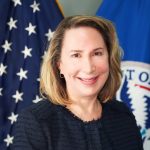 Samantha Medlock is President of Climate Risk Advisors, helping communities and organizations advance equity, sustainability, and resilience. Her career began chasing floods as a local official in Texas Flash Flood Alley—a hands-on experience that still shapes her approach to climate and disaster risk management.
 Arsum is the Senior Adaptation and Coastal Resilience Specialist for the National Wildlife Federation’s Southcentral Region. In this role, she advances climate adaptation efforts, with a focus on nature-based approaches to address the impacts of climate change and extreme events across the Gulf region. She has authored and co-authored numerous publications on climate impact assessments and adaptation solutions. Additionally, she regularly participates in state-based coastal resilience and hazard mitigation planning across the Gulf, collaborating with regional and local stakeholders.
 Jim is a multilingual world traveler. Based in Bavaria during the 1970s, Jim spent most of this period in India, Afghanistan and Nepal, where he founded and operated a charitable medical clinic serving Tibetan Refugees. He settled in Oregon in 1983 on a forested ranch in the Umpqua National Forest.
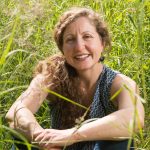 Dr. Micah Hahn is an Associate Professor of Environmental Health in the Institute for Circumpolar Health Studies at the University of Alaska-Anchorage. She received her joint PhD in Epidemiology / Environment and Resources from the University of Wisconsin-Madison and her MPH in Global Environmental Health from Emory University. Subsequently, she was a postdoctoral fellow for the CDC Climate and Health Program, and in this position worked collaboratively with the CDC Division of Vector-borne Diseases and the National Center for Atmospheric Research. Her research focuses on understanding the health impacts of climate change and working with communities to develop locally-relevant adaptation and resilience-building strategies. Dr. Hahn is also on the Management Team of the Alaska Climate Adaptation Science Center.
 Michael is a former Founding Principal of Resilient Cities Catalyst, a global non-profit helping cities and their partners tackle their toughest challenges. He is currently the Executive Director of Climate Resilience Academy at the University of Miami.
 Dr. Quintus Jett is a consultant, educator, and strategist for public causes. He has a doctorate in Organizations & Management from Stanford University, and a two-decade faculty career which spans schools, departments, and programs of business, engineering, liberal studies, divinity, and public and nonprofit management. Following Hurricane Katrina in 2005, Dr. Jett launched a volunteer project in New Orleans, which enlisted residents, students from over a dozen colleges and universities, and hundreds of others to field map the city’s Gentilly district, Lower Ninth Ward, and New Orleans East. Dr. Jett is an innovator in higher education, bridging the divide between academic research and the other priorities of the modern university, including student access and diversity, community engagement, and providing foundations for life-long learning in today’s rapidly changing world.
 Scott is Monfort Professor of Atmospheric Science at Colorado State University. He has written about 100 publications in the peer-reviewed climate literature, is a former editor of the Journal of Climate, and served for five years as founding Science Chair of the North American Carbon Program.
 Linda has many years of experience in disaster preparedness and resilience. She has been an elected official on the Linn County Iowa Board of Supervisors, Chair of the Metropolitan Planning Organization, the East Central Iowa Council of Governments, the statewide Mental Health Developmental Disability and the Linn County Board of Health. Langston is a former president of the National Association of Counties (2013-2014).
 Ken works with families and organizations as a mediator, organizational consultant, trainer and facilitator. Along with his passion for helping people prepare for and reduce climate change, Ken also volunteers as a mediator through Mediation Works and is passionate about supporting youth through mentoring with Boys to Men of Southern Oregon.
 Matthew is a retired high school teacher who was once honored as Oregon High School Social Studies Teacher of the Year. Before his teaching career he was in the restaurant business in Portland. He is also a lawyer who has been a member of the Oregon State Bar Association since 1980.
 Andrea is the Resilience Policy Advisor for the North Carolina Office of Recovery and Resiliency. She works across state agencies and with local governments to increase the state’s resilience to the impacts of climate change.