
Phase out of Tongass old-growth logging
A 2014 study of second growth timber on the Tongass National Forest in southeast Alaska shows that the U.S. Forest Service can transition out of old growth logging in 5 years, and shift timber sales into young growth located in previously logged and roaded areas.
As Dominick DellaSala stated, “We have a once-in-a lifetime opportunity to stop the needless logging of old growth in one of the world’s last relatively intact rainforests, with the added benefit of keeping carbon in the forest and out of the atmosphere.”
Press Releases:
Managing Coast Redwoods for Resilience in a Changing Climate
 Reports:
- Managing an Ancient Ecosystem for the Modern World: Coast Redwoods and Climate Change
- Draft Workshop Summary
The North Pacific Landscape Conservation Cooperative, California Landscape Cooperative, Geos Institute, Society for Conservation Biology (Humboldt State Chapter), and the Environmental Protection Information Center hosted a workshop and field trip entitled: “Managing Coast Redwoods for Resilience in a Changing Climate,” which took place on September 6 and 7, 2013 at Humboldt State University and Redwood National Park.
Temperate and Boreal Rainforests Book
 Temperate and Boreal Rainforests of the World: Ecology and Conservation
Edited by Geos Institute Chief Scientist, Dominick A. DellaSala, Ph.D.
News about the book’s 2012 national award, naming it “best of the best” for academic excellence.
Temperate and boreal rainforests are biogeographically unique. Compared to their tropical counterparts, they are rarer and at least as endangered. Because most temperate and boreal rainforests are marked by the intersection of marine, terrestrial, and freshwater systems, their rich ecotones are among the most productive regions on Earth. Many of them store more carbon per hectare than even tropical rainforests, contain some of the oldest and largest trees on the planet, and provide habitat for scores of rare and unique species including some with affinities dating back to the supercontinent Gondwanaland and when dinosaurs were king.
Rainforests Play a Pivotal Role in Stabilizing the Global Climate
 Given temperate and boreal rainforests are very wet places and trees are relatively long-lived they are highly productive ecosystems that store carbon for centuries in massive trees, dense foliage, and productive soils. In fact, these rainforests are among the world’s champions in storing carbon. In 2007, these cool-weather rainforests contained roughly 196 gigatonnes of carbon – the equivalent of more than six times the total annual carbon dioxide emissions from human activities.
10 Temperate and Boreal Rainforest Regions of the World
In 2011, Geos Institute and partners completed an updated global synthesis of temperate and boreal rainforests of the world, using advanced computer mapping and local partnerships with 32 scientists to identify just ten regions of the world that qualified as temperate and boreal rainforest:

- Pacific Coast of North America (redwoods to Alaska containing the greatest extent of these rainforests globally)
- Inland northwest British Columbia and portions of Idaho and Montana
- Eastern Canada (portions of Nova Scotia, Newfoundland, New Brunswick, eastern Quebec)
- Europe (Norway is boreal; British Isles, Ireland, Swiss Alps, and Bohemia are temperate);
- Western Eurasian Caucasus (Georgia, Turkey, Iran)
- Russian Far East and Inland Southern Siberia (transitional between boreal and temperate)
- Japan and Korea
- Australasia (Australian mainland, Tasmania, New Zealand)
- South Africa (Knysna-Tsitsikamma)
- Chile & Argentina (Valdivia temperate rainforests)
Scientists Applaud Northwest Forest Plan Anniversary While Calling for More Forest Protections
For Immediate Release on September 28, 2015
Contacts: Dr. Dominick A. DellaSala, Geos Institute, Chief Scientist; 541-482-4459 x 302; 541-621-7223 (cell);Dominick@geosinstitute.org; Dr. James Karr 360-681-3163; jrkarr@olypen.com; and Dr. Barry R. Noon 970-491-7905; barry.noon@colostate.edu
Ashland, OR – Two decades of monitoring and recent scientific studies show that the integrity of old-growth forests and the viability of salmon and spotted owl populations would be far worse today if not for the Northwest Forest Plan. Published in a special feature on forests and biodiversity in the open access journal Forests, “Building on two decades of ecosystem management and biodiversity conservation under the Northwest Forest Plan, USA” is the most comprehensive assessment to date of the plan’s effectiveness in halting the long-term decline in the region’s federal forests.
260 Scientists Oppose Post-fire Logging Bills
For immediate release on September 24, 2015
Contacts:
Dominick DellaSala, Ph.D., Chief Scientist, Geos Institute: (cell) 541-621-7223; dominick@geosinstitute.org
Chad Hanson, Ph.D., Research Ecologist, John Muir Project: (cell) 530-273-9290; cthanson1@gmail.com
Ashland, Oregon — Over 260 scientists sent a letter to the U.S. Senate and President Obama urging them to oppose two public lands logging bills, being promoted by the timber industry and their supporters in Congress, which the scientists say would be very destructive to forest ecosystems and wildlife on National Forests and other federal public forestlands. The bills, HR 2647 and S 1691, will not improve forest health or reduce fire risks by promoting widespread logging of ecologically rich post-fire “snag forest” and older forest in mostly remote areas of federal public forestlands.
Instead they would eliminate most environmental analysis, prevent enforcement of environmental laws by the courts, and markedly reduce public participation in forest management decisions on public forests. The role of the timber industry in federal forest management would also unfairly increase under the deceptive guise of promoting decision-making by “collaborative” groups.
Scientists Call on Pres. Obama to Include Tongass in Climate Change Talks
Contact: Dominick DellaSala (541/621-7223; dominick@geosinstitute.org)
Ashland, OR – Alaska’s Tongass rainforest may fair better in a changing climate than more southerly rainforest locales, according to a new study published in an online reference module “Earth Systems and Environmental Sciences” by Elsevier, a world-leading provider of scientific, technical and medical information products and services.
The release of the study coincides with President Barack Obama’s visit with the Arctic Council in Anchorage in advance of the United Nations climate talks. It follows a letter sent in April 2015 to the White House by hundreds of scientists calling on President Obama to speed the transition out of old-growth logging on the Tongass to preserve the rainforest’s unique climate and wildlife benefits.
Global Synthesis of Large Wildland Fires Shows They Are Ecologically Beneficial
For Release on June 29, 2015
Contacts:
| Dominick A. DellaSala, Ph.D., Chief Scientist | Chad Hanson, Ph.D., Ecologist |
| Geos Inst., Ashland, OR | John Muir Project |
| 541-482-4459 x 302; 541-621-7223 (cell) | Big Bear City, CA; 530-273-9290 |
| www.geosinstitute.org | www.johnmuirproject.org |
Ashland, OR – 25 fire scientists from around the world released a new publication “The Ecological Importance of Mixed-Severity Fires: Nature’s Phoenix” published by Elsevier, a world-leading provider of scientific, technical and medical information products and services.
For the first time scientific research has been compiled from fire-adapted regions providing extensive documentation that forests and other plant communities need a variety of different types of fires, including severe fire, to rejuvenate over the long-term. These findings are timely, in light of current proposals by Members of Congress to weaken environmental laws, based on the assumption that current fires are damaging forest ecosystems, and that increased logging is needed to reduce fire effects.
Emerald Waters – Wild Rivers At Risk
The Kalmiopsis region in southwest Oregon is home to wild rivers and rare beauty. It is one of the most biologically diverse landscapes on the West Coast. It is also threatened by industrial scale nickel mines. British investors are looking to turn the wild and pristine wildlands into a wasteland of haul roads, ore smelters, and mountain top removal. Grassroots conservation groups are building support to protect 90,000 acres of the Rough & Ready, Baldface, and Hunter Creek watersheds from mine development. Join the efforts today.
Watch the video depicting this rare and beautiful landscape.
Emerald Waters – Wild Rivers At Risk from KS Wild on Vimeo.
 Briana Carbajal (they/she) was born and raised in South Central Los Angeles. In 2019, Briana was an active Youth Climate Councilmember working with the City of Los Angeles. Their purpose was to inform Mayor Garcetti of the concerns raised by young voices in their neighborhood and propose solutions to work toward resolving them. Briana holds a dual BA degree in Political Science and Geography/Environmental Studies from the University of California, Los Angeles.
 Michelle Lewis is a community engagement and outreach associate for the Heat Policy Innovation Hub. Before her work at the Nicholas Institute, she served as the Agent of Thriving for Climate and Environmental Justice at the Ormond Center at Duke Divinity School. She earned her doctoral degree from Emory University’s Candler School of Theology. Lewis holds a Master of Environmental Science from Yale School of the Environment and a Master of Divinity from Yale Divinity School, along with a certificate from Yale Institute of Sacred Music and the Arts. She studied film at Regent University, where she completed a Master of Arts in communication. Lewis has worked in both rural and urban contexts and has led community-based participatory research. Her research has focused on how faith communities connect with the environment through their existing cosmologies, the effects of green space on patient outcomes, and the environmental theologies of Black coastal communities.
 Lauren Graham is a strategic ecosystems thinker and cross-pollinator who creates impact in the areas of climate and democracy by transforming how mission-driven organizations are designed, led, and evolved. She holds Master’s degrees from University of Pennsylvania in Nonprofit Leadership, Yale in Environmental Management, and Stanford University in Sociology and teaches Strategic Management and Leadership for Nonprofits among other courses at the University of Pennsylvania School of Social Policy & Practice. Lauren is founder of Velvet Frame, a social impact strategy and communications consultancy for mission-driven organizations, and has extensive nonprofit experience including roles as Chief of Staff for Hunger Free America and Director of Innovation for Climate Access.
 Robert Macnee, Ph.D. is Deputy Director of Resilience Services at Climate Resilience Consulting, where he helps governments, institutions, and communities reduce climate risk in equitable and practical ways. He holds a Ph.D. in Environmental Management focused on climate change impacts on health and communities, and brings over a decade of experience spanning economic development, resilience planning, and implementation.
 Samantha Medlock is President of Climate Risk Advisors, helping communities and organizations advance equity, sustainability, and resilience. Her career began chasing floods as a local official in Texas Flash Flood Alley—a hands-on experience that still shapes her approach to climate and disaster risk management.
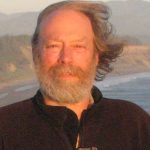 Jim is a multilingual world traveler. Based in Bavaria during the 1970s, Jim spent most of this period in India, Afghanistan and Nepal, where he founded and operated a charitable medical clinic serving Tibetan Refugees. He settled in Oregon in 1983 on a forested ranch in the Umpqua National Forest.
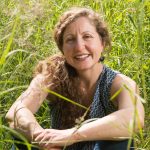 Dr. Micah Hahn is an Associate Professor of Environmental Health in the Institute for Circumpolar Health Studies at the University of Alaska-Anchorage. She received her joint PhD in Epidemiology / Environment and Resources from the University of Wisconsin-Madison and her MPH in Global Environmental Health from Emory University. Subsequently, she was a postdoctoral fellow for the CDC Climate and Health Program, and in this position worked collaboratively with the CDC Division of Vector-borne Diseases and the National Center for Atmospheric Research. Her research focuses on understanding the health impacts of climate change and working with communities to develop locally-relevant adaptation and resilience-building strategies. Dr. Hahn is also on the Management Team of the Alaska Climate Adaptation Science Center.
 Michael is a former Founding Principal of Resilient Cities Catalyst, a global non-profit helping cities and their partners tackle their toughest challenges. He is currently the Executive Director of Climate Resilience Academy at the University of Miami.
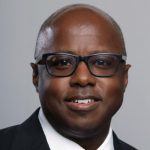 Dr. Quintus Jett is a consultant, educator, and strategist for public causes. He has a doctorate in Organizations & Management from Stanford University, and a two-decade faculty career which spans schools, departments, and programs of business, engineering, liberal studies, divinity, and public and nonprofit management. Following Hurricane Katrina in 2005, Dr. Jett launched a volunteer project in New Orleans, which enlisted residents, students from over a dozen colleges and universities, and hundreds of others to field map the city’s Gentilly district, Lower Ninth Ward, and New Orleans East. Dr. Jett is an innovator in higher education, bridging the divide between academic research and the other priorities of the modern university, including student access and diversity, community engagement, and providing foundations for life-long learning in today’s rapidly changing world.
 Scott is Monfort Professor of Atmospheric Science at Colorado State University. He has written about 100 publications in the peer-reviewed climate literature, is a former editor of the Journal of Climate, and served for five years as founding Science Chair of the North American Carbon Program.
 Linda has many years of experience in disaster preparedness and resilience. She has been an elected official on the Linn County Iowa Board of Supervisors, Chair of the Metropolitan Planning Organization, the East Central Iowa Council of Governments, the statewide Mental Health Developmental Disability and the Linn County Board of Health. Langston is a former president of the National Association of Counties (2013-2014).
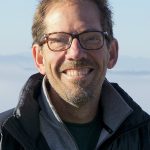 Ken works with families and organizations as a mediator, organizational consultant, trainer and facilitator. Along with his passion for helping people prepare for and reduce climate change, Ken also volunteers as a mediator through Mediation Works and is passionate about supporting youth through mentoring with Boys to Men of Southern Oregon.
 Matthew is a retired high school teacher who was once honored as Oregon High School Social Studies Teacher of the Year. Before his teaching career he was in the restaurant business in Portland. He is also a lawyer who has been a member of the Oregon State Bar Association since 1980.
 Andrea is the Resilience Policy Advisor for the North Carolina Office of Recovery and Resiliency. She works across state agencies and with local governments to increase the state’s resilience to the impacts of climate change.