
Scientists say logging forests won’t reduce wildfire risk
By Annette McGee Rasch for The Mail Tribune, published September 21, 2018
A group of environmental scientists have written a letter to Congress advising that efforts to control wildfires should focus on reducing fire hazards near communities, homes and roads and not on logging larger, fire-resistant trees deeper in the forest.
More than 200 scientists with backgrounds in areas such as wildfire ecology and natural resource management recently sent the letter to Congress urging the removal of pro-logging amendments to the 2018 Farm Bill.
“It’s hard for most policymakers to ignore science from so many experts when they explain why the logging provisions would harm forests and worsen wildfire conditions in the West while doing nothing to protect communities,” said Dominick DellaSala, chief scientist with Geos Institute, which focuses on climate change and other environmental issues.
 Briana Carbajal (they/she) was born and raised in South Central Los Angeles. In 2019, Briana was an active Youth Climate Councilmember working with the City of Los Angeles. Their purpose was to inform Mayor Garcetti of the concerns raised by young voices in their neighborhood and propose solutions to work toward resolving them. Briana holds a dual BA degree in Political Science and Geography/Environmental Studies from the University of California, Los Angeles.
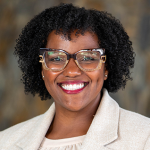 Michelle Lewis is a community engagement and outreach associate for the Heat Policy Innovation Hub. Before her work at the Nicholas Institute, she served as the Agent of Thriving for Climate and Environmental Justice at the Ormond Center at Duke Divinity School. She earned her doctoral degree from Emory University’s Candler School of Theology. Lewis holds a Master of Environmental Science from Yale School of the Environment and a Master of Divinity from Yale Divinity School, along with a certificate from Yale Institute of Sacred Music and the Arts. She studied film at Regent University, where she completed a Master of Arts in communication. Lewis has worked in both rural and urban contexts and has led community-based participatory research. Her research has focused on how faith communities connect with the environment through their existing cosmologies, the effects of green space on patient outcomes, and the environmental theologies of Black coastal communities.
 Lauren Graham is a strategic ecosystems thinker and cross-pollinator who creates impact in the areas of climate and democracy by transforming how mission-driven organizations are designed, led, and evolved. She holds Master’s degrees from University of Pennsylvania in Nonprofit Leadership, Yale in Environmental Management, and Stanford University in Sociology and teaches Strategic Management and Leadership for Nonprofits among other courses at the University of Pennsylvania School of Social Policy & Practice. Lauren is founder of Velvet Frame, a social impact strategy and communications consultancy for mission-driven organizations, and has extensive nonprofit experience including roles as Chief of Staff for Hunger Free America and Director of Innovation for Climate Access.
 Robert Macnee, Ph.D. is Deputy Director of Resilience Services at Climate Resilience Consulting, where he helps governments, institutions, and communities reduce climate risk in equitable and practical ways. He holds a Ph.D. in Environmental Management focused on climate change impacts on health and communities, and brings over a decade of experience spanning economic development, resilience planning, and implementation.
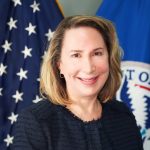 Samantha Medlock is President of Climate Risk Advisors, helping communities and organizations advance equity, sustainability, and resilience. Her career began chasing floods as a local official in Texas Flash Flood Alley—a hands-on experience that still shapes her approach to climate and disaster risk management.
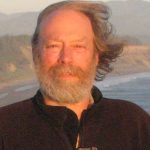 Jim is a multilingual world traveler. Based in Bavaria during the 1970s, Jim spent most of this period in India, Afghanistan and Nepal, where he founded and operated a charitable medical clinic serving Tibetan Refugees. He settled in Oregon in 1983 on a forested ranch in the Umpqua National Forest.
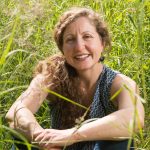 Dr. Micah Hahn is an Associate Professor of Environmental Health in the Institute for Circumpolar Health Studies at the University of Alaska-Anchorage. She received her joint PhD in Epidemiology / Environment and Resources from the University of Wisconsin-Madison and her MPH in Global Environmental Health from Emory University. Subsequently, she was a postdoctoral fellow for the CDC Climate and Health Program, and in this position worked collaboratively with the CDC Division of Vector-borne Diseases and the National Center for Atmospheric Research. Her research focuses on understanding the health impacts of climate change and working with communities to develop locally-relevant adaptation and resilience-building strategies. Dr. Hahn is also on the Management Team of the Alaska Climate Adaptation Science Center.
 Michael is a former Founding Principal of Resilient Cities Catalyst, a global non-profit helping cities and their partners tackle their toughest challenges. He is currently the Executive Director of Climate Resilience Academy at the University of Miami.
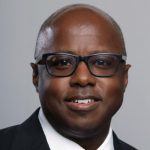 Dr. Quintus Jett is a consultant, educator, and strategist for public causes. He has a doctorate in Organizations & Management from Stanford University, and a two-decade faculty career which spans schools, departments, and programs of business, engineering, liberal studies, divinity, and public and nonprofit management. Following Hurricane Katrina in 2005, Dr. Jett launched a volunteer project in New Orleans, which enlisted residents, students from over a dozen colleges and universities, and hundreds of others to field map the city’s Gentilly district, Lower Ninth Ward, and New Orleans East. Dr. Jett is an innovator in higher education, bridging the divide between academic research and the other priorities of the modern university, including student access and diversity, community engagement, and providing foundations for life-long learning in today’s rapidly changing world.
 Scott is Monfort Professor of Atmospheric Science at Colorado State University. He has written about 100 publications in the peer-reviewed climate literature, is a former editor of the Journal of Climate, and served for five years as founding Science Chair of the North American Carbon Program.
 Linda has many years of experience in disaster preparedness and resilience. She has been an elected official on the Linn County Iowa Board of Supervisors, Chair of the Metropolitan Planning Organization, the East Central Iowa Council of Governments, the statewide Mental Health Developmental Disability and the Linn County Board of Health. Langston is a former president of the National Association of Counties (2013-2014).
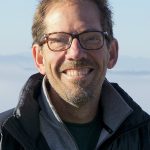 Ken works with families and organizations as a mediator, organizational consultant, trainer and facilitator. Along with his passion for helping people prepare for and reduce climate change, Ken also volunteers as a mediator through Mediation Works and is passionate about supporting youth through mentoring with Boys to Men of Southern Oregon.
 Matthew is a retired high school teacher who was once honored as Oregon High School Social Studies Teacher of the Year. Before his teaching career he was in the restaurant business in Portland. He is also a lawyer who has been a member of the Oregon State Bar Association since 1980.
 Andrea is the Resilience Policy Advisor for the North Carolina Office of Recovery and Resiliency. She works across state agencies and with local governments to increase the state’s resilience to the impacts of climate change.