
Does Logging Forests Lower Fire Risks and is Woody Biomass Clean, Renewable Energy?
The answers to these questions are not so clear, as explained by Dominick DellaSala, Ph.D. of Geos Institute in a webinar on February 18, 2016.

The answers to these questions are not so clear, as explained by Dominick DellaSala, Ph.D. of Geos Institute in a webinar on February 18, 2016.
By Dominick A. DellaSala and Jim Furnish, for the Juneau Empire
Change is not for the risk averse. It is scary stuff that takes us out of our comfort zones and into the unknown.
It’s also how we adapt, meet challenges and improve outcomes for our communities and ourselves. People in Southeast Alaska know that better than most. Over the past quarter century, the region has been moving beyond boom-and-bust cycles of unsustainable resource extraction and export. Today, world-class, sustainably managed fisheries, tourism and recreation lead economic diversification that has replaced most old-growth logging.
The time is past due for the Forest Service to ride the change wave. In 2010, Agriculture Secretary Tom Vilsack recognized that when he announced a transition away from logging old growth and roadless areas on the Tongass would help “communities stabilize and grow new jobs.” His Alaska Regional Forester agreed, saying that the Forest Service would transition “quickly.”
By Dominick A. DellaSala and Jim Furnish, for the Juneau Empire
Change is not for the risk averse. It is scary stuff that takes us out of our comfort zones and into the unknown.
It’s also how we adapt, meet challenges and improve outcomes for our communities and ourselves. People in Southeast Alaska know that better than most. Over the past quarter century, the region has been moving beyond boom-and-bust cycles of unsustainable resource extraction and export. Today, world-class, sustainably managed fisheries, tourism and recreation lead economic diversification that has replaced most old-growth logging.
The time is past due for the Forest Service to ride the change wave. In 2010, Agriculture Secretary Tom Vilsack recognized that when he announced a transition away from logging old growth and roadless areas on the Tongass would help “communities stabilize and grow new jobs.” His Alaska Regional Forester agreed, saying that the Forest Service would transition “quickly.”
Sometimes there’s no more passionate form of advocacy than sound and rigorous science. Dominick Dellasala explains to Matt Kettman why.
Though he got his start working on the ground with some of the most headline-grabbing endangered species battles of the past quarter-century, Dominick Dellasala admits that today he is an “armchair biologist,” having been out of field work for years. The chief scientist of the climate change-focused Geos Institute grew up in Brooklyn, where he admits there weren’t many trees. Trips to the Catskills with his parents sparked his passion for the outdoors.
“My whole background is very improbable in terms of where I wound up,” Dellasala told me over the phone from his office in Ashland. “I wasn’t raised in an outdoor environment, but it became my passion because, once I got out there, I knew how special it was.” Teachers in high school and college recognized that passion early on, and pushed him to study nature while at Adelphi University on Long Island and then Wayne State in Detroit, where he got his Masters. He then went to University of Michigan in Ann Arbor for his Ph.D.
Once a professional, he ran headfirst into the northern spotted owl, the most challenging species he’s ever had the opportunity to study and, eventually, protect. “It’s just become the symbol for the battles over the forests of the Pacific Northwest,” said Dellasala. “That species has shouldered all of the conservation burdens, and you either hate it or you love it, depending on your approach to the issue.”
Many scientists try to straddle the divide between strict observation and passionate activism, but Dellasala has set a strong mold for how to do both without undermining one’s career and respect.
 Briana Carbajal (they/she) was born and raised in South Central Los Angeles. In 2019, Briana was an active Youth Climate Councilmember working with the City of Los Angeles. Their purpose was to inform Mayor Garcetti of the concerns raised by young voices in their neighborhood and propose solutions to work toward resolving them. Briana holds a dual BA degree in Political Science and Geography/Environmental Studies from the University of California, Los Angeles.
Driven to continue to learn about policy solutions to climate change, Briana became a legislative fellow for Friends of the Earth in Washington, D.C.. There, they worked to keep false energy solutions out of federal policy priorities during the Biden Administration. In 2021, Briana moved to New York City to become part of the first class of the Columbia Climate School where they received their Master’s degree in Climate Science and Policy with a focus on environmental law and community-based solutions to climate change impacts.
Briana’s current position is as the State Legislative Manager at WE ACT for Environmental Justice, based in West Harlem. They are responsible for working directly with State legislators and agencies to pass and implement policies that advance environmental justice for the Northern Manhattan community and other environmental justice communities across New York.
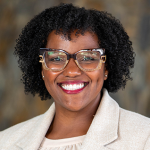 Michelle Lewis is a community engagement and outreach associate for the Heat Policy Innovation Hub. Before her work at the Nicholas Institute, she served as the Agent of Thriving for Climate and Environmental Justice at the Ormond Center at Duke Divinity School. She earned her doctoral degree from Emory University’s Candler School of Theology. Lewis holds a Master of Environmental Science from Yale School of the Environment and a Master of Divinity from Yale Divinity School, along with a certificate from Yale Institute of Sacred Music and the Arts. She studied film at Regent University, where she completed a Master of Arts in communication. Lewis has worked in both rural and urban contexts and has led community-based participatory research. Her research has focused on how faith communities connect with the environment through their existing cosmologies, the effects of green space on patient outcomes, and the environmental theologies of Black coastal communities.
Lewis is ordained in the United Methodist Church and is a former US park ranger. She founded and directs the Outer Banks Environmental Film Festival and is the founder and Executive Director of the Peace Garden Project. You can find her podcast: Finding Hope in the Climate Crisis, wherever you listen.
 Lauren Graham is a strategic ecosystems thinker and cross-pollinator who creates impact in the areas of climate and democracy by transforming how mission-driven organizations are designed, led, and evolved. She holds Master’s degrees from University of Pennsylvania in Nonprofit Leadership, Yale in Environmental Management, and Stanford University in Sociology and teaches Strategic Management and Leadership for Nonprofits among other courses at the University of Pennsylvania School of Social Policy & Practice. Lauren is founder of Velvet Frame, a social impact strategy and communications consultancy for mission-driven organizations, and has extensive nonprofit experience including roles as Chief of Staff for Hunger Free America and Director of Innovation for Climate Access.
 Robert Macnee, Ph.D. is Deputy Director of Resilience Services at Climate Resilience Consulting, where he helps governments, institutions, and communities reduce climate risk in equitable and practical ways. He holds a Ph.D. in Environmental Management focused on climate change impacts on health and communities, and brings over a decade of experience spanning economic development, resilience planning, and implementation.
Robert specializes in translating climate risk and vulnerability data into clear, actionable decisions—helping organizations identify priority risks, allocate resources effectively, and deliver measurable resilience outcomes. He has published academic research in this field and regularly advises public and private sector clients on strategy, risk management, financing, and implementation. His work has included engagements with organizations such as the World Bank, the UK government, the Asia-Pacific Economic Cooperation (APEC) Climate Center, and numerous city governments.
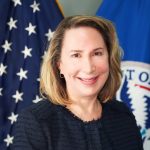 Samantha Medlock is President of Climate Risk Advisors, helping communities and organizations advance equity, sustainability, and resilience. Her career began chasing floods as a local official in Texas Flash Flood Alley—a hands-on experience that still shapes her approach to climate and disaster risk management.
Until May 2025, Sam served as FEMA’s Assistant Administrator for Resilience Strategy, overseeing policy, doctrine, and strategy for grants, hazard mitigation, and insurance programs. She was previously senior counsel to the U.S. House Select Committee on the Climate Crisis, managing portfolios in science, public health, infrastructure, finance, and national security. Her background also includes senior roles in the White House Office of Management and Budget and the Council on Environmental Quality, where she coordinated federal resilience policies and modernized flood programs with local leaders and private sector partners. Earlier in her career, Sam developed risk management and insurance solutions in the private sector and served as policy counsel for the Association of State Floodplain Managers. She earned the Army Commander’s Award for Public Service for her leadership in flood and levee safety after Hurricane Katrina.
Sam is a certified floodplain manager and holds a Juris Doctor from Vermont Law School and a B.S., summa cum laude, from Texas Woman’s University. Her academic appointments include the University of Cambridge, the Natural Hazards Center at the University of Colorado Boulder, and multiple law schools.
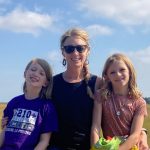
Lindsay Ex, AICP and LEED Green Associate, is a sustainability professional with 20 years of experience in the public, private, and academic sectors In Alaska, Colorado, New York, Ohio, and Utah. She currently serves as the Policy Director for Colorado Communities for Climate Action (CC4CA), a coalition of 47 Colorado communities advocating for strong state and federal climate policy. Prior to joining the staff team at CC4CA, Lindsay worked with the City of Fort Collins for 13 years and most recently served as their Environmental Sustainability Director overseeing a team of 28 advancing some of the country’s most ambitious climate and environmental goals. Lindsay holds a Masters Degree in Landscape Architecture and Environmental Policy from Utah State University and a Bachelors in Natural Resources Management from Oregon State University.
Lindsay is fiercely motivated by the urgency of climate, racial, and economic justice while bringing positivity, hope, and a sense of humor to her work. Lindsay is at her best convening people across perspectives to deliver clear vision and high impact results. When she isn’t leading high impact collaborative efforts, you will find her in her garden, the desert, the woods, the ocean, or anywhere she can reconnect with nature with her twin ten-year old daughters.
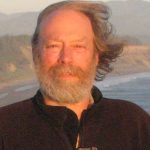 Jim is a multilingual world traveler. Based in Bavaria during the 1970s, Jim spent most of this period in India, Afghanistan and Nepal, where he founded and operated a charitable medical clinic serving Tibetan Refugees. He settled in Oregon in 1983 on a forested ranch in the Umpqua National Forest.
Very active in conservation and wildlife policy in the Pacific Northwest for over 30 years, Jim maintains important liaisons with many non-profits in our region, serving on several boards in Oregon. He is the owner of two small businesses, and has two grown children.
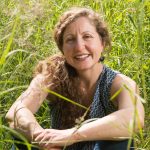 Dr. Micah Hahn is an Associate Professor of Environmental Health in the Institute for Circumpolar Health Studies at the University of Alaska-Anchorage. She received her joint PhD in Epidemiology / Environment and Resources from the University of Wisconsin-Madison and her MPH in Global Environmental Health from Emory University. Subsequently, she was a postdoctoral fellow for the CDC Climate and Health Program, and in this position worked collaboratively with the CDC Division of Vector-borne Diseases and the National Center for Atmospheric Research. Her research focuses on understanding the health impacts of climate change and working with communities to develop locally-relevant adaptation and resilience-building strategies. Dr. Hahn is also on the Management Team of the Alaska Climate Adaptation Science Center.
Dr. Hahn is actively engaged with the Municipality of Anchorage and other Alaskan communities at the intersection of science, policy, and community-based projects. She contributes to initiatives that directly support community resilience, by improving food security and facilitating community conversations around climate mitigation and adaptation, and she convenes a regional network of municipal climate leaders who are working to collaborate and scale their approaches to adapt to and mitigate climate change.
 Michael is a former Founding Principal of Resilient Cities Catalyst, a global non-profit helping cities and their partners tackle their toughest challenges. He is currently the Executive Director of Climate Resilience Academy at the University of Miami.
Previously he joined the Rockefeller Foundation in August 2013 to shape and oversee the creation of 100 Resilient Cities. He served as the 100 Resilient Cities President from 2013 to 2019. From 2005 to 2013 he worked at Deutsche Bank, most recently as the global head of Operational Risk Management. In that capacity he oversaw the firm’s operational risk capital planning efforts, served as a primary regulatory contact and connected the myriad operational risk management efforts group-wide.
Until January 2005, he was Deputy Commissioner at the Office of Emergency Management (OEM) in New York City where he led an initiative to create OEM’s Public-Private Emergency Planning Initiative and its Ready New York citizen preparedness campaign. He also responded to incidents including the 1999 outbreak of West Nile Fever, Tropical Storm Floyd, major flooding in Southern Queens (1999), the crashes of SwissAir 111 and American Airlines 587, the 2003 Northeast blackout, as well as the 2001 anthrax incidents and the World Trade Center disaster.
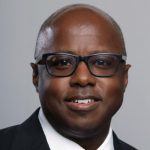 Dr. Quintus Jett is a consultant, educator, and strategist for public causes. He has a doctorate in Organizations & Management from Stanford University, and a two-decade faculty career which spans schools, departments, and programs of business, engineering, liberal studies, divinity, and public and nonprofit management. Following Hurricane Katrina in 2005, Dr. Jett launched a volunteer project in New Orleans, which enlisted residents, students from over a dozen colleges and universities, and hundreds of others to field map the city’s Gentilly district, Lower Ninth Ward, and New Orleans East. Dr. Jett is an innovator in higher education, bridging the divide between academic research and the other priorities of the modern university, including student access and diversity, community engagement, and providing foundations for life-long learning in today’s rapidly changing world.
Dr. Jett has particular expertise in ‘organizing from the bottom up’, which has growing potency in networked societies that have extensive adoption and use of smart mobile devices and Internet. He also has expertise with ‘enterprising nonprofits,’ specifically those that seek to employ management science techniques to inform strategy, choreograph operations, and grow capacity through digital technologies and stakeholder engagement. Since 2016, Dr. Jett has served on the Resilient America Roundtable, a convening of the National Academies of Sciences, Engineering, and Medicine to address whole-community preparation and response to extreme events, across the nation’s regions and localities.
 Scott is Monfort Professor of Atmospheric Science at Colorado State University. He has written about 100 publications in the peer-reviewed climate literature, is a former editor of the Journal of Climate, and served for five years as founding Science Chair of the North American Carbon Program.
He takes special delight in engaging hostile audiences on the subject of climate change and has twice been a featured speaker at the Heartland Institute’s annual conference.
 Linda has many years of experience in disaster preparedness and resilience. She has been an elected official on the Linn County Iowa Board of Supervisors, Chair of the Metropolitan Planning Organization, the East Central Iowa Council of Governments, the statewide Mental Health Developmental Disability and the Linn County Board of Health. Langston is a former president of the National Association of Counties (2013-2014).
She was named the 2009 Americans for the Arts’ Public Official of the Year Award. She was also named Iowa Public Health Official of the Year and to the Hall of Fame for International Women in Emergency Management. Langston also served on the staff of the National Association of Counties as the Director of Strategic Relations.
Langston is the former chair of the Resilient America Roundtable for the National Academy of Sciences and serves on the National Advisory Council for the Federal Emergency Management Agency.
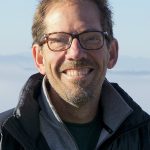 Ken works with families and organizations as a mediator, organizational consultant, trainer and facilitator. Along with his passion for helping people prepare for and reduce climate change, Ken also volunteers as a mediator through Mediation Works and is passionate about supporting youth through mentoring with Boys to Men of Southern Oregon.
He previously worked for Intel Corp. in strategic planning, marketing, competitive analysis, performance modeling, and product definition. He holds 5 patents in the area of computer systems architecture.
 Matthew is a retired high school teacher who was once honored as Oregon High School Social Studies Teacher of the Year. Before his teaching career he was in the restaurant business in Portland. He is also a lawyer who has been a member of the Oregon State Bar Association since 1980.
A resident of Oregon since 1975, Matthew serves as Board Secretary and the Chairperson of the Governance Committee for Geos Institute.
 Andrea is the Resilience Policy Advisor for the North Carolina Office of Recovery and Resiliency. She works across state agencies and with local governments to increase the state’s resilience to the impacts of climate change.
Previously, Andrea worked at Indiana University’s Environmental Resilience Institute, where she supported Indiana mayors, county officials, and their staff guiding local climate action. From 2013 to 2017, Andrea worked for Louisville Metro Government’s Office of Sustainability, where she implemented carbon reduction projects in the City’s sustainability plan. Across all of these positions, Andrea has focused on reducing greenhouse gases in the public and private sectors, helping communities access and understand climate projection data, and breaking down barriers to climate action.
She earned her undergraduate degree from Indiana University Bloomington, her a Master of Public Administration from the Maxwell School at Syracuse University and her Master of Science in Environmental Studies at the SUNY College of Environmental Science and Forestry.