
Conservationists promote the Tongass as bulwark against climate change
Conservationist Dominick DellaSala asks can the Tongass save Alaska?
By Peter Segall, Originally published Friday, August 16, 2019 at The Juneau Empire
Can the Tongass save Alaska from climate chaos?
Dr. Dominick DellaSala, president and chief scientist at the Geos Institute in Ashland, Oregon, asked that question to the small audience of about two dozen gathered in the Mendenhall Valley Library Tuesday evening.
He speaking at at an event hosted by the Southeast Alaska Conservation Council about the role that old-growth forest like the Tongass National Forest can play in combating climate change.
Temperate rain forests like the Tongass soak up an incredible amount of carbon and play a pivotal role in keeping the planet’s temperature at sustainable levels. In answer to his own question, DellaSala said that the Tongass can play a part in saving Alaska from climate chaos, so long as it continues to exist in its present state.
That may be a problem as the Alaska’s logging industry is eager to get at the hundreds of thousands of acres of old-growth forest in Southeast. “Old-growth” forests are not simply forests with old trees, but forests with a complex array of features which create a unique ecosystem which have remained mostly undisturbed by humans.
These Alaska Natives want to upend Trump’s pro-timber rule
Marc Heller, E&E News reporter
Originally published at E&E News Greenwire, Wednesday, August 14, 2019
KAKE, Alaska — To the 569 residents of this island community in the Tongass National Forest, picking blueberries may offer more promise in the long run than harvesting trees.
So when the Department of Agriculture announced last year that it would consider scrapping rules that protect stands of old-growth forest, they demanded meetings with the agency.
“We said we wanted to be consulted,” said Mike Jackson, a leader with the Organized Village of Kake (OVK), in the tribal offices adorned with Native carvings and paintings. The OVK is a federally recognized tribe and has lived here, 100 miles southeast of Juneau, for generations. The Alaska Natives have seen the forests cut over in decades past.
“This is a huge decision to be making,” he said. “They’re just rolling with it.”
The tension between the Organized Village of Kake and USDA is part of a broader negative reaction in southeast Alaska to the department’s proposal to rewrite rules that protect roadless areas of the Tongass from timber harvest.
This Trump administration proposal to roll back logging rules is reckless
By Jim Furnish
Jim is a consulting forester in Iowa, following a 34-year career with the U.S. Forest Service, including as the agency’s deputy chief from 1999 to 2002.
Published August 11 at The Washington Post
I was the supervisor of Oregon’s Siuslaw National Forest in 1996 when a huge landslide caused by shoddy road construction sent tons of mud and debris into a critical salmon stream. I felt terrible ― and personally responsible. In the rush to build logging roads along treacherously steep hillsides, we mismanaged forests for decades and pushed salmon and spotted owls to the brink of extinction.
When I came to Washington to become deputy chief of the Forest Service a few years later, that Oregon landslide ― and countless other road-building mistakes ― motivated me to rewrite national forest policy. I was a chief architect of two landmark rules to reform logging and road building in our national forests.
‘Deliberate extinction’: extensive clear-cuts, gas pipeline approved in endangered caribou habitat
Scientists warn another B.C. caribou herd could disappear as the provincial government approves 78 new logging cutblocks in critical habitat for the Hart Ranges herd, while construction of a pipeline for LNG industry takes out another chunk of boreal forest
By Sarah Cox, Originally published on Aug 7, 2019 at The Narwhal
Standing near the summit of a clear-cut mountain in B.C.’s interior, overlooking the brown and emerald green Anzac River valley, scientist Dominick DellaSala has a bird’s eye view of why the Hart Ranges caribou herd is at risk of extinction.
Only a fringe of forest remains around the distant mountain peak where the declining herd seeks protection from wolves and other predators in ever-shrinking habitat northeast of Prince George.
“The difference between this and Borneo is that there aren’t any orangutans behind me,” says DellaSala, pointing to extensive clear cuts covering much of the mountain side.
“You’ve got caribou at upper elevations. That’s their habitat out there. And they’re being squished to the top of the tallest mountains because all the habitat’s been taken out down below. The species is migratory, it goes up and down.”
DellaSala, chief scientist and president of the Geos Institute in Ashland, Oregon, is touring parts of B.C.’s ancient inland temperate rainforest as part of an Australian-led study documenting the world’s most important unlogged forests.
Continue reading at The Narwhal
‘Deliberate extinction’: extensive clear-cuts, gas pipeline approved in endangered caribou habitat
Scientists warn another B.C. caribou herd could disappear as the provincial government approves 78 new logging cutblocks in critical habitat for the Hart Ranges herd, while construction of a pipeline for LNG industry takes out another chunk of boreal forest
By Sarah Cox, Originally published on Aug 7, 2019 at The Narwhal
Standing near the summit of a clear-cut mountain in B.C.’s interior, overlooking the brown and emerald green Anzac River valley, scientist Dominick DellaSala has a bird’s eye view of why the Hart Ranges caribou herd is at risk of extinction.
Only a fringe of forest remains around the distant mountain peak where the declining herd seeks protection from wolves and other predators in ever-shrinking habitat northeast of Prince George.
“The difference between this and Borneo is that there aren’t any orangutans behind me,” says DellaSala, pointing to extensive clear cuts covering much of the mountain side.
“You’ve got caribou at upper elevations. That’s their habitat out there. And they’re being squished to the top of the tallest mountains because all the habitat’s been taken out down below. The species is migratory, it goes up and down.”
DellaSala, chief scientist and president of the Geos Institute in Ashland, Oregon, is touring parts of B.C.’s ancient inland temperate rainforest as part of an Australian-led study documenting the world’s most important unlogged forests.
Continue reading at The Narwhal
Canada’s forgotten rainforest
Less than one-third of the world’s primary forests are still intact. Deep in the interior of British Columbia, a temperate rainforest that holds vast stores of carbon and is home to endangered caribou is being clear-cut as fast as the Amazon
By Sarah Cox, Originally published on Jul 27, 2019 at The Narwhal
On a balmy day in mid-July, in the heart of British Columbia, Dominick DellaSala steps out of a rented truck to examine the remains of one of the rarest ecosystems on the planet.
DellaSala, a scientist studying global forests that hold vast stores of carbon, is silent for a moment as he surveys a logging road punched through an ancient red cedar and western hemlock grove only days earlier.
A spared cedar tree, at least 400 years old, stands uncloaked in the sun beside the road, an empty bear den hidden in its hollow trunk.
“I haven’t seen logging this bad since I flew over Borneo,” says DellaSala, president and chief scientist at the Geos Institute in Ashland, Oregon, a partner in an international project to map the world’s most important unlogged forests.
“It was a rainforest. Now it’s a wasteland.”
Proposed Tongass change could speed young-growth transition
By Marc Heller, E&E News reporter, Originally published at E&E News on July 26, 2019
The Forest Service is proposing to open an additional 1,144 acres of the Tongass National Forest to harvesting of young-growth timber, opening a debate about where the transition away from old-growth timber should be focused.
In a proposed amendment to the forest management plan for the Tongass — the nation’s biggest national forest at nearly 17 million acres — the agency said it would allow more harvesting of young growth on a landscape known as moderate-vulnerability karst, which is typically underlain by a soluble rock like limestone.
Moderate-vulnerability karst doesn’t have caves or sinkholes — which are typically found in high-vulnerability karst landscapes — and the Forest Service said those areas can handle management activities such as timber harvesting. In addition, the agency said, regulations have been written in an inconsistent way that would allow cutting of trees in those locations if they were old growth.
“Analysis of old-growth harvest on moderate vulnerability karst has demonstrated that the standards in place were sufficient to maintain the natural processes and productivity of karst lands. This amendment will align the standards for young-growth and old-growth harvest on moderate vulnerability karst,” the Forest Service said in a news release.
Wildfire – Forest Webinar
A recording of a recent webinar discussing the role of climate change in wildfires and how forests can help fight climate change. The webinar was held on July 18, 2019.
Panelists:
- Dr Dominick DellaSala (Geos Institute): wildfire ecology and the climate connection (jump to presentation)
- Alexander Harris (Cascadia Wildlands): forest-carbon 201 (jump to presentation)
- Ralph Bloemers (Crag Law Center): communicating about 21st century wildfires (jump to presentation)
Climate change calls for new look at fire, experts say
By Caitlin Fowlkes of the Tidings
Dominick A. DellaSala, chief scientist at the Geos Institute in Ashland, says more scientists agree that forest thinning in the backcountry is futile.
At a presentation he gave Friday during a symposium on fire, DellaSala said that according to a 2017 study, less than 1% of areas that were thinned had a forest fire.
He said thinning doesn’t work well in extreme fire weather, it can increase wind speed and vegetation, it doesn’t last longer than 10 to 15 years before it must be redone, and it can make land more prone to fire.
DellaSala, speaking at the 100th annual meeting of the Pacific Division of the American Association for the Advancement of Science, said there’s just no way to tell where lightening is going to strike.
“A lot of it is in backcountry, in steep areas that you can’t get to it anyway,” DellaSala said. “In many areas you don’t have access, and there’s no way you can treat enough of the landscape to make enough of a difference.”
Timber industry the focus of GOP wildfire response
By Adam Aton, E&E News reporter
Originally published at E&E News on June 17, 2019
Republican climate policy is taking shape under the Trump administration, with a new forestry proposal offering an example of businesses setting the parameters of action.
As wildfires become an emblem of climate change, the GOP wants to help the timber industry respond. The strategy mostly disregards emissions, accepts some collateral damage to local ecosystems and limits public oversight of corporate activity.
The Forest Service’s new proposed rule, open for comment until Aug. 12, would loosen environmental reviews for many projects, including logging and road-building. A new suite of categorical exclusions for those projects would require only public notice, not public comment.
Latest News
Stay Updated!
Sign up to stay updated on our current initiatives and receive information you can use to build resilience in your community.
 Briana Carbajal (they/she) was born and raised in South Central Los Angeles. In 2019, Briana was an active Youth Climate Councilmember working with the City of Los Angeles. Their purpose was to inform Mayor Garcetti of the concerns raised by young voices in their neighborhood and propose solutions to work toward resolving them. Briana holds a dual BA degree in Political Science and Geography/Environmental Studies from the University of California, Los Angeles.
 Michelle Lewis is a community engagement and outreach associate for the Heat Policy Innovation Hub. Before her work at the Nicholas Institute, she served as the Agent of Thriving for Climate and Environmental Justice at the Ormond Center at Duke Divinity School. She earned her doctoral degree from Emory University’s Candler School of Theology. Lewis holds a Master of Environmental Science from Yale School of the Environment and a Master of Divinity from Yale Divinity School, along with a certificate from Yale Institute of Sacred Music and the Arts. She studied film at Regent University, where she completed a Master of Arts in communication. Lewis has worked in both rural and urban contexts and has led community-based participatory research. Her research has focused on how faith communities connect with the environment through their existing cosmologies, the effects of green space on patient outcomes, and the environmental theologies of Black coastal communities.
 Lauren Graham is a strategic ecosystems thinker and cross-pollinator who creates impact in the areas of climate and democracy by transforming how mission-driven organizations are designed, led, and evolved. She holds Master’s degrees from University of Pennsylvania in Nonprofit Leadership, Yale in Environmental Management, and Stanford University in Sociology and teaches Strategic Management and Leadership for Nonprofits among other courses at the University of Pennsylvania School of Social Policy & Practice. Lauren is founder of Velvet Frame, a social impact strategy and communications consultancy for mission-driven organizations, and has extensive nonprofit experience including roles as Chief of Staff for Hunger Free America and Director of Innovation for Climate Access.
 Robert Macnee, Ph.D. is Deputy Director of Resilience Services at Climate Resilience Consulting, where he helps governments, institutions, and communities reduce climate risk in equitable and practical ways. He holds a Ph.D. in Environmental Management focused on climate change impacts on health and communities, and brings over a decade of experience spanning economic development, resilience planning, and implementation.
 Samantha Medlock is President of Climate Risk Advisors, helping communities and organizations advance equity, sustainability, and resilience. Her career began chasing floods as a local official in Texas Flash Flood Alley—a hands-on experience that still shapes her approach to climate and disaster risk management.
 Jim is a multilingual world traveler. Based in Bavaria during the 1970s, Jim spent most of this period in India, Afghanistan and Nepal, where he founded and operated a charitable medical clinic serving Tibetan Refugees. He settled in Oregon in 1983 on a forested ranch in the Umpqua National Forest.
 Dr. Micah Hahn is an Associate Professor of Environmental Health in the Institute for Circumpolar Health Studies at the University of Alaska-Anchorage. She received her joint PhD in Epidemiology / Environment and Resources from the University of Wisconsin-Madison and her MPH in Global Environmental Health from Emory University. Subsequently, she was a postdoctoral fellow for the CDC Climate and Health Program, and in this position worked collaboratively with the CDC Division of Vector-borne Diseases and the National Center for Atmospheric Research. Her research focuses on understanding the health impacts of climate change and working with communities to develop locally-relevant adaptation and resilience-building strategies. Dr. Hahn is also on the Management Team of the Alaska Climate Adaptation Science Center.
 Michael is a former Founding Principal of Resilient Cities Catalyst, a global non-profit helping cities and their partners tackle their toughest challenges. He is currently the Executive Director of Climate Resilience Academy at the University of Miami.
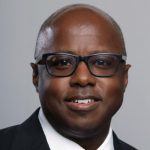 Dr. Quintus Jett is a consultant, educator, and strategist for public causes. He has a doctorate in Organizations & Management from Stanford University, and a two-decade faculty career which spans schools, departments, and programs of business, engineering, liberal studies, divinity, and public and nonprofit management. Following Hurricane Katrina in 2005, Dr. Jett launched a volunteer project in New Orleans, which enlisted residents, students from over a dozen colleges and universities, and hundreds of others to field map the city’s Gentilly district, Lower Ninth Ward, and New Orleans East. Dr. Jett is an innovator in higher education, bridging the divide between academic research and the other priorities of the modern university, including student access and diversity, community engagement, and providing foundations for life-long learning in today’s rapidly changing world.
 Scott is Monfort Professor of Atmospheric Science at Colorado State University. He has written about 100 publications in the peer-reviewed climate literature, is a former editor of the Journal of Climate, and served for five years as founding Science Chair of the North American Carbon Program.
 Linda has many years of experience in disaster preparedness and resilience. She has been an elected official on the Linn County Iowa Board of Supervisors, Chair of the Metropolitan Planning Organization, the East Central Iowa Council of Governments, the statewide Mental Health Developmental Disability and the Linn County Board of Health. Langston is a former president of the National Association of Counties (2013-2014).
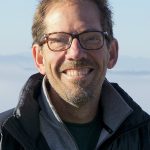 Ken works with families and organizations as a mediator, organizational consultant, trainer and facilitator. Along with his passion for helping people prepare for and reduce climate change, Ken also volunteers as a mediator through Mediation Works and is passionate about supporting youth through mentoring with Boys to Men of Southern Oregon.
 Matthew is a retired high school teacher who was once honored as Oregon High School Social Studies Teacher of the Year. Before his teaching career he was in the restaurant business in Portland. He is also a lawyer who has been a member of the Oregon State Bar Association since 1980.
 Andrea is the Resilience Policy Advisor for the North Carolina Office of Recovery and Resiliency. She works across state agencies and with local governments to increase the state’s resilience to the impacts of climate change.