
New Risk of Logging in Clayoquot Sound Biosphere Reserve
Old growth valleys must be protected, say 133 scientists and conservation groups
Vancouver, BC – The B.C. government has received an application for cutblocks in the old growth rainforest of Flores Island in Clayoquot Sound, a UNESCO Biosphere Reserve that was the site of the largest civil disobedience protest in Canada’s history in 1993.
“It’s very disturbing that the B.C. government could approve logging of one of Vancouver Island’s last intact ancient rainforest valleys,” said Dan Lewis, Executive Director of Friends of Clayoquot Sound. “People believe that Clayoquot Sound’s famous rainforests are protected, but they aren’t.”
More than 130 scientists across North America have just signed a declaration calling for permanent protection of Clayoquot’s remaining intact old-growth rainforests. “Given the global importance of the region and the imminent threats posed to intact rainforests, we the undersigned urge First Nations, provincial and federal decision-makers, logging companies, and other stakeholders to cease logging in all remaining intact valleys of Clayoquot Sound,” says the declaration, released today.
A new Sierra Club BC map, also released today, shows that only 21 of Vancouver Island’s 282 rainforest watersheds are unlogged. Of the seven unlogged Vancouver Island watersheds that lack permanent protection, five are in Clayoquot Sound, including the Flores Island watershed now at risk of being logged.
“Our map shows that there is nowhere else left on Vancouver Island, except Clayoquot Sound, that provides extensive high quality habitat for rainforest species such as bears and wolves,” said Jens Wieting, Forest Campaigner with Sierra Club BC.
Clayoquot was designated a United Nations Biosphere Reserve in 2000, but that designation does not confer legal protection. A 1999 Memorandum of Understanding, signed by First Nations and environmental groups, outlined intact rainforest valleys in Clayoquot deserving protection, including the valley now slated for logging on Flores Island, north of Tofino. Yet those valleys are still unprotected.
“Clayoquot’s ancient forests store more carbon per hectare than almost any other forest on earth, and protecting Clayoquot’s old-growth watersheds plays a key role in fighting global warming,” said Dominick DellaSala, Chief Scientist and President of the Geos Institute in Oregon, one of the signatories of the “Scientists’ Declaration to Protect Intact, Old-Growth Rainforests of Clayoquot Sound in British Columbia.”
The logging company Iisaak applied to the B.C. government for cutting permits on Flores during on-going talks with environmental groups about conservation financing for Clayoquot’s intact valleys. Friends of Clayoquot Sound, Sierra Club BC and other environmental organizations working to protect the intact rainforests of the region are calling on the B.C. government to offer short-term alternatives to logging, in order to allow more time to develop solutions for protection like conservation financing.
-30-
For more information, please contact:
Dominick DellaSala, Chief Scientist and President of Geos Institute, Ashland, Oregon, 541/482-4459 x302
Dan Lewis, Executive Director, Friends of Clayoquot Sound, 250/725-4218
Jens Wieting, Sierra Club BC Coastal Forest Campaigner: 604/354-5312
 Robert Macnee, Ph.D. is Deputy Director of Resilience Services at Climate Resilience Consulting, where he helps governments, institutions, and communities reduce climate risk in equitable and practical ways. He holds a Ph.D. in Environmental Management focused on climate change impacts on health and communities, and brings over a decade of experience spanning economic development, resilience planning, and implementation.
 Samantha Medlock is President of Climate Risk Advisors, helping communities and organizations advance equity, sustainability, and resilience. Her career began chasing floods as a local official in Texas Flash Flood Alley—a hands-on experience that still shapes her approach to climate and disaster risk management.
 Jim is a multilingual world traveler. Based in Bavaria during the 1970s, Jim spent most of this period in India, Afghanistan and Nepal, where he founded and operated a charitable medical clinic serving Tibetan Refugees. He settled in Oregon in 1983 on a forested ranch in the Umpqua National Forest.
 Dr. Micah Hahn is an Associate Professor of Environmental Health in the Institute for Circumpolar Health Studies at the University of Alaska-Anchorage. She received her joint PhD in Epidemiology / Environment and Resources from the University of Wisconsin-Madison and her MPH in Global Environmental Health from Emory University. Subsequently, she was a postdoctoral fellow for the CDC Climate and Health Program, and in this position worked collaboratively with the CDC Division of Vector-borne Diseases and the National Center for Atmospheric Research. Her research focuses on understanding the health impacts of climate change and working with communities to develop locally-relevant adaptation and resilience-building strategies. Dr. Hahn is also on the Management Team of the Alaska Climate Adaptation Science Center.
 Michael is a former Founding Principal of Resilient Cities Catalyst, a global non-profit helping cities and their partners tackle their toughest challenges. He is currently the Executive Director of Climate Resilience Academy at the University of Miami.
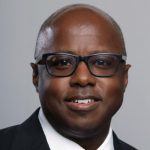 Dr. Quintus Jett is a consultant, educator, and strategist for public causes. He has a doctorate in Organizations & Management from Stanford University, and a two-decade faculty career which spans schools, departments, and programs of business, engineering, liberal studies, divinity, and public and nonprofit management. Following Hurricane Katrina in 2005, Dr. Jett launched a volunteer project in New Orleans, which enlisted residents, students from over a dozen colleges and universities, and hundreds of others to field map the city’s Gentilly district, Lower Ninth Ward, and New Orleans East. Dr. Jett is an innovator in higher education, bridging the divide between academic research and the other priorities of the modern university, including student access and diversity, community engagement, and providing foundations for life-long learning in today’s rapidly changing world.
 Scott is Monfort Professor of Atmospheric Science at Colorado State University. He has written about 100 publications in the peer-reviewed climate literature, is a former editor of the Journal of Climate, and served for five years as founding Science Chair of the North American Carbon Program.
 Linda has many years of experience in disaster preparedness and resilience. She has been an elected official on the Linn County Iowa Board of Supervisors, Chair of the Metropolitan Planning Organization, the East Central Iowa Council of Governments, the statewide Mental Health Developmental Disability and the Linn County Board of Health. Langston is a former president of the National Association of Counties (2013-2014).
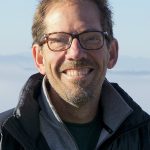 Ken works with families and organizations as a mediator, organizational consultant, trainer and facilitator. Along with his passion for helping people prepare for and reduce climate change, Ken also volunteers as a mediator through Mediation Works and is passionate about supporting youth through mentoring with Boys to Men of Southern Oregon.
 Matthew is a retired high school teacher who was once honored as Oregon High School Social Studies Teacher of the Year. Before his teaching career he was in the restaurant business in Portland. He is also a lawyer who has been a member of the Oregon State Bar Association since 1980.
 Andrea is the Resilience Policy Advisor for the North Carolina Office of Recovery and Resiliency. She works across state agencies and with local governments to increase the state’s resilience to the impacts of climate change.