
First Global Assessment of Roadless Areas Presented at International Congress
Contact: Dominick DellaSala, Geos Institute, 541/482-4459 x302
Last July in Baltimore, representatives of the Society for Conservation Biology (SCB) participated in a Roadless Area Symposium at the biennial International Congress for Conservation Biology 2013. Scientists described their research about global and regional perspectives on conserving roadless areas and shared preliminary results from the first global assessment of roadless areas.
Opinion: BLM lands give us clean water
Medford Mail Tribune Opinion by Dominick A. DellaSala
The July 14 guest opinion “Logging didn’t cause water problems” by retired forester Theodore Lorensen digs deep into my report, featured in the Mail Tribune on June 27, to find any contentious points to discredit my message that unlogged Bureau of Land Management lands are important for clean water. Decades of research, and not just modeling studies or one contentious example from Salem that he cites, provide strong evidence that heavily logged and roaded watersheds, most notably those occurring on state and private lands, contribute to significant water quality problems.
It’s simple, really: When you clearcut the trees and bulldoze the ground, heavy rains wash away the soil, leading to more landslides and muddy water. Heavy erosion events stem directly from road-related slope failures. Clearcutting on steep slopes, logging in streamside areas and culvert failures that cumulatively leak sediments into streams are expensive for public water utilities to treat low-quality water, and they damage salmon runs. There are numerous government reports, field studies and water-quality monitoring reports by the Department of Environmental Quality that back my claims. Lorensen is correct that landslides also can occur in healthy watersheds during heavy rains, like the one in Salem years ago, but the evidence is solid that there are many more in logged and roaded watersheds contributing to Oregon’s water quality problems.
On the other hand, well-protected and well-managed watersheds are much better at reducing flood damage and producing clean water, healthy fish and wildlife populations, more resilient local economies and outdoor recreational benefits as fully detailed in my report. Forest thinning, if done judiciously, can also lower fire risks to watersheds by culling overly dense small trees as in the Ashland watershed.
Other restorative actions can put loggers to work removing failing roads and repairing inappropriately sized road culverts. Communities throughout Oregon are doing this right now through Oregon’s Salmon Plan and the restorative work of watershed councils.
I also cite studies documenting the ecosystem benefits of well-managed (unlogged) watersheds that represent an estimated savings to public water utilities and taxpayers in billions of dollars from road-related sediment avoidance costs nationally. From the forest to the faucet, unlogged watersheds are wellsprings of clean water, which will only become increasingly valuable economically and ecologically as many communities in the West struggle with over-allocation of precious water supplies and climate change triggers more intense droughts.
As a conservation scientist, I am inclined to inform the public of what’s at risk to our public lands by using the tools of my trade — computer modeling, literature reviews, fieldwork and publishing in peer-reviewed journals, the gold standard for scientific publication — which I routinely do. Putting all that aside, you only have to look out the window the next time you fly over Oregon’s intensively managed forests to see the maze of roads and shotgun blast of clearcuts, mostly on private lands. In our region alone (Klamath-Siskiyou) there are enough forest roads to drive to Portland and back 50 times. Clearly, this isn’t good for salmon, clean water or wildlife.
It is also my civic duty and responsibility as a parent to advocate for a healthy planet with vibrant salmon runs and clean water and to warn of the dangers of rampant logging as the science clearly shows. Attempting to discredit a solid body of scientific evidence with one contentious finger-pointing episode is not helping. “Get the cut out” forestry myths from decades ago will not give us clean water, healthy wildlife or vibrant communities. They will lead only to more polarization and a return to failed policies of the past.
Sen. Ron Wyden can create a legacy for Oregonians if he protects our remaining mature forests and watersheds for their drinking water, outstanding fish and wildlife habitat and scenic beauty.
———-
Dominick A. DellaSala is chief scientist for the Geos Institute and author of the award-winning book “Temperate and Boreal Rainforests of the World: Ecology and Conservation.” Read more online at ipfieldnotes.org/author/dominickdellasala/
Timber bill could pollute drinking water, study warns
by Paul Fattig, Medford Mail Tribune
An environmental group warns that a substantial portion of the drinking water for some 1.5 million Oregonians could be at risk if a proposed bill to create a timber trust on federal forestlands in Western Oregon becomes law. The computerized study by the Ashland-based Geos Institute released Thursday concluded that nearly 80 communities, including Medford, Rogue River and Grants Pass, could have their drinking water sources polluted by logging sediment if the O&C Trust, Conservation and Jobs Act is approved. READ MORE>
Drinking Water for Over 1.5 Million Oregonians At-Risk If Logging Increased on BLM Holdings
Click here for the June 26, 2013 press release on threats to Oregon’s drinking water supplies.
Click here to see the “Clean Water or Clearcuts?” video (3.5 min.) from Pacific Rivers Council.
Click here to listen to the July 1, 2013 KBOO Radio interview with Dominick DellaSala.
Click here for the October 17, 2013 OpEd (“Decades of evading laws led to timber woes”) by Ron Sadler, retired chief of forest planning for the BLM in Oregon and Washington.
To Us, Every Day is Earth Day
Medford Mail Tribune
Guest Opinion by Dominick DellaSala and Ed Begley, Jr.
One of us is an actor who has devoted much of his life to developing a “low impact” lifestyle and teaching others how to do so. The other is a conservation scientist who works to protect rainforests around the world. The daily work that feeds our passions could hardly be more different — yet we are each responding to the same challenge. What can we do so that Earth Day remains an American legacy to clean air, wild rivers, ancient forests and a stable climate because, after all, aren’t we all in this together?
At the top of our Earth Day agenda is the climate. Nearly a century ago, the downtown Grants Pass sign — “It’s the Climate” — first welcomed tourists to the beauty of our region. But the sign needs a facelift and should read,”The climate is becoming unsafe, so what are you going to do about it?”
Climate change could force grazing cuts in West
Washington Examiner – Associated Press
Significant reductions in grazing on public land — in some places outright elimination of the activity — is justified because of the impacts of a warming climate, scientists say in a new report. Read more>
Climate change increases stress, need for restoration on grazed public lands
Contact: Robert Beschta: 541-737-4292 or robert.beschta@oregonstate.edu
CORVALLIS, Ore. – Eight researchers in a new report have suggested that climate change is causing additional stress to many western rangelands, and as a result land managers should consider a significant reduction, or in some places elimination of livestock and other large animals from public lands.
Great Bear Rainforest Scientists Letter
For Immediate Release on 14 June 2012
Contacts: Dominick DellaSala, Chief Scientist and President of Geos Institute, Ashland, Oregon; 541-621-7223 (cell); In Rio: Kyle Gracey, Research Scientist and Science Coordinator, Global Footprint Network
SCIENTISTS AROUND THE WORLD CONCERNED OVER LENGTHY DELAYS TO FULLY IMPLEMENT
THE PROTECTION AGREEMENTS IN THE GREAT BEAR RAINFOREST
EXPERTS TAKE MESSAGE TO EARTH SUMMIT IN RIO
Rainforest scientists from around the world, supported by prominent experts speaking at the Earth Summit in Rio, today sent a letter to the Premier of British Columbia, Christy Clark, calling on her government to fully implement the agreements to protect the world renowned Great Bear Rainforest – announced more than six years ago.
Protecting Old Growth Forests: Keys to Prepare for Climate Change
Interview by Barbara Bernstein for KBOO Radio
This past winter the Forest Service released its long anticipated final planning rule for the nation’s 155 national forests and 20 national grasslands. The plan validates what many scientists have been saying for years: mature and old-growth forests play a critical role in reducing climate change and providing clean drinking water to millions of Americans. On this 44 minute episode of Locus Focus, we talk with Dominick DellaSala about why we need to remain vigilant about protecting our precious forest resources, especially in this current political climate in which amped up logging is being promoted as job creation.
To listen, click here and scroll down to the “download audio file” link.
Opinion: Is there still time to save spaceship Earth?
Medford Mail Tribune
by Dominick DellaSala
“We’re not the center of the universe; we’re way out in left field on a tiny dust mote, but it is our home and we need to take care of it.” — Apollo 8 Astronaut William Anders, commenting on his December 1968 “Earthrise” photo, the first image ever taken of Earth from the moon
Rivers on fire, toxic chemicals and other environmental calamities awakened America’s environmental consciousness in the 1960s. Back then, Earth Day was born out of the passion of peace activist John McConnell and U.S. Sen. Gaylord Nelson and first celebrated in San Francisco on March 21, 1970. Comments from the Apollo astronauts helped to inspire changing public perceptions. Today, Earth Day is celebrated in more than 175 countries around the globe. read more >
Latest News
Stay Updated!
Sign up to stay updated on our current initiatives and receive information you can use to build resilience in your community.
 Robert Macnee, Ph.D. is Deputy Director of Resilience Services at Climate Resilience Consulting, where he helps governments, institutions, and communities reduce climate risk in equitable and practical ways. He holds a Ph.D. in Environmental Management focused on climate change impacts on health and communities, and brings over a decade of experience spanning economic development, resilience planning, and implementation.
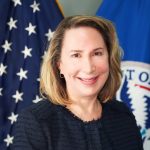 Samantha Medlock is President of Climate Risk Advisors, helping communities and organizations advance equity, sustainability, and resilience. Her career began chasing floods as a local official in Texas Flash Flood Alley—a hands-on experience that still shapes her approach to climate and disaster risk management.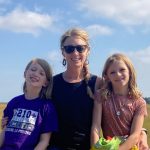
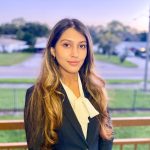 Arsum is the Senior Adaptation and Coastal Resilience Specialist for the National Wildlife Federation’s Southcentral Region. In this role, she advances climate adaptation efforts, with a focus on nature-based approaches to address the impacts of climate change and extreme events across the Gulf region. She has authored and co-authored numerous publications on climate impact assessments and adaptation solutions. Additionally, she regularly participates in state-based coastal resilience and hazard mitigation planning across the Gulf, collaborating with regional and local stakeholders.
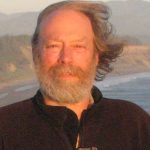 Jim is a multilingual world traveler. Based in Bavaria during the 1970s, Jim spent most of this period in India, Afghanistan and Nepal, where he founded and operated a charitable medical clinic serving Tibetan Refugees. He settled in Oregon in 1983 on a forested ranch in the Umpqua National Forest.
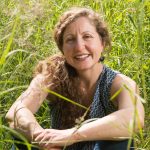 Dr. Micah Hahn is an Associate Professor of Environmental Health in the Institute for Circumpolar Health Studies at the University of Alaska-Anchorage. She received her joint PhD in Epidemiology / Environment and Resources from the University of Wisconsin-Madison and her MPH in Global Environmental Health from Emory University. Subsequently, she was a postdoctoral fellow for the CDC Climate and Health Program, and in this position worked collaboratively with the CDC Division of Vector-borne Diseases and the National Center for Atmospheric Research. Her research focuses on understanding the health impacts of climate change and working with communities to develop locally-relevant adaptation and resilience-building strategies. Dr. Hahn is also on the Management Team of the Alaska Climate Adaptation Science Center.
 Michael is a former Founding Principal of Resilient Cities Catalyst, a global non-profit helping cities and their partners tackle their toughest challenges. He is currently the Executive Director of Climate Resilience Academy at the University of Miami.
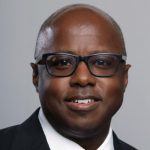 Dr. Quintus Jett is a consultant, educator, and strategist for public causes. He has a doctorate in Organizations & Management from Stanford University, and a two-decade faculty career which spans schools, departments, and programs of business, engineering, liberal studies, divinity, and public and nonprofit management. Following Hurricane Katrina in 2005, Dr. Jett launched a volunteer project in New Orleans, which enlisted residents, students from over a dozen colleges and universities, and hundreds of others to field map the city’s Gentilly district, Lower Ninth Ward, and New Orleans East. Dr. Jett is an innovator in higher education, bridging the divide between academic research and the other priorities of the modern university, including student access and diversity, community engagement, and providing foundations for life-long learning in today’s rapidly changing world.
 Scott is Monfort Professor of Atmospheric Science at Colorado State University. He has written about 100 publications in the peer-reviewed climate literature, is a former editor of the Journal of Climate, and served for five years as founding Science Chair of the North American Carbon Program.
 Linda has many years of experience in disaster preparedness and resilience. She has been an elected official on the Linn County Iowa Board of Supervisors, Chair of the Metropolitan Planning Organization, the East Central Iowa Council of Governments, the statewide Mental Health Developmental Disability and the Linn County Board of Health. Langston is a former president of the National Association of Counties (2013-2014).
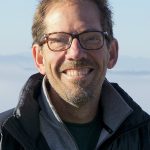 Ken works with families and organizations as a mediator, organizational consultant, trainer and facilitator. Along with his passion for helping people prepare for and reduce climate change, Ken also volunteers as a mediator through Mediation Works and is passionate about supporting youth through mentoring with Boys to Men of Southern Oregon.
 Matthew is a retired high school teacher who was once honored as Oregon High School Social Studies Teacher of the Year. Before his teaching career he was in the restaurant business in Portland. He is also a lawyer who has been a member of the Oregon State Bar Association since 1980.
 Andrea is the Resilience Policy Advisor for the North Carolina Office of Recovery and Resiliency. She works across state agencies and with local governments to increase the state’s resilience to the impacts of climate change.