
New Global Analysis Reveals Extreme Vulnerability of Primary Forests
Contact: Stephen Sautner, Wildlife Conservation Society, 1-718-220-3682; ssautner@wcs.org
- Authors say just 22 percent of primary forests are located in protected areas and that less than 5 percent of original primary forest is left on Earth
- Half the world’s remaining primary forests located in U.S., Canada, Russia, Australia, and New Zealand
- Analysis provides clear policy recommendations to safeguard primary forests into the future
- Full Report
New York – A team of conservationists has published a new global analysis and map showing the extremely precarious state of the world’s primary forests. The analysis is featured in a paper appearing in the early online edition of the journal Conservation Letters.
The analysis reveals that only 5 percent of the world’s pre-agricultural primary forest cover is now found in protected areas.
Primary forests – largely ignored by policy makers and under increasing land use threats – are forests where there are no visible indications of human activities, especially industrial-scale land use, and ecological processes have not been significantly disrupted. These forests are home to an extraordinary richness of biodiversity; up to 57 percent of all tropical forest species are dependent on primary forest habitat and the ecological processes they provide for their survival.
Forest health crisis ends with a whimper
FRISCO — Even here, in a cool forest hollow near Tenmile Creek, you can feel the tom-toms. It’s a distant beat, born in the marbled halls of Congress, where political forces blow an ill wind across Colorado’s forests. Nearly every Western elected official with a clump of shrubby cottonwoods in his or her jurisdiction claims to be a forest expert. And when senators and congress members make forest policy, rhetoric usually trumps science — as is the case with laws requiring new logging projects that may wipe out some of the very trees needed to replenish forests in the global warming era.
U.S. Forests Are Pivotal in Efforts to Slow Climate Change
For Immediate Release on June 18, 2014
Contacts: Dr. Dominick DellaSala, Geos Institute (541-482-4459 x 302; 541-621-7223); Dr. Olga Krankina, Oregon State University (541-737-1780)
Ashland, OR – Scientists today called on the Obama Administration to do more to protect the nation’s mature “high-biomass” forests because of their unique climate change benefits. While the President has taken bold steps to reduce carbon dioxide pollution from coal and other fossil fuels, he has sidestepped efforts to protect productive older forests that store massive amounts of carbon and are key to helping stabilize runaway climate change. The study of high-biomass forests was published in the July 2014 issue of Environmental Management.
Older forests (mature and old growth) are a critical part of the global biological carbon cycle that contribute to climate stabilization by uptake and storage of atmospheric carbon in live and dead trees, foliage and soils. The oldest and most productive forests are where the trees are providing a long-term “sink” for atmospheric carbon, absorbing and holding on to it like a sponge for centuries. Those forests are the primary target for logging and when they are cut down up to half of their stored carbon is released into the atmosphere as a carbon dioxide pollutant within just a few years. This loss is not made up for by planting trees or storing carbon in wood products as forest products have a short “shelf life” compared to mature forest that sequesters (absorbs) and stores carbon for centuries.
Proposed mine by wild Smith River roils Del Norte County folks
The clear, flowing Smith River is a life force in the northern corner of California, where the locals keep a sharp eye out for threats to the pristine water and thriving fish. That would explain why the folk who live along the river in Del Norte County nearly jumped out of their britches when they learned about a proposed nickel mine along a major tributary of the Smith, the last major river without a dam left in the state.
A London mining company has applied to the U.S. Forest Service to begin exploratory drilling over thousands of acres of forest lands, including Baldface Creek, in Curry County, Ore., which flows into the Smith and helps maintain one of the most abundant natural salmon runs in California. <read more>
Celebrating Earth Day, an intergenerational guide to the future
Guest Opinion in the Medford Mail Tribune
by Dominick A. DellaSala, Camila Thorndike, and Jim Furnish
One of us is a scientist, the next a young climate activist, and the third the former Siuslaw National Forest supervisor and Evangelical Environmental Network board member. What do we share in common?
Across three generations, we deeply respect nature, love our families, and are gravely concerned by the dramatic impact of carbon dioxide pollution that is triggering climate disruptions. We have each committed our lives to common-sense solutions for climate stability.
Our lives are enriched by the natural world. Yet no matter where we go, from the magnificent temperate rainforests of Oregon’s coast to the distant reaches of the polar ice caps, we see the world changing dangerously fast. We read the chaotic signature of deforestation in Amazonia and the view above our own Rogue Valley, where clearcuts greatly outnumber the remaining mature forests.
Call To Keep Intact Forests Free Of Roads
Contacts:
Kriton Arsenis, Member of the European Parliament, RoadFree Initiative, +32 22833537, kriton.arsenis@europarl.europa.eu
William Laurance, Distinguished Research Professor and Australian Laureate at James Cook University in Australia, bill.laurance@jcu.edu.au
Dr. Dominick DellaSala, President and Chief Scientist, Geos Institute, United States, +541-482-4459 ext. 302, dominick@geosinstitute.org
Dr. Sean Foley, Fellow & Chairman of the Board, The Samdhana Institute, Indonesia, +62 811 199-7560, +856 20 5872-0379, sean@samdhana.org
Dr. Barbara Zimmerman, Director, Kayapo Project, International Conservation Fund of Canada, +1 416 487 0879, B.zimmerman@wild.org
BRUSSELS – On the eve of the 2nd International Day of Forests on Friday, March 21st, scientists join MEP Kriton Arsenis in calling for an urgent response to the threats from road development to the world’s last intact primary forests.
Less than a third of Earth’s forests remain undisturbed by human activities. Road building, often driven by industrial activities, is one of the main causes of intact forest loss. RoadFree, an initiative by Member of the European Parliament Kriton Arsenis, was specially created to address this issue.
“95% of forest loss occurs within 50 km of a road. Scientific reports and satellite imagery have demonstrated road building is a major driver of deforestation from the Amazon to Indonesian and Congo Basin forests. Keeping our last intact forests free of roads is a cost-efficient way to protect the climate, halt biodiversity loss and keep illegal traffickers at bay”, says Kriton Arsenis. <read more>
Hundreds of Scientists Back EPA’s Bristol Bay Watershed Assessment
In under two weeks, 360 individuals added their name to the letter to support of the science-based approach the EPA has taken to assess the risks and consequences of proposed large-scale mining in Bristol Bay and encourage the EPA to pursue protective action.
The final letter was handed to the Region 10 Administrator Dennis McLerran on February 4th during his visit to Anchorage, Alaska. He and his colleagues were eager to read it. The letter has also been mailed and emailed to other relevant regional and national EPA officials and caught some attention in the media covering the debate around the proposed Pebble mine and the assessment.
Scientists oppose two logging bills in Congress
by Scott Sonner, Associated Press
More than 200 biologists, ecologists and other scientists are urging Congress to defeat legislation they say would destroy critical wildlife habitat by setting aside U.S. environmental laws to speed logging of burned trees at Yosemite National Park and other national forests and wilderness areas across the West.
Click here for the full text of the scientists’ letter to Congress.
The experts say two measures pushed by pro-logging interests ignore a growing scientific consensus that the burned landscape plays a critical role in forest regeneration and is home to many birds, bats and other species found nowhere else. Read More>
A Scientist Who Cares – an interview with Dominick DellaSala
Sometimes there’s no more passionate form of advocacy than sound and rigorous science. Dominick Dellasala explains to Matt Kettman why.
Though he got his start working on the ground with some of the most headline-grabbing endangered species battles of the past quarter-century, Dominick Dellasala admits that today he is an “armchair biologist,” having been out of field work for years. The chief scientist of the climate change-focused Geos Institute grew up in Brooklyn, where he admits there weren’t many trees. Trips to the Catskills with his parents sparked his passion for the outdoors.
“My whole background is very improbable in terms of where I wound up,” Dellasala told me over the phone from his office in Ashland. “I wasn’t raised in an outdoor environment, but it became my passion because, once I got out there, I knew how special it was.” Teachers in high school and college recognized that passion early on, and pushed him to study nature while at Adelphi University on Long Island and then Wayne State in Detroit, where he got his Masters. He then went to University of Michigan in Ann Arbor for his Ph.D.
Once a professional, he ran headfirst into the northern spotted owl, the most challenging species he’s ever had the opportunity to study and, eventually, protect. “It’s just become the symbol for the battles over the forests of the Pacific Northwest,” said Dellasala. “That species has shouldered all of the conservation burdens, and you either hate it or you love it, depending on your approach to the issue.”
Many scientists try to straddle the divide between strict observation and passionate activism, but Dellasala has set a strong mold for how to do both without undermining one’s career and respect.
Why Biodiversity is Important to Solving Climate Chaos: Top 10 Reasons
By Dominick DellaSala
Originally published in Island Press Notes: an Island Press blog on September 13, 2013.
Having jump-started my career as a conservation biologist riding the 1980s explosion of scientific and public interest in biodiversity, I have progressively witnessed how biophilia has given way to climate change concerns with the public, decision makers, scientists, and philanthropists (who have increasingly moved funding out of biodiversity and into climate change). In the meantime, we have lost sight of why biodiversity is critical to solving climate chaos. In fact, our biodiversity roots are indeed needed to solve climate chaos as the natural world holds the keys for reaching both a safe climate and living planet. After all, the planet’s life-given atmosphere is a byproduct of billions of years of atmospheric and biological forces in synch with one another and balanced by life on earth. We are poised to change that balance through unprecedented human-caused extinctions interacting with greenhouse gas pollutants, both byproducts of runaway population growth and unsustainable consumption levels.
Simply put, the path we are on today – some call it the “Great Acceleration” – or “Anthropocene” (Age of Humanity) – is triggering the sixth great extinction spasm (aka E.O. Wilson) through unprecedented species losses and a build up of heat-trapping gasses. The path ahead must recognize that we need nature to survive and overcome these dangerous times, lest we live in a world where wild things are pushed to the brink and climate disruptions worsen loses to both nature and people. Here are my top 10 reasons for why reinvigorating biodiversity conservation is critical to both a stable climate and a living planet.

Massive trees like New Zealand’s Kauri (Agathis australis) not only support unique temperate rainforest communities but are vital in the effort to find a solution to global warming. Bio-diverse temperate rainforests globally absorb the equivalent of over 60 times the world’s annual greenhouse gas pollutants.
- Areas of high ecological integrity (generally intact systems) with full complement of species and processes (biodiverse) are more resilient (capable of rebounding from disturbance) and resistant (capable of withstanding disturbance) to climate change and human disturbances.
- High levels of biodiversity are associated with productive ecosystem services, including pollination (in major decline in agriculturally simplified systems), carbon sequestration and long-term storage (highest in old-growth biodiverse forests), nutrient cycling, soil formation, predator-prey dynamics (complex food webs), and provisioning services such as clean air and water, food, timber, and fiber. All of these services are at risk in a changing climate and from their exploitation.
- High levels of biodiversity tend to be associated with human-well being (quality of life) and human health, which are at risk from increased air pollution, reduced quality and quantity of clean water, respiratory ailments, and natural disasters exacerbated by climate change. Natural systems and their inherent biodiversity can ameliorate at least some of these ailments as nearly 1 of every 4 medicines was originally synthesized from the world’s tropical rainforests that we also desperately need for a stable climate.
- A diverse coastal environment with intact and functional wetlands is best at absorbing increasing storm surges and sea-level rise caused by global warming.
- A diverse streamside channel with fully functional and intact riparian areas and wetlands are more capable of ameliorating flood damages and storing water especially if keystone species such as beaver are present.
- Biodiversity is a kind of climate change insurance – we humans know very little about how natural systems work and how tipping points can trigger cascading ecological effects. Examples from marine fisheries abound where entire systems have collapsed due to over-fishing of a few commercially valuable fish that limit options for climate change adaptation.
- There is magic in wild places; climate change removes that magic as a product of an ever-increasing human footprint – a dangerous feedback loop is being set up where biodiversity is hammered, resulting in diminished ecosystem services, concomitant impacts to humans that then put more pressure on those systems until they are extinguished. Numerous studies have linked poverty to decline in natural capital and this will only worsen as the poor feel climate impacts disproportionately.
- Diversity in nature allows for more adaptation options in the future –biodiverse prairies with their full complement of wildflowers, for instance, are more capable of rebounding after disturbance than mega-farms.
- Intact and connected landscapes are better able to provide refugia for climate-forced wildlife migrations than fragmented areas with low levels of diversity and artificial barriers to migration.
- High levels of genetic diversity allow for greater phenotypic plasticity (i.e., more adaptive responses) than low levels of genetic diversity. Similarly, genetically modified organisms may be maladaptive in a changing climate due to their simplified genetic structure.
 All species have a right to exist and are a product of eons of evolution at work (many believe a Creator is also at work). We should not have to choose between climate change or biodiversity nor justify biodiversity investments based mainly on Anthropentric views. We owe it to our children to leave both a living planet and a safe climate: the two are woven together like strands in the great web of life and all the strands are important for their own sake as well as ours.
 Robert Macnee, Ph.D. is Deputy Director of Resilience Services at Climate Resilience Consulting, where he helps governments, institutions, and communities reduce climate risk in equitable and practical ways. He holds a Ph.D. in Environmental Management focused on climate change impacts on health and communities, and brings over a decade of experience spanning economic development, resilience planning, and implementation.
 Samantha Medlock is President of Climate Risk Advisors, helping communities and organizations advance equity, sustainability, and resilience. Her career began chasing floods as a local official in Texas Flash Flood Alley—a hands-on experience that still shapes her approach to climate and disaster risk management.
 Arsum is the Senior Adaptation and Coastal Resilience Specialist for the National Wildlife Federation’s Southcentral Region. In this role, she advances climate adaptation efforts, with a focus on nature-based approaches to address the impacts of climate change and extreme events across the Gulf region. She has authored and co-authored numerous publications on climate impact assessments and adaptation solutions. Additionally, she regularly participates in state-based coastal resilience and hazard mitigation planning across the Gulf, collaborating with regional and local stakeholders.
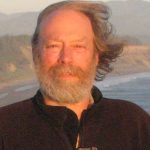 Jim is a multilingual world traveler. Based in Bavaria during the 1970s, Jim spent most of this period in India, Afghanistan and Nepal, where he founded and operated a charitable medical clinic serving Tibetan Refugees. He settled in Oregon in 1983 on a forested ranch in the Umpqua National Forest.
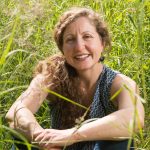 Dr. Micah Hahn is an Associate Professor of Environmental Health in the Institute for Circumpolar Health Studies at the University of Alaska-Anchorage. She received her joint PhD in Epidemiology / Environment and Resources from the University of Wisconsin-Madison and her MPH in Global Environmental Health from Emory University. Subsequently, she was a postdoctoral fellow for the CDC Climate and Health Program, and in this position worked collaboratively with the CDC Division of Vector-borne Diseases and the National Center for Atmospheric Research. Her research focuses on understanding the health impacts of climate change and working with communities to develop locally-relevant adaptation and resilience-building strategies. Dr. Hahn is also on the Management Team of the Alaska Climate Adaptation Science Center.
 Michael is a former Founding Principal of Resilient Cities Catalyst, a global non-profit helping cities and their partners tackle their toughest challenges. He is currently the Executive Director of Climate Resilience Academy at the University of Miami.
 Dr. Quintus Jett is a consultant, educator, and strategist for public causes. He has a doctorate in Organizations & Management from Stanford University, and a two-decade faculty career which spans schools, departments, and programs of business, engineering, liberal studies, divinity, and public and nonprofit management. Following Hurricane Katrina in 2005, Dr. Jett launched a volunteer project in New Orleans, which enlisted residents, students from over a dozen colleges and universities, and hundreds of others to field map the city’s Gentilly district, Lower Ninth Ward, and New Orleans East. Dr. Jett is an innovator in higher education, bridging the divide between academic research and the other priorities of the modern university, including student access and diversity, community engagement, and providing foundations for life-long learning in today’s rapidly changing world.
 Scott is Monfort Professor of Atmospheric Science at Colorado State University. He has written about 100 publications in the peer-reviewed climate literature, is a former editor of the Journal of Climate, and served for five years as founding Science Chair of the North American Carbon Program.
 Linda has many years of experience in disaster preparedness and resilience. She has been an elected official on the Linn County Iowa Board of Supervisors, Chair of the Metropolitan Planning Organization, the East Central Iowa Council of Governments, the statewide Mental Health Developmental Disability and the Linn County Board of Health. Langston is a former president of the National Association of Counties (2013-2014).
 Ken works with families and organizations as a mediator, organizational consultant, trainer and facilitator. Along with his passion for helping people prepare for and reduce climate change, Ken also volunteers as a mediator through Mediation Works and is passionate about supporting youth through mentoring with Boys to Men of Southern Oregon.
 Matthew is a retired high school teacher who was once honored as Oregon High School Social Studies Teacher of the Year. Before his teaching career he was in the restaurant business in Portland. He is also a lawyer who has been a member of the Oregon State Bar Association since 1980.
 Andrea is the Resilience Policy Advisor for the North Carolina Office of Recovery and Resiliency. She works across state agencies and with local governments to increase the state’s resilience to the impacts of climate change.