Guest Column by Dominick DellaSala, PhD
The July 26 Oregonian editorial “Logging for spotted owls” dismisses decades of scientific research by touting one new study that suggests “heavy thinning” (aka, clear-cut lite) of forests could benefit spotted owls. Based on a single computer simulation, the new study suggests that intensive logging will magically prevent “catastrophic fires” such as the Biscuit that “wiped out” owls and other wildlife. This is unfounded.
The Biscuit fire did not destroy spotted owl territories, nor did it “consume” half a million acres of forests. More than half of the fire area actually burned with no, low or moderate fire severity, while a third was deliberately torched in what are called back burns set by firefighters trying to “control” the blaze. This fire was weather-driven, not fuel-driven, and occurred during a severe drought with gusting winds that created fire plumes up to 30,000 feet. Thinned areas burned as hot as those not thinned.
Klamath-Siskiyou country is no stranger to large fires. In fact, a Biscuit-like fire burned through the area in the late 1800s, and since then, fires of mixed severities (low, moderate, high) have repeatedly visited the landscape every 15 to 75 years. The renewal of plant communities — many of which are rare and fire-dependent — from repeat fires is part of the region’s globally distinct plant and wildlife richness. Mature evergreen forests with madrone and oak understories also have been shown to burn less severely than open forests, presumably because over time understory trees in these closed-canopy forests shade out flammable shrubs.
Ten years following the Biscuit fire, the landscape is a vibrant snag forest full of wildflowers, conifer seedlings, woodpeckers, songbirds and butterflies that began populating the fire area as the embers cooled (from nature’s rain, not firefighting). It was certainly not an ecological catastrophe. And while the fire influenced owl territories, its patchiness created a beneficial mixture of shrubby owl foraging areas with large dead and live trees left standing for nesting. Such snag forests are richer in plants and wildlife than even old-growth forests, and unlogged areas are rare because salvage logging, the true catastrophe in burned forests, typically damages them.
Decades of research on spotted owls and prey shows that logging is not as short-lived an impact as some might hope. This is because the owls roost and nest in closed-canopy, dense forests and so do many of the species’ prey. Opening up forests may encourage barred owls, a more aggressive competitor of spotted owls, thereby negating efforts by the U.S. Fish and Wildlife Service to contain this invading owl.
We agree with social reasons for thinning forests to reduce fuels, especially near buildings, and ecological reasons in highly flammable tree plantations. A recent report released by conservation groups and forestry experts, in fact, recommended a 44 percent annual increase in log volume as a byproduct of ecologically restorative actions in primarily tree plantations west of the Cascades. Until scientists have more definitive information on thinning effects on owls and prey, land managers would do best to stick with less ecologically risky and more scientifically supportable actions.
Dominick A. DellaSala is chief scientist of the Geos Institute in Ashland and was a member of the U.S. Fish and Wildlife Service spotted owl recovery team (2006-08). Also contributing to this essay: Monica L. Bond, principal scientist of the Wild Nature Institute and a member of the dry forest landscapes work group for the Northern Spotted Owl Recovery Plan; Dennis Odion, fire ecologist at the University of California at Santa Barbara; Randi Spivak, vice president of government affairs of the Geos Institute.
© 2012 OregonLive.com

 Robert Macnee, Ph.D. is Deputy Director of Resilience Services at Climate Resilience Consulting, where he helps governments, institutions, and communities reduce climate risk in equitable and practical ways. He holds a Ph.D. in Environmental Management focused on climate change impacts on health and communities, and brings over a decade of experience spanning economic development, resilience planning, and implementation.
 Samantha Medlock is President of Climate Risk Advisors, helping communities and organizations advance equity, sustainability, and resilience. Her career began chasing floods as a local official in Texas Flash Flood Alley—a hands-on experience that still shapes her approach to climate and disaster risk management.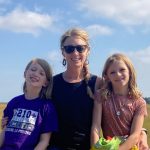
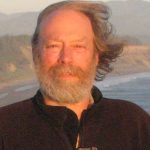 Jim is a multilingual world traveler. Based in Bavaria during the 1970s, Jim spent most of this period in India, Afghanistan and Nepal, where he founded and operated a charitable medical clinic serving Tibetan Refugees. He settled in Oregon in 1983 on a forested ranch in the Umpqua National Forest.
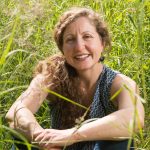 Dr. Micah Hahn is an Associate Professor of Environmental Health in the Institute for Circumpolar Health Studies at the University of Alaska-Anchorage. She received her joint PhD in Epidemiology / Environment and Resources from the University of Wisconsin-Madison and her MPH in Global Environmental Health from Emory University. Subsequently, she was a postdoctoral fellow for the CDC Climate and Health Program, and in this position worked collaboratively with the CDC Division of Vector-borne Diseases and the National Center for Atmospheric Research. Her research focuses on understanding the health impacts of climate change and working with communities to develop locally-relevant adaptation and resilience-building strategies. Dr. Hahn is also on the Management Team of the Alaska Climate Adaptation Science Center.
 Michael is a former Founding Principal of Resilient Cities Catalyst, a global non-profit helping cities and their partners tackle their toughest challenges. He is currently the Executive Director of Climate Resilience Academy at the University of Miami.
 Dr. Quintus Jett is a consultant, educator, and strategist for public causes. He has a doctorate in Organizations & Management from Stanford University, and a two-decade faculty career which spans schools, departments, and programs of business, engineering, liberal studies, divinity, and public and nonprofit management. Following Hurricane Katrina in 2005, Dr. Jett launched a volunteer project in New Orleans, which enlisted residents, students from over a dozen colleges and universities, and hundreds of others to field map the city’s Gentilly district, Lower Ninth Ward, and New Orleans East. Dr. Jett is an innovator in higher education, bridging the divide between academic research and the other priorities of the modern university, including student access and diversity, community engagement, and providing foundations for life-long learning in today’s rapidly changing world.
 Scott is Monfort Professor of Atmospheric Science at Colorado State University. He has written about 100 publications in the peer-reviewed climate literature, is a former editor of the Journal of Climate, and served for five years as founding Science Chair of the North American Carbon Program.
 Linda has many years of experience in disaster preparedness and resilience. She has been an elected official on the Linn County Iowa Board of Supervisors, Chair of the Metropolitan Planning Organization, the East Central Iowa Council of Governments, the statewide Mental Health Developmental Disability and the Linn County Board of Health. Langston is a former president of the National Association of Counties (2013-2014).
 Ken works with families and organizations as a mediator, organizational consultant, trainer and facilitator. Along with his passion for helping people prepare for and reduce climate change, Ken also volunteers as a mediator through Mediation Works and is passionate about supporting youth through mentoring with Boys to Men of Southern Oregon.
 Matthew is a retired high school teacher who was once honored as Oregon High School Social Studies Teacher of the Year. Before his teaching career he was in the restaurant business in Portland. He is also a lawyer who has been a member of the Oregon State Bar Association since 1980.
 Andrea is the Resilience Policy Advisor for the North Carolina Office of Recovery and Resiliency. She works across state agencies and with local governments to increase the state’s resilience to the impacts of climate change.