
Mystic Corridor Tour
From Crater Lake to the Coast
Join us for an online road tour down the Mystic Corridor, between Crater Lake National Park and the Pacific Coast, with its world-class recreation sites and scenic attractions. This tour crosses the northern part of the Klamath-Siskiyou region on highways 62, 234, 99, and 199.
For each stop on this virtual tour, you will find:
- a 2 to 3 minute video about the site and what you can do there
- driving directions and a map
- links to more information and resources
Agnes Pilgrim at the Takelma Pit House
Take a tour with native Takelma elder, Agnes Baker Pilgrim, to the Kerbyville Museum and History Center, which features a replica of the traditional “pit houses” that sheltered Grandma Aggie’s ancestors. The pit house replica is located right behind the Museum at 24195 Highway 199 in Kerby. See a map and photos on Facebook.
Open daily from April 1st through October 31st, the Museum has exhibits on Native Americans, mining, logging and pioneers. The historic Naucke House, built in the 1880s, is on the National Register of Historic Places. For details, call 541-592-5252.
Grandma Aggie and others worked with the Museum to secure a grant and build the pit house replica in 2000.
To learn more about Agnes Baker Pilgrim and her Takelma ancestors, visit: www.agnesbakerpilgrim.org
Stout Grove’s Amazing Redwoods
Learn about Del Norte County’s majestic redwoods with Rene’ Shanle-Hutzell, as she guides us down Howland Hill Road into Jedediah Smith Redwoods State Park. This scenic drive is just 3 miles off of Highway 199 near Hiouchi. The road is well-maintained, but unpaved, so motorhomes and trailers are not advised.
Join Rene’ for a hike on the family-friendly Stout Grove Loop Trail (.6 miles). Restrooms are available at the parking lot.
All along Howland Hill Road, numerous pull-outs and trailheads welcome explorers of all ages.
Directions: From Highway 199 in California, between the towns of Gasquet and Hiouchi, watch for the sign to Howland Hill Road and turn south on Country Road 427. Cross the Smith River twice and turn right onto Douglas Park Drive, which leads to Howland Hill Road. From the entrance sign to Jedediah Smith Redwoods State Park (where the pavement ends), drive one more mile and turn right at the sign to Stout Grove. Click here for map.
From Stout Grove you can return the way you came to Highway 199, or continue driving west through the redwoods to Highway 101 on the Pacific Coast just south of Crescent City (7 miles, a 30-minute drive).
For more information, contact:
Crescent City/Del Norte County Visitors Bureau (800) 343-8300
Jedediah Smith Redwoods State Park (707) 458-3018
The Gold of Gold Hill
Take a tour with acclaimed local historian and author, Dennis Powers, and learn how the discovery of gold in the late 1800’s built the town of Gold Hill. Visit the Gold Hill Historical Society Museum and see the twenty-foot tall stamp mill out back, once used to crush and purify raw ore into powder for smelting.Dennis retells famous stories, illustrated by rare Museum photos printed in his new book, “Images of America: Gold Hill” (available at the Gold Hill Historical Society Museum, Amazon.com, and local book outlets).
Museum hours: 12 to 4 pm, Thurs. through Sat. Call 541-855-1182.
Directions: Drive to downtown Gold Hill on either Highway 234 or 99. Turn south on Estremado Street and drive one block to 1st Avenue.
Nature Trails and Visitor Center at McGregor Park
McGregor Park is a free, day-use park on 17 acres next to the Rogue River, just downstream of Lost Creek Dam. The nature trails, picnic areas, and playground are all wheelchair accessible.
The Visitor Center is open daily between Memorial Day and Labor Day weekends from 10 am to 5 pm, with information about the local ecology and cultural history.
Join naturalist Leah Schrodt for a walk in the park!
Directions: On Highway 62, drive 8.8 miles northeast of Shady Cove. Turn left on Takelma Drive, also the turnoff to the Cole River Fish Hatchery. Drive 1/4 mile to McGregor Park on the right.
For more details: visit the BLM website.
Flyfishing on the Rogue River at Takelma Park
Takelma Park is a Jackson County day-use area south of Shady Cove with forty acres of parkland, one-third mile of river frontage, and a boatramp.
It’s a favorite place for salmon and steelhead anglers like local resident Mike Beagle, who gives a flyfishing lesson (and catches one!) in the video below.
Directions: From Medford, drive 19 miles northeast on Highway 62. Turn left on Highway 234. Cross the Rogue River at Dodge Bridge and turn right onto Rogue River Drive. Go 3 miles north to Takelma Park.
For more details: see the Jackson County website.
Art Along the Rogue
Art Along the Rogue is an annual Grants Pass event held the first weekend in October. This free outdoor festival features dozens of local and national chalk artists of all ages, who create amazing street art during the two-day event. The family affair also includes live music, a doggie parade, and prizes.
For more information, watch the video below and visit the website for Art Along the Rogue.
Contribute
Geos Institute depends on the generous support of caring people who believe we can and must do a better job addressing climate change for our children and those who will follow.
Stay Updated!
Sign up for our eNews to stay updated on our work and receive information you can use to build resilience in your community.
 Robert Macnee, Ph.D. is Deputy Director of Resilience Services at Climate Resilience Consulting, where he helps governments, institutions, and communities reduce climate risk in equitable and practical ways. He holds a Ph.D. in Environmental Management focused on climate change impacts on health and communities, and brings over a decade of experience spanning economic development, resilience planning, and implementation.
 Samantha Medlock is President of Climate Risk Advisors, helping communities and organizations advance equity, sustainability, and resilience. Her career began chasing floods as a local official in Texas Flash Flood Alley—a hands-on experience that still shapes her approach to climate and disaster risk management.
 Arsum is the Senior Adaptation and Coastal Resilience Specialist for the National Wildlife Federation’s Southcentral Region. In this role, she advances climate adaptation efforts, with a focus on nature-based approaches to address the impacts of climate change and extreme events across the Gulf region. She has authored and co-authored numerous publications on climate impact assessments and adaptation solutions. Additionally, she regularly participates in state-based coastal resilience and hazard mitigation planning across the Gulf, collaborating with regional and local stakeholders.
 Jim is a multilingual world traveler. Based in Bavaria during the 1970s, Jim spent most of this period in India, Afghanistan and Nepal, where he founded and operated a charitable medical clinic serving Tibetan Refugees. He settled in Oregon in 1983 on a forested ranch in the Umpqua National Forest.
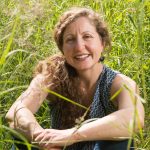 Dr. Micah Hahn is an Associate Professor of Environmental Health in the Institute for Circumpolar Health Studies at the University of Alaska-Anchorage. She received her joint PhD in Epidemiology / Environment and Resources from the University of Wisconsin-Madison and her MPH in Global Environmental Health from Emory University. Subsequently, she was a postdoctoral fellow for the CDC Climate and Health Program, and in this position worked collaboratively with the CDC Division of Vector-borne Diseases and the National Center for Atmospheric Research. Her research focuses on understanding the health impacts of climate change and working with communities to develop locally-relevant adaptation and resilience-building strategies. Dr. Hahn is also on the Management Team of the Alaska Climate Adaptation Science Center.
 Michael is a former Founding Principal of Resilient Cities Catalyst, a global non-profit helping cities and their partners tackle their toughest challenges. He is currently the Executive Director of Climate Resilience Academy at the University of Miami.
 Dr. Quintus Jett is a consultant, educator, and strategist for public causes. He has a doctorate in Organizations & Management from Stanford University, and a two-decade faculty career which spans schools, departments, and programs of business, engineering, liberal studies, divinity, and public and nonprofit management. Following Hurricane Katrina in 2005, Dr. Jett launched a volunteer project in New Orleans, which enlisted residents, students from over a dozen colleges and universities, and hundreds of others to field map the city’s Gentilly district, Lower Ninth Ward, and New Orleans East. Dr. Jett is an innovator in higher education, bridging the divide between academic research and the other priorities of the modern university, including student access and diversity, community engagement, and providing foundations for life-long learning in today’s rapidly changing world.
 Scott is Monfort Professor of Atmospheric Science at Colorado State University. He has written about 100 publications in the peer-reviewed climate literature, is a former editor of the Journal of Climate, and served for five years as founding Science Chair of the North American Carbon Program.
 Linda has many years of experience in disaster preparedness and resilience. She has been an elected official on the Linn County Iowa Board of Supervisors, Chair of the Metropolitan Planning Organization, the East Central Iowa Council of Governments, the statewide Mental Health Developmental Disability and the Linn County Board of Health. Langston is a former president of the National Association of Counties (2013-2014).
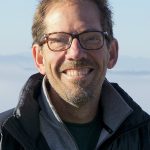 Ken works with families and organizations as a mediator, organizational consultant, trainer and facilitator. Along with his passion for helping people prepare for and reduce climate change, Ken also volunteers as a mediator through Mediation Works and is passionate about supporting youth through mentoring with Boys to Men of Southern Oregon.
 Matthew is a retired high school teacher who was once honored as Oregon High School Social Studies Teacher of the Year. Before his teaching career he was in the restaurant business in Portland. He is also a lawyer who has been a member of the Oregon State Bar Association since 1980.
 Andrea is the Resilience Policy Advisor for the North Carolina Office of Recovery and Resiliency. She works across state agencies and with local governments to increase the state’s resilience to the impacts of climate change.