
U.S. Forests Are Pivotal in Efforts to Slow Climate Change
For Immediate Release on June 18, 2014
Contacts: Dr. Dominick DellaSala, Geos Institute (541-482-4459 x 302; 541-621-7223); Dr. Olga Krankina, Oregon State University (541-737-1780)
Ashland, OR – Scientists today called on the Obama Administration to do more to protect the nation’s mature “high-biomass” forests because of their unique climate change benefits. While the President has taken bold steps to reduce carbon dioxide pollution from coal and other fossil fuels, he has sidestepped efforts to protect productive older forests that store massive amounts of carbon and are key to helping stabilize runaway climate change. The study of high-biomass forests was published in the July 2014 issue of Environmental Management.
Older forests (mature and old growth) are a critical part of the global biological carbon cycle that contribute to climate stabilization by uptake and storage of atmospheric carbon in live and dead trees, foliage and soils. The oldest and most productive forests are where the trees are providing a long-term “sink” for atmospheric carbon, absorbing and holding on to it like a sponge for centuries. Those forests are the primary target for logging and when they are cut down up to half of their stored carbon is released into the atmosphere as a carbon dioxide pollutant within just a few years. This loss is not made up for by planting trees or storing carbon in wood products as forest products have a short “shelf life” compared to mature forest that sequesters (absorbs) and stores carbon for centuries.
According to lead author Dr. Olga Krankina, Oregon State University faculty and a member of the Nobel-prize winning Intergovernmental Panel on Climate Change (2007), our findings demonstrate that “high-biomass forests occur on less than 3% of the nation’s forest base but the Pacific Northwest holds over half these forests. The new study shows that 68% of BLM forests in the Pacific Northwest are high-biomass; only National Parks have higher proportion of high-biomass forest in their forest area.”
Krankina led a team of scientists that assembled multiple data sources on forest carbon using remote sensing from the Space Shuttle, Landsat, and USDA Forest Service forest inventory plots to map the location of high-biomass forests. Over an 8-year period (2000-2008) for which data were readily available, losses to these forests were greatest on private lands where logging was the primary cause. In comparison, loss of high-biomass forests to fire on public lands was ~30% lower than logging-related losses.
The study concluded that the level of protection for older productive forests in the Pacific Northwest is inadequate to help stabilize the climate and ranges from 31% in Washington to only 9% in Oregon, meaning that the vast majority of these climate-critical forests are vulnerable to logging. Planned revisions to the Northwest Forest Plan would greatly undermine the existing limited protection of older forests. New federal climate change initiatives also fail to recognize the value of forests as stores of carbon and the need to protect them from logging to prevent the release of stored carbon into the atmosphere as CO2.
Dr. Dominick A. DellaSala, Chief Scientist of Geos Institute and co-author, stated “While the President has taken bold steps to draw attention to the growing climate change crisis, he has done very little to enlist forests in the climate change solution. From the massive Coast Redwoods of California to the towering spruce trees of the Tongass rainforest in Alaska, older forests help stabilize the climate, clean our air, give us drinking water, and support the region’s outdoor economies. Protecting them would be a flagship accomplishment of the President’s efforts to stem runaway climate change.”
DellaSala used these and related findings to show older forests in Oregon store more carbon per acre than nearly any forest on Earth while providing life-giving ecosystem benefits that will be in short supply in a changing climate such as clean water. Older forest benefits will become increasingly important as a refuge for climate-forced wildlife migrations in search of suitable climate. However, these same forests are now on the chopping block as Oregon Senator Ron Wyden has introduced legislation to double logging levels on BLM lands in western Oregon. Such logging would result in carbon dioxide pollution that rivals Oregon’s dirtiest coal-fired power plant. Similarly, in Alaska, old-growth rainforests are still being logged on the Tongass and these forests are among the most stable carbon stores on the planet.
High biomass Forests of the Contiguous United States

 Robert Macnee, Ph.D. is Deputy Director of Resilience Services at Climate Resilience Consulting, where he helps governments, institutions, and communities reduce climate risk in equitable and practical ways. He holds a Ph.D. in Environmental Management focused on climate change impacts on health and communities, and brings over a decade of experience spanning economic development, resilience planning, and implementation.
 Samantha Medlock is President of Climate Risk Advisors, helping communities and organizations advance equity, sustainability, and resilience. Her career began chasing floods as a local official in Texas Flash Flood Alley—a hands-on experience that still shapes her approach to climate and disaster risk management.
 Arsum is the Senior Adaptation and Coastal Resilience Specialist for the National Wildlife Federation’s Southcentral Region. In this role, she advances climate adaptation efforts, with a focus on nature-based approaches to address the impacts of climate change and extreme events across the Gulf region. She has authored and co-authored numerous publications on climate impact assessments and adaptation solutions. Additionally, she regularly participates in state-based coastal resilience and hazard mitigation planning across the Gulf, collaborating with regional and local stakeholders.
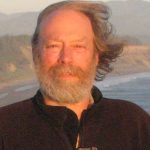 Jim is a multilingual world traveler. Based in Bavaria during the 1970s, Jim spent most of this period in India, Afghanistan and Nepal, where he founded and operated a charitable medical clinic serving Tibetan Refugees. He settled in Oregon in 1983 on a forested ranch in the Umpqua National Forest.
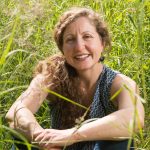 Dr. Micah Hahn is an Associate Professor of Environmental Health in the Institute for Circumpolar Health Studies at the University of Alaska-Anchorage. She received her joint PhD in Epidemiology / Environment and Resources from the University of Wisconsin-Madison and her MPH in Global Environmental Health from Emory University. Subsequently, she was a postdoctoral fellow for the CDC Climate and Health Program, and in this position worked collaboratively with the CDC Division of Vector-borne Diseases and the National Center for Atmospheric Research. Her research focuses on understanding the health impacts of climate change and working with communities to develop locally-relevant adaptation and resilience-building strategies. Dr. Hahn is also on the Management Team of the Alaska Climate Adaptation Science Center.
 Michael is a former Founding Principal of Resilient Cities Catalyst, a global non-profit helping cities and their partners tackle their toughest challenges. He is currently the Executive Director of Climate Resilience Academy at the University of Miami.
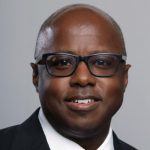 Dr. Quintus Jett is a consultant, educator, and strategist for public causes. He has a doctorate in Organizations & Management from Stanford University, and a two-decade faculty career which spans schools, departments, and programs of business, engineering, liberal studies, divinity, and public and nonprofit management. Following Hurricane Katrina in 2005, Dr. Jett launched a volunteer project in New Orleans, which enlisted residents, students from over a dozen colleges and universities, and hundreds of others to field map the city’s Gentilly district, Lower Ninth Ward, and New Orleans East. Dr. Jett is an innovator in higher education, bridging the divide between academic research and the other priorities of the modern university, including student access and diversity, community engagement, and providing foundations for life-long learning in today’s rapidly changing world.
 Scott is Monfort Professor of Atmospheric Science at Colorado State University. He has written about 100 publications in the peer-reviewed climate literature, is a former editor of the Journal of Climate, and served for five years as founding Science Chair of the North American Carbon Program.
 Linda has many years of experience in disaster preparedness and resilience. She has been an elected official on the Linn County Iowa Board of Supervisors, Chair of the Metropolitan Planning Organization, the East Central Iowa Council of Governments, the statewide Mental Health Developmental Disability and the Linn County Board of Health. Langston is a former president of the National Association of Counties (2013-2014).
 Ken works with families and organizations as a mediator, organizational consultant, trainer and facilitator. Along with his passion for helping people prepare for and reduce climate change, Ken also volunteers as a mediator through Mediation Works and is passionate about supporting youth through mentoring with Boys to Men of Southern Oregon.
 Matthew is a retired high school teacher who was once honored as Oregon High School Social Studies Teacher of the Year. Before his teaching career he was in the restaurant business in Portland. He is also a lawyer who has been a member of the Oregon State Bar Association since 1980.
 Andrea is the Resilience Policy Advisor for the North Carolina Office of Recovery and Resiliency. She works across state agencies and with local governments to increase the state’s resilience to the impacts of climate change.