
Summer 2016 Newsletter
Campaign to Establish a Forest and Climate Legacy for President Obama Heating Up
In this summer edition of the Forest Legacies newsletter:
- The Tongass as Alaska’s First Line of Climate Change Defense
- Race to Save the South Kalmiopsis and Oregon Redwoods in Full Gear
- Defending the Northwest Forest Plan: A Global Example of Large-Landscape Conservation
- The Wildfire Conundrum
- Looking Ahead
The Tongass as Alaska’s First Line of Climate Change Defense

At nearly 17 million acres, the Tongass National Forest in southeast Alaska is the nation’s largest national forest and a carbon champion, absorbing some 8% of our annual carbon dioxide pollution in its productive old-growth rainforests. Unfortunately, the Forest Service proposes to clearcut 43,000 acres of this old growth, mostly in the next 16 years, releasing the equivalent emissions of some 4 million vehicles annually. The agency’s logging plan is an embarrassment to President Obama’s global leadership on climate change and contradicts his visit to Alaska last September when he announced, while in route to the Paris Climate Change Summit, that the state is the nation’s “sign post” on climate change.
For the past three years, Geos Institute, and our partners, Natural Resources Defense Council, Mater Engineering (board member), and retired Deputy Forest Service Chief Jim Furnish (board member), have been conducting ground-breaking research on the amount of young forests available to shift timber production out of controversial old-growth logging. Thousands of acres of young plantation forests originally logged in the 1950s have since regrown and will soon (by 2020) be ready offset the need to log old growth.
 We also teamed with a local Alaska mill to propose a study that would determine the feasibility of processing young trees from the Tongass, using new milling technologies that get more material from small logs with much less wood waste. Collectively, this work is uniquely solving for economic uncertainties of a rapid transition. And while we have demonstrated to the Forest Service how transition can swiftly occur, they remain dug in on clearcutting vast areas of old-growth rainforests, the only national forest that is still doing this on a large scale.
In the coming months, we will be making a compelling case to the Obama Administration to direct the Forest Service to speed up its transition by taking advantage of this new opportunity we have demonstrated, and help save Alaska’s rainforests and climate. Only with bold direction from the President can we save the Tongass from rampant old-growth and climate-dirty logging.
Race to Save the South Kalmiopsis and Oregon Redwoods in Full Gear
 Emerald green rivers, rare carnivorous plants, and massive Oregon redwoods make up a landscape unmatched in biodiversity across the American West. For the past 4 years, Geos Institute has partnered with local and national conservation groups to seek protection from mining of these waterways and for Oregon’s redwoods. Legislation has been introduced in Congress by Oregon Senators Ron Wyden and Jeff Merkley and Reps. Peter DeFazio (OR) and Jared Huffman (CA) to protect at-risk watersheds that, although has yet to receive a hearing in the Republican-controlled Congress, did trigger a temporary withdrawal of new mining claims until Congress can act. Geos Institute is pushing for permanent protections of this area in the coming months that we hope to achieve before President Obama leaves office in January.
Defending the Northwest Forest Plan: A Global Example of Large-Landscape Conservation
 The Northwest Forest Plan is a global model for ecosystem management and biodiversity conservation on over 24 million acres of federal lands from California to Washington. This landmark plan is scheduled for renewal in 2017 under the incoming Administration. The Forest Service is currently conducting a science synthesis in its preparation for future plan revisions. Geos Institute has been instrumental in providing sound science to the agency. Recently, we published a peer-reviewed paper on the 20-year anniversary of the 100-year Northwest Forest Plan in the journal Forests. That paper, along with hundreds of related publications by scientists, was sent to the agency in support of increased protections for Northwest forests.
This June, 13 leading scientists called on the Forest Service to expand protections afforded for forests and imperiled species as a means of preparing for unprecedented climate impacts and ongoing land-use disturbances mainly on nonfederal lands. We intend to brief the incoming Administration on the importance of building on the Northwest Forest Plan’s two decades of accomplishments.
The Wildfire Conundrum
Chief Scientist, Dr. Dominick DellaSala, was recently interviewed in a Jefferson Journal article, “The Wildfire Conundrum,” based on a three-part radio series on the Jefferson Public Radio.
“If fuels were contributing to more forest fires and more severe fires, that’s what we would be seeing in the West.” Instead, [DellaSala] says, “We are actually in a deficit of fire severity and fire acres in most of the West compared to historical times.”

Geos Institute continues to be a national leader on advocating for the biodiversity importance of wildland fires and ways to co-exist with them without logging in the backcountry. Check out our book – “The ecological importance of mixed-severity fires: nature’s phoenix (link to the book goes here). In the coming months, we will be meeting with decision makers in Washington D.C. to make our case to Congress that responsible fire management can be achieved by first and foremost protecting homes and fire fighters so that more fires can burn safely in the backcountry performing a vital ecological role.
Looking Ahead
 Conservation always involves anticipation. And despite uncertainties in who the next president will be in November, Geos Institute is already preparing to brief the incoming Administration. We are in the process of working on a bold conservation vision for public lands that we hope to present to the incoming Administration during its first 100 days – stay tuned as we wrap up existing campaigns and keep our periscope up for emerging opportunities.
 Robert Macnee, Ph.D. is Deputy Director of Resilience Services at Climate Resilience Consulting, where he helps governments, institutions, and communities reduce climate risk in equitable and practical ways. He holds a Ph.D. in Environmental Management focused on climate change impacts on health and communities, and brings over a decade of experience spanning economic development, resilience planning, and implementation.
 Samantha Medlock is President of Climate Risk Advisors, helping communities and organizations advance equity, sustainability, and resilience. Her career began chasing floods as a local official in Texas Flash Flood Alley—a hands-on experience that still shapes her approach to climate and disaster risk management.
 Arsum is the Senior Adaptation and Coastal Resilience Specialist for the National Wildlife Federation’s Southcentral Region. In this role, she advances climate adaptation efforts, with a focus on nature-based approaches to address the impacts of climate change and extreme events across the Gulf region. She has authored and co-authored numerous publications on climate impact assessments and adaptation solutions. Additionally, she regularly participates in state-based coastal resilience and hazard mitigation planning across the Gulf, collaborating with regional and local stakeholders.
 Jim is a multilingual world traveler. Based in Bavaria during the 1970s, Jim spent most of this period in India, Afghanistan and Nepal, where he founded and operated a charitable medical clinic serving Tibetan Refugees. He settled in Oregon in 1983 on a forested ranch in the Umpqua National Forest.
 Dr. Micah Hahn is an Associate Professor of Environmental Health in the Institute for Circumpolar Health Studies at the University of Alaska-Anchorage. She received her joint PhD in Epidemiology / Environment and Resources from the University of Wisconsin-Madison and her MPH in Global Environmental Health from Emory University. Subsequently, she was a postdoctoral fellow for the CDC Climate and Health Program, and in this position worked collaboratively with the CDC Division of Vector-borne Diseases and the National Center for Atmospheric Research. Her research focuses on understanding the health impacts of climate change and working with communities to develop locally-relevant adaptation and resilience-building strategies. Dr. Hahn is also on the Management Team of the Alaska Climate Adaptation Science Center.
 Michael is a former Founding Principal of Resilient Cities Catalyst, a global non-profit helping cities and their partners tackle their toughest challenges. He is currently the Executive Director of Climate Resilience Academy at the University of Miami.
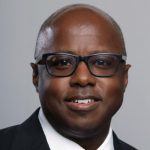 Dr. Quintus Jett is a consultant, educator, and strategist for public causes. He has a doctorate in Organizations & Management from Stanford University, and a two-decade faculty career which spans schools, departments, and programs of business, engineering, liberal studies, divinity, and public and nonprofit management. Following Hurricane Katrina in 2005, Dr. Jett launched a volunteer project in New Orleans, which enlisted residents, students from over a dozen colleges and universities, and hundreds of others to field map the city’s Gentilly district, Lower Ninth Ward, and New Orleans East. Dr. Jett is an innovator in higher education, bridging the divide between academic research and the other priorities of the modern university, including student access and diversity, community engagement, and providing foundations for life-long learning in today’s rapidly changing world.
 Scott is Monfort Professor of Atmospheric Science at Colorado State University. He has written about 100 publications in the peer-reviewed climate literature, is a former editor of the Journal of Climate, and served for five years as founding Science Chair of the North American Carbon Program.
 Linda has many years of experience in disaster preparedness and resilience. She has been an elected official on the Linn County Iowa Board of Supervisors, Chair of the Metropolitan Planning Organization, the East Central Iowa Council of Governments, the statewide Mental Health Developmental Disability and the Linn County Board of Health. Langston is a former president of the National Association of Counties (2013-2014).
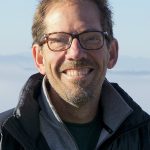 Ken works with families and organizations as a mediator, organizational consultant, trainer and facilitator. Along with his passion for helping people prepare for and reduce climate change, Ken also volunteers as a mediator through Mediation Works and is passionate about supporting youth through mentoring with Boys to Men of Southern Oregon.
 Matthew is a retired high school teacher who was once honored as Oregon High School Social Studies Teacher of the Year. Before his teaching career he was in the restaurant business in Portland. He is also a lawyer who has been a member of the Oregon State Bar Association since 1980.
 Andrea is the Resilience Policy Advisor for the North Carolina Office of Recovery and Resiliency. She works across state agencies and with local governments to increase the state’s resilience to the impacts of climate change.