
Scientists’ warning to humanity has Earth Day meaning
By Dominick A. DellaSala, posted April 22, 2018 at Medford Mail Tribune
In 1992, I was one of 1,700 scientists, including Nobel laureates, who issued the “Scientists’ Warning to Humanity” because of damage humans were inflicting on the Earth. This March, I joined 20,000 scientists in sounding a second alarm as humanity is on an even faster collision with Earth’s life-giving systems.
This is not Chicken Little or “fake news.” Scientists read the planet’s life signs like the warning lights on a car’s dashboard. We use satellites, global weather stations and polar ice measurements to document how humans are altering the global climate and destroying the planet’s ecosystems in unprecedented ways. In the years since the first warning, Earth’s dashboard lights are signaling a pending system-wide failure that threatens life on Earth on a scale soon to rival the epic demise of the dinosaurs.
Consider these alarming trends:
Half of all species on Earth could be extinguished by mid- to late century, mainly from habitat destruction and global warming as more and more people consume finite natural resources and our ecological footprint reaches dangerous levels. For the Rogue Valley, summer temperatures will heat up by 7 to 15 degrees Fahrenheit. Coastal towns will experience unprecedented sea-level rise from melting glaciers. Health ailments such as Lyme disease, asthma and heat exhaustion, exacerbated by climate change, will increasingly hurt children, the elderly and the economically disadvantaged. Category 5 hurricanes will become the new norm for east coast residents and Alaska Native villages will be displaced by floods and permafrost melting. It’s hard to put a smiley face on Earth Day celebrations after forecasting such alarming trends. But I am an eternal optimist and a parent, so I have to believe there is still time to act for a better future.
In fact, we see people taking action all around us.
Witness America’s youth standing up to politicians who have failed to act on gun violence. A climate lawsuit, filed by “Our Children’s Trust,” is making a compelling argument that our government is placing their birth right to a safe climate in jeopardy by not acting on climate change. #Metoo is raising awareness of injustices to woman. The Civil Rights movement continues to work toward Dr. King’s vision of true racial equality. Groups like Indivisible are advocating for affordable health care. Environmental and social justice organizations are working toward a clean environment in economically disadvantaged communities. And my own organization, Geos Institute, along with other local groups, is protecting public lands and fighting climate change.
In the meantime, to avoid a third and possibly final warning from scientists, here is my hopeful vision for righting spaceship Earth.
By Earth Day 2021:
- The White House embraces climate science in decision making.
- The U.S. has rejoined the global community in the historic Paris Climate Change Agreement (signed by President Obama, withdrawn by President Trump), restoring diplomacy to international affairs and jump-starting the carbon neutral economy.
- Oregon leads by example in passing a Clean Energy Jobs bill that includes forest protections.
- Congress is upgrading auto fuel efficiency standards, saving Americans money at the pump as we transition completely off fossil fuels.
- Older and unlogged forests from the tropics to our very own public lands are protected while forests damaged by clearcut logging are being repaired, which helps to cool the planet and supplies clean water for salmon, agriculture and rural communities.
- Land-use zoning and “smart” growth measures are containing sprawl into fire-unsafe areas.
- Designing houses for fire safety and clearing vegetation nearest homes is replacing rhetoric about logging in the back country for fire control.
- Local leaders are passing climate change ordinances that quickly reduce global warming pollution.
- All of this change goes viral, as we take responsibility for our part of the ecological crisis.
During my 30-year career spanning the two scientist letters, I have personally witnessed communities around the globe taking actions like these. But to really be the change we want in the world, we need to get involved at our places of worship, community events, social change rallies and through social media. And we must exert our influence through voter registration drives and letter-writing campaigns to lawmakers.
Earth Day reminds me that none of us is truly alone in wanting interconnectedness, ecological restoration and a better way to relate to each other and the planet. So please join millions around the world in celebrating Earth Day by helping young people connect with the elderly and all genders and people of color in healing the planet through local to global actions.
— Dominick A. DellaSala, Ph.D, chief scientist at the Geos Institute, is an award-winning conservation scientist with over 200 scientific articles, books and films about global environmental change.
Contribute
Geos Institute depends on the generous support of caring people who believe we can and must do a better job addressing climate change for our children and those who will follow.
Stay Updated!
Sign up for our eNews to stay updated on our work and receive information you can use to build resilience in your community.
 Robert Macnee, Ph.D. is Deputy Director of Resilience Services at Climate Resilience Consulting, where he helps governments, institutions, and communities reduce climate risk in equitable and practical ways. He holds a Ph.D. in Environmental Management focused on climate change impacts on health and communities, and brings over a decade of experience spanning economic development, resilience planning, and implementation.
 Samantha Medlock is President of Climate Risk Advisors, helping communities and organizations advance equity, sustainability, and resilience. Her career began chasing floods as a local official in Texas Flash Flood Alley—a hands-on experience that still shapes her approach to climate and disaster risk management.
 Arsum is the Senior Adaptation and Coastal Resilience Specialist for the National Wildlife Federation’s Southcentral Region. In this role, she advances climate adaptation efforts, with a focus on nature-based approaches to address the impacts of climate change and extreme events across the Gulf region. She has authored and co-authored numerous publications on climate impact assessments and adaptation solutions. Additionally, she regularly participates in state-based coastal resilience and hazard mitigation planning across the Gulf, collaborating with regional and local stakeholders.
 Jim is a multilingual world traveler. Based in Bavaria during the 1970s, Jim spent most of this period in India, Afghanistan and Nepal, where he founded and operated a charitable medical clinic serving Tibetan Refugees. He settled in Oregon in 1983 on a forested ranch in the Umpqua National Forest.
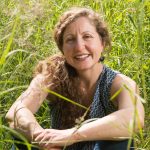 Dr. Micah Hahn is an Associate Professor of Environmental Health in the Institute for Circumpolar Health Studies at the University of Alaska-Anchorage. She received her joint PhD in Epidemiology / Environment and Resources from the University of Wisconsin-Madison and her MPH in Global Environmental Health from Emory University. Subsequently, she was a postdoctoral fellow for the CDC Climate and Health Program, and in this position worked collaboratively with the CDC Division of Vector-borne Diseases and the National Center for Atmospheric Research. Her research focuses on understanding the health impacts of climate change and working with communities to develop locally-relevant adaptation and resilience-building strategies. Dr. Hahn is also on the Management Team of the Alaska Climate Adaptation Science Center.
 Michael is a former Founding Principal of Resilient Cities Catalyst, a global non-profit helping cities and their partners tackle their toughest challenges. He is currently the Executive Director of Climate Resilience Academy at the University of Miami.
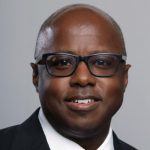 Dr. Quintus Jett is a consultant, educator, and strategist for public causes. He has a doctorate in Organizations & Management from Stanford University, and a two-decade faculty career which spans schools, departments, and programs of business, engineering, liberal studies, divinity, and public and nonprofit management. Following Hurricane Katrina in 2005, Dr. Jett launched a volunteer project in New Orleans, which enlisted residents, students from over a dozen colleges and universities, and hundreds of others to field map the city’s Gentilly district, Lower Ninth Ward, and New Orleans East. Dr. Jett is an innovator in higher education, bridging the divide between academic research and the other priorities of the modern university, including student access and diversity, community engagement, and providing foundations for life-long learning in today’s rapidly changing world.
 Scott is Monfort Professor of Atmospheric Science at Colorado State University. He has written about 100 publications in the peer-reviewed climate literature, is a former editor of the Journal of Climate, and served for five years as founding Science Chair of the North American Carbon Program.
 Linda has many years of experience in disaster preparedness and resilience. She has been an elected official on the Linn County Iowa Board of Supervisors, Chair of the Metropolitan Planning Organization, the East Central Iowa Council of Governments, the statewide Mental Health Developmental Disability and the Linn County Board of Health. Langston is a former president of the National Association of Counties (2013-2014).
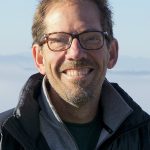 Ken works with families and organizations as a mediator, organizational consultant, trainer and facilitator. Along with his passion for helping people prepare for and reduce climate change, Ken also volunteers as a mediator through Mediation Works and is passionate about supporting youth through mentoring with Boys to Men of Southern Oregon.
 Matthew is a retired high school teacher who was once honored as Oregon High School Social Studies Teacher of the Year. Before his teaching career he was in the restaurant business in Portland. He is also a lawyer who has been a member of the Oregon State Bar Association since 1980.
 Andrea is the Resilience Policy Advisor for the North Carolina Office of Recovery and Resiliency. She works across state agencies and with local governments to increase the state’s resilience to the impacts of climate change.