
Scientists sound the alarm on Earth Day
Originally published on April 21, 2019 in the Medford Mail Tribune
 By Dominick A. DellaSala, William J. Ripple and Franz Baumann
Another Earth Day is here and it’s time to see how the planet’s life-support systems are doing and what it means for Oregonians.
Since clean, renewable energy solutions are becoming increasingly available, we remain hopeful. Given the risk, though, that they might not be deployed at scale, and because the planet is creeping dangerously close to a tipping point, it’s hard not to be alarmed.
For decades, scientists have been monitoring the planet’s systems like the warning lights on a car’s dashboard. We scan satellite images of humanity’s growing ecological footprint on the world’s forests, rivers, and oceans that is setting the stage for the biggest extinction event since the dinosaurs went extinct. We use thousands of weather stations to track rising global temperatures and super-computers that forecast catastrophic impacts awaiting future generations if we ignore these telltale signs.
In 1992, we were among 1,700 scientists that issued a warning to humanity that “a great change in our stewardship of the Earth and the life on it is required if vast human misery is to be avoided.” In 2017, more than 21,000 scientists from 184 countries joined us in issuing a second warning that conditions had far worsened and we were running out of time.
In Oregon, rising temperatures means more extreme fire weather (hotter, drier, windier). Smoke now pours into the Rogue Valley from fires in British Columbia. Winters deliver more rain, less snow, and flooding is impacting coastal communities.
Fortunately, forward-thinking members of Congress, led by Rep. Alexandria Ocasio-Cortez, D-N.Y., and Sen. Ed Markey D-Mass., recently introduced a bold resolution that responds to the climate challenge at scale. Aptly named a Green New Deal, it is as ambitious as President Roosevelt’s New Deal in the 1930s. It comprehends the magnitude of climate change and the pending extinction crisis in their totality and with urgency.
Supported by much of Oregon’s congressional delegation, the resolution recognizes that environmental policies are an important part of a broader social and economic fabric that must be woven together to transition the economy to renewable energy empowered by innovation, a “green” workforce and proactive businesses.
While there are gaps in the approach, by calling for carbon-free energy, clean air and water, and an economic system that addresses inequalities, it is the most comprehensive and properly scaled response yet to the scientists’ warnings. The message is spreading from Ashland to the Global Covenant of Mayors for Climate and Energy committed to emissions reductions set forth in the historic Paris Climate Change Agreement that our climate-denying president refuses to acknowledge.
As a first priority, there is a pressing need for Congress and state legislators to each follow suit with legislation to curb greenhouse gas emissions with a fair, equitable and effective carbon pricing scheme that also enlists nature in climate solutions. The Clean Energy Jobs Bill in the Oregon Legislature is poised to do just that but it needs to also include forestry reforms that have a major climate benefit.
Most importantly, Oregon’s coastal rainforests and older forests throughout the state are nature’s climate solutions, scrubbing vast quantities of carbon from the atmosphere that helps keep the planet from overheating.
The longer we keep carbon in the forests, the better it is for the climate. Lawmakers need to introduce measures that protect older forests on public lands and increase the time between logging cycles on private lands to grow and store more carbon in forests. Landowners practicing climate-smart forestry should be rewarded through financial incentives.
Communities also need to prepare for unavoidable consequences of today’s carbon emissions that will distress future generations. For the Rogue Valley, this means avoiding the tragic losses that took place in Paradise, California, where entire homes burned down while surrounding trees were left unscorched. No amount of logging in the surroundings could have prepared homes that ignited when embers from fires miles away landed on rooftops. Oregon Gov. Kate Brown’s Wildfire Council needs to focus on proven home-hardening measures like building with fire-resistant roofs along with thinning flammable vegetation around homes. Containing housing sprawl, improving clean air standards, providing smoke shelters and indoor air filtration systems are climate-smart responses.
Guided by science, policy makers need to solicit input from social-environmental justice, labor, indigenous, “green” businesses, and conservation groups to fine-tune and activate the Green New Deal that along with the Clean Energy Jobs Bill prepare us for the inconvenient truth of climate change.
Let’s make this Earth Day the start of turning the planet’s warning lights off for future generations.
Dominick A. DellaSala, Ph.D., chief scientist for the Geos Institute in Ashland, has over 200 science publications, was on the Oregon Global Warming Commission’s Task Force on Forest Carbon, and is currently a member of the Oregon Department of Forestry’s forest carbon stakeholder group appointed by Gov. Kate Brown. William J. Ripple, Ph.D., distinguished professor of ecology at Oregon State University, was the lead author of the 2017 World Scientists’ Warning to Humanity: A Second Notice scientistswarning. forestry.oregonstate. edu). Franz Baumann, Ph.D., former United Nations assistant secretary-general, is a visiting research professor at New York University.
 Robert Macnee, Ph.D. is Deputy Director of Resilience Services at Climate Resilience Consulting, where he helps governments, institutions, and communities reduce climate risk in equitable and practical ways. He holds a Ph.D. in Environmental Management focused on climate change impacts on health and communities, and brings over a decade of experience spanning economic development, resilience planning, and implementation.
 Samantha Medlock is President of Climate Risk Advisors, helping communities and organizations advance equity, sustainability, and resilience. Her career began chasing floods as a local official in Texas Flash Flood Alley—a hands-on experience that still shapes her approach to climate and disaster risk management.
 Arsum is the Senior Adaptation and Coastal Resilience Specialist for the National Wildlife Federation’s Southcentral Region. In this role, she advances climate adaptation efforts, with a focus on nature-based approaches to address the impacts of climate change and extreme events across the Gulf region. She has authored and co-authored numerous publications on climate impact assessments and adaptation solutions. Additionally, she regularly participates in state-based coastal resilience and hazard mitigation planning across the Gulf, collaborating with regional and local stakeholders.
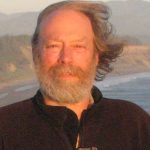 Jim is a multilingual world traveler. Based in Bavaria during the 1970s, Jim spent most of this period in India, Afghanistan and Nepal, where he founded and operated a charitable medical clinic serving Tibetan Refugees. He settled in Oregon in 1983 on a forested ranch in the Umpqua National Forest.
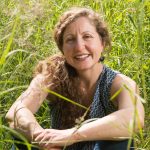 Dr. Micah Hahn is an Associate Professor of Environmental Health in the Institute for Circumpolar Health Studies at the University of Alaska-Anchorage. She received her joint PhD in Epidemiology / Environment and Resources from the University of Wisconsin-Madison and her MPH in Global Environmental Health from Emory University. Subsequently, she was a postdoctoral fellow for the CDC Climate and Health Program, and in this position worked collaboratively with the CDC Division of Vector-borne Diseases and the National Center for Atmospheric Research. Her research focuses on understanding the health impacts of climate change and working with communities to develop locally-relevant adaptation and resilience-building strategies. Dr. Hahn is also on the Management Team of the Alaska Climate Adaptation Science Center.
 Michael is a former Founding Principal of Resilient Cities Catalyst, a global non-profit helping cities and their partners tackle their toughest challenges. He is currently the Executive Director of Climate Resilience Academy at the University of Miami.
 Dr. Quintus Jett is a consultant, educator, and strategist for public causes. He has a doctorate in Organizations & Management from Stanford University, and a two-decade faculty career which spans schools, departments, and programs of business, engineering, liberal studies, divinity, and public and nonprofit management. Following Hurricane Katrina in 2005, Dr. Jett launched a volunteer project in New Orleans, which enlisted residents, students from over a dozen colleges and universities, and hundreds of others to field map the city’s Gentilly district, Lower Ninth Ward, and New Orleans East. Dr. Jett is an innovator in higher education, bridging the divide between academic research and the other priorities of the modern university, including student access and diversity, community engagement, and providing foundations for life-long learning in today’s rapidly changing world.
 Scott is Monfort Professor of Atmospheric Science at Colorado State University. He has written about 100 publications in the peer-reviewed climate literature, is a former editor of the Journal of Climate, and served for five years as founding Science Chair of the North American Carbon Program.
 Linda has many years of experience in disaster preparedness and resilience. She has been an elected official on the Linn County Iowa Board of Supervisors, Chair of the Metropolitan Planning Organization, the East Central Iowa Council of Governments, the statewide Mental Health Developmental Disability and the Linn County Board of Health. Langston is a former president of the National Association of Counties (2013-2014).
 Ken works with families and organizations as a mediator, organizational consultant, trainer and facilitator. Along with his passion for helping people prepare for and reduce climate change, Ken also volunteers as a mediator through Mediation Works and is passionate about supporting youth through mentoring with Boys to Men of Southern Oregon.
 Matthew is a retired high school teacher who was once honored as Oregon High School Social Studies Teacher of the Year. Before his teaching career he was in the restaurant business in Portland. He is also a lawyer who has been a member of the Oregon State Bar Association since 1980.
 Andrea is the Resilience Policy Advisor for the North Carolina Office of Recovery and Resiliency. She works across state agencies and with local governments to increase the state’s resilience to the impacts of climate change.