
Real vs. Fake Forests
What makes a forest a forest? This simple question becomes much more complicated, depending on who you ask. Thankfully, Dr. Dominick DellaSala, President and Chief Scientist of the Geos Institute, helps us explore this question and settle the debate in a chapter on “Fake” vs “Real” forests that will be published in The World’s Biomes, scheduled to be released in 2020. Topics that will be explored include:
- Does planting trees compensate for cutting down a forest?
- Can we truly see a forest for more than just the trees?
 If a tree grows in a forest, does that make it a forest? Industry classifies forests as “an area at minimum 120 ft wide, 1 acre minimum wide, with at least 10% forest cover.” Does that sound like a forest to you?
The US Forest Service is an arm of the USDA. The department of agriculture’s focus is growing crops. Stated plainly, that means the Forest Service sees trees as crops. This typically means tree plantations are planted in dense rows like corn to be thinned, sprayed with chemicals, and fertilized for the fastest growing cycle for logging and the highest “return on investment.”
To an ecologist, a forest is a place where the sum of the ecosystem parts is greater than the whole. In contrast to industry, the “goal” of a forest to an ecologist is to support and sustain life.
Natural forests have many species of trees, plants and herbs, insects, animals, fungi and microbes that rely on each other to survive. They provide the benefits we as humans rely on: fresh water, clean air, food, climate regulation, and habitat. They are our place to rest, experience the wonder of the natural world, and a place for recreation. Scientists refer to this as “ecological integrity.” And it’s simple – real forests have the highest integrity, whereas fake ones have none. Unfortunately, real forests are declining globally as fake forests replace them via an unmitigated, massive eco-engineering of the planet’s ecosystems, and this holds true in the United States.
Memories are not made in plantations. They are made by bird watching, hunting, playing a game of “tag” in real forests.
In the second half of the 20th century, the United States paid landowners to plant pine instead of allowing natural forests to regrow. We’ve lost 33 million acres of natural forest and increased pine plantations by 40 million acres in the US South. Now, we have more plantations and less true natural forests than ever before.
To Dr. DellaSala, real forests are superior to their fake counterparts in every aspect. They are complex structurally from the penthouse (forest canopy) to the basement (soils). Natural forests are connected by an Avatar-like sub-highway of root masses and fungal mats that transfer vital soil nutrients and moisture to the roots of trees. Their food-webs have interlocking strands that join squirrel to pine cone and squirrel to owl, deer to grass and deer to mountain lion, and slugs to rotten logs, and so on.
Real forests also are nature’s climate solutions, serving as enormous air filters and giant cooling towers, increasingly vital in a rapidly warming and drying world and for flood protection in a wetter one. They are the best “green infrastructure” we have. Given the climate crisis, we know that we need to reduce the amount of carbon dioxide being emitted into the atmosphere immediately and additionally sequester more carbon dioxide from the air. Where can we turn? Real, natural forests.
If we stop deforestation, protect and restore degraded forests, and expand natural forests, we could reduce annual emissions by 75% in the next 50 years.
If we also phase out fossil fuels, we can meet the goals of the Paris Climate Agreement and avoid catastrophic climate change. One thing is certain: we cannot solve the climate crisis without placing a premium on protection of natural forests while restoring and sustainably managing other forests. Forests are one of the best ways we have to keep carbon out of the atmosphere, especially older, complex forests, because each year they absorb carbon and store it in their roots, leaves, and wood.
We need to improve, restore, and protect our natural forests.
Logging real forests and converting them to fake ones contributes more carbon dioxide pollution than any other source of emissions from forests. When we look closely at the data, logging accounts for 85% of emissions from US forests, more than 5x the emissions from fire, wind, insects, and tree mortality combined. Even more, planting trees or entombing wood in buildings does not compensate for carbon held by real forests for centuries.
Plantation forests, aka “fake” forests, are prone to intense forest fires, are climate polluters, and are biologically impoverished ecosystems.
At the end of the day, forests are more than wood. If we continue to grow plantations instead of forests, we will lose out on all that natural forests provide. Standing forests are our best defense against climate change. Forests support us in ways that we cannot live without. But currently, our economic and political system favors forest destruction over forest protection. Together, we can make a change.
Call on your elected officials to be Stand4Forests champions and demand the protection of “real” over “fake” forests
Written by Rita Frost with Dr. Dominick DellaSala, February 28th, 2019, originally published at Dogwoodalliance.org
 Robert Macnee, Ph.D. is Deputy Director of Resilience Services at Climate Resilience Consulting, where he helps governments, institutions, and communities reduce climate risk in equitable and practical ways. He holds a Ph.D. in Environmental Management focused on climate change impacts on health and communities, and brings over a decade of experience spanning economic development, resilience planning, and implementation.
 Samantha Medlock is President of Climate Risk Advisors, helping communities and organizations advance equity, sustainability, and resilience. Her career began chasing floods as a local official in Texas Flash Flood Alley—a hands-on experience that still shapes her approach to climate and disaster risk management.
 Arsum is the Senior Adaptation and Coastal Resilience Specialist for the National Wildlife Federation’s Southcentral Region. In this role, she advances climate adaptation efforts, with a focus on nature-based approaches to address the impacts of climate change and extreme events across the Gulf region. She has authored and co-authored numerous publications on climate impact assessments and adaptation solutions. Additionally, she regularly participates in state-based coastal resilience and hazard mitigation planning across the Gulf, collaborating with regional and local stakeholders.
 Jim is a multilingual world traveler. Based in Bavaria during the 1970s, Jim spent most of this period in India, Afghanistan and Nepal, where he founded and operated a charitable medical clinic serving Tibetan Refugees. He settled in Oregon in 1983 on a forested ranch in the Umpqua National Forest.
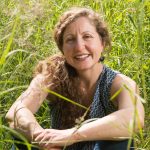 Dr. Micah Hahn is an Associate Professor of Environmental Health in the Institute for Circumpolar Health Studies at the University of Alaska-Anchorage. She received her joint PhD in Epidemiology / Environment and Resources from the University of Wisconsin-Madison and her MPH in Global Environmental Health from Emory University. Subsequently, she was a postdoctoral fellow for the CDC Climate and Health Program, and in this position worked collaboratively with the CDC Division of Vector-borne Diseases and the National Center for Atmospheric Research. Her research focuses on understanding the health impacts of climate change and working with communities to develop locally-relevant adaptation and resilience-building strategies. Dr. Hahn is also on the Management Team of the Alaska Climate Adaptation Science Center.
 Michael is a former Founding Principal of Resilient Cities Catalyst, a global non-profit helping cities and their partners tackle their toughest challenges. He is currently the Executive Director of Climate Resilience Academy at the University of Miami.
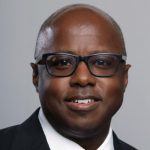 Dr. Quintus Jett is a consultant, educator, and strategist for public causes. He has a doctorate in Organizations & Management from Stanford University, and a two-decade faculty career which spans schools, departments, and programs of business, engineering, liberal studies, divinity, and public and nonprofit management. Following Hurricane Katrina in 2005, Dr. Jett launched a volunteer project in New Orleans, which enlisted residents, students from over a dozen colleges and universities, and hundreds of others to field map the city’s Gentilly district, Lower Ninth Ward, and New Orleans East. Dr. Jett is an innovator in higher education, bridging the divide between academic research and the other priorities of the modern university, including student access and diversity, community engagement, and providing foundations for life-long learning in today’s rapidly changing world.
 Scott is Monfort Professor of Atmospheric Science at Colorado State University. He has written about 100 publications in the peer-reviewed climate literature, is a former editor of the Journal of Climate, and served for five years as founding Science Chair of the North American Carbon Program.
 Linda has many years of experience in disaster preparedness and resilience. She has been an elected official on the Linn County Iowa Board of Supervisors, Chair of the Metropolitan Planning Organization, the East Central Iowa Council of Governments, the statewide Mental Health Developmental Disability and the Linn County Board of Health. Langston is a former president of the National Association of Counties (2013-2014).
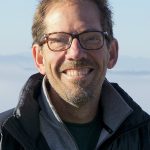 Ken works with families and organizations as a mediator, organizational consultant, trainer and facilitator. Along with his passion for helping people prepare for and reduce climate change, Ken also volunteers as a mediator through Mediation Works and is passionate about supporting youth through mentoring with Boys to Men of Southern Oregon.
 Matthew is a retired high school teacher who was once honored as Oregon High School Social Studies Teacher of the Year. Before his teaching career he was in the restaurant business in Portland. He is also a lawyer who has been a member of the Oregon State Bar Association since 1980.
 Andrea is the Resilience Policy Advisor for the North Carolina Office of Recovery and Resiliency. She works across state agencies and with local governments to increase the state’s resilience to the impacts of climate change.