
New Report On the Economics of Protecting Endangered Species
The Bush administration has repeatedly ignored the economic benefits of protecting endangered species habitat, using faulty accounting to create a false dichotomy between prosperity and conservation, a new report from environmental groups charges.
Scientists seek protection for 26 million acres of public lands
Researchers ask Congress to vote yes on National Landscape Conservation System
Contact:
Richard S. Nauman, conservation scientist
GEOS Institute – Ashland, Oregon
(541) 482-4459, ext. 307
Christopher Lancette, communications director
The Wilderness Society
(202) 429-2692
Ashland, OR A group of 31 independent scientists representing 14 states today endorsed a national effort to provide permanent protection for the National Landscape Conservation System — a unified system of conservation lands managed by the U.S. Bureau of Land Management (BLM). All the scientists have extensive experience in field research, particularly involving Conservation System lands, and are calling on Congress to support the National Landscape Conservation System Act (HR 2016). The legislation received a yes vote today from the House Natural Resources Committee and now makes its way toward a vote by the full House.
Requiem for a River
More than 80 years ago, seven western states hammered out a pact dividing up the water in the Colorado River. Agriculture was king and Las Vegas just a railroad watering stop in the middle of nowhere. Today, after an eight-year drought, the river is in crisis. Tim Folger traveled from its snow-fed headwaters to the feeble trickle that enters the Gulf of California, asking everyone he met: What comes next? Read more…
Conservation Science Group Announces Winners of Annual Conservation Awards
Ashland, OR Five exemplary individuals and organizations that led the way in 2007 in protecting life on earth were honored recently by the National Center for Conservation Science & Policy. “The world is a measurably better place because of the efforts of our most recent Conservation Award winners,” said Matthew McMcKinnon, Vice President the Board of Directors of the National Center.
Senator Ron Wyden, for his work on endangered species, and State Representative Peter Buckley, for his 100% Oregon League of Conservation Voters record, were recognized with the National Center’s 2007 Conservation Integrity Award. The Seattle Office of Earthjustice, for their success in protecting salmon, steelhead and old-growth forests, and Randi Spivak, for her work with grassroots coalitions in the Pacific Northwest and throughout the nation, received 2007 Conservation Leadership Awards. The Williams Creek Watershed Council was recognized with the 2007 Headwaters Heritage Award to honor their efforts to restore local streams to support returning salmon and steelhead.
Eminent Local Scientist to Ask the Bush Administration and Congress to Restore Scientific Integrity in Endangered Species Protections
Ashland, OR Media Advisory
Who: Dominick DellaSala, President and Chief Scientist at GEOS Institute
Big sponge: Las Vegas pumping could create ecological crisis
Think of the geology beneath the Great Basin as a giant sponge. Mother Nature drizzles water into it in the form of rain and snow. The water creeps below ground from valley to valley in a huge regional aquifer that extends from Salt Lake City to Death Valley. Read more…
UNLV prof says no such thing as ‘surplus water’
There’s no such thing as “surplus water.”
It might be described that way by Southern Nevada Water Authority officials when they apply for permission to tap into the state’s rural water supply, said James Deacon, a professor emeritus of environmental studies at UNLV. Read more…
Las Vegas Ground Water Pumping Could Harm Regional Biodiversity
Dr. James Deacon, a biologist and Professor Emeritus of Environmental Studies and Biological Sciences at UNLV, and his colleagues recently addressed the Southern Nevada Water Authority’s (SNWA) plan to tap eastern Nevada ground water and pipe it to the Las Vegas area in the September 2007 issue (volume 57, issue 8) of BioScience Magazine. Read more…
Biologist: Water plan invites peril
Draining aquifers for Vegas development would endanger species, he says
Nevada’s water laws contradict the laws of nature, a prominent Nevada biologist says. And if water officials back a pipeline proposal to nurture Las Vegas growth at the expense of surrounding states, a water war and ecological disaster are guaranteed. Read more…
Professor doubts ‘surplus’ – Tapping rural groundwater will cause harm, article’s author says
There’s no such thing as “surplus water.”
It might be described that way by Southern Nevada Water Authority officials when they apply for permission to tap into the state’s rural water supply, said James Deacon, a professor emeritus of environmental studies at UNLV. Read more…
Latest News
Stay Updated!
Sign up to stay updated on our current initiatives and receive information you can use to build resilience in your community.
 Robert Macnee, Ph.D. is Deputy Director of Resilience Services at Climate Resilience Consulting, where he helps governments, institutions, and communities reduce climate risk in equitable and practical ways. He holds a Ph.D. in Environmental Management focused on climate change impacts on health and communities, and brings over a decade of experience spanning economic development, resilience planning, and implementation.
 Samantha Medlock is President of Climate Risk Advisors, helping communities and organizations advance equity, sustainability, and resilience. Her career began chasing floods as a local official in Texas Flash Flood Alley—a hands-on experience that still shapes her approach to climate and disaster risk management.
 Arsum is the Senior Adaptation and Coastal Resilience Specialist for the National Wildlife Federation’s Southcentral Region. In this role, she advances climate adaptation efforts, with a focus on nature-based approaches to address the impacts of climate change and extreme events across the Gulf region. She has authored and co-authored numerous publications on climate impact assessments and adaptation solutions. Additionally, she regularly participates in state-based coastal resilience and hazard mitigation planning across the Gulf, collaborating with regional and local stakeholders.
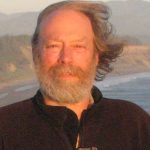 Jim is a multilingual world traveler. Based in Bavaria during the 1970s, Jim spent most of this period in India, Afghanistan and Nepal, where he founded and operated a charitable medical clinic serving Tibetan Refugees. He settled in Oregon in 1983 on a forested ranch in the Umpqua National Forest.
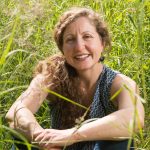 Dr. Micah Hahn is an Associate Professor of Environmental Health in the Institute for Circumpolar Health Studies at the University of Alaska-Anchorage. She received her joint PhD in Epidemiology / Environment and Resources from the University of Wisconsin-Madison and her MPH in Global Environmental Health from Emory University. Subsequently, she was a postdoctoral fellow for the CDC Climate and Health Program, and in this position worked collaboratively with the CDC Division of Vector-borne Diseases and the National Center for Atmospheric Research. Her research focuses on understanding the health impacts of climate change and working with communities to develop locally-relevant adaptation and resilience-building strategies. Dr. Hahn is also on the Management Team of the Alaska Climate Adaptation Science Center.
 Michael is a former Founding Principal of Resilient Cities Catalyst, a global non-profit helping cities and their partners tackle their toughest challenges. He is currently the Executive Director of Climate Resilience Academy at the University of Miami.
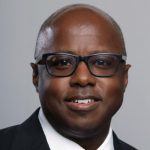 Dr. Quintus Jett is a consultant, educator, and strategist for public causes. He has a doctorate in Organizations & Management from Stanford University, and a two-decade faculty career which spans schools, departments, and programs of business, engineering, liberal studies, divinity, and public and nonprofit management. Following Hurricane Katrina in 2005, Dr. Jett launched a volunteer project in New Orleans, which enlisted residents, students from over a dozen colleges and universities, and hundreds of others to field map the city’s Gentilly district, Lower Ninth Ward, and New Orleans East. Dr. Jett is an innovator in higher education, bridging the divide between academic research and the other priorities of the modern university, including student access and diversity, community engagement, and providing foundations for life-long learning in today’s rapidly changing world.
 Scott is Monfort Professor of Atmospheric Science at Colorado State University. He has written about 100 publications in the peer-reviewed climate literature, is a former editor of the Journal of Climate, and served for five years as founding Science Chair of the North American Carbon Program.
 Linda has many years of experience in disaster preparedness and resilience. She has been an elected official on the Linn County Iowa Board of Supervisors, Chair of the Metropolitan Planning Organization, the East Central Iowa Council of Governments, the statewide Mental Health Developmental Disability and the Linn County Board of Health. Langston is a former president of the National Association of Counties (2013-2014).
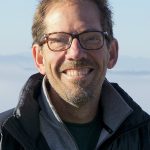 Ken works with families and organizations as a mediator, organizational consultant, trainer and facilitator. Along with his passion for helping people prepare for and reduce climate change, Ken also volunteers as a mediator through Mediation Works and is passionate about supporting youth through mentoring with Boys to Men of Southern Oregon.
 Matthew is a retired high school teacher who was once honored as Oregon High School Social Studies Teacher of the Year. Before his teaching career he was in the restaurant business in Portland. He is also a lawyer who has been a member of the Oregon State Bar Association since 1980.
 Andrea is the Resilience Policy Advisor for the North Carolina Office of Recovery and Resiliency. She works across state agencies and with local governments to increase the state’s resilience to the impacts of climate change.