
Negotiators aim to settle policy fights, post omnibus tonight
George Cahlink and Geof Koss, E&E News reporters
Published: Tuesday, March 20, 2018
Congressional leaders hope to have massive omnibus spending legislation on the House floor by Thursday, assuming they can resolve a few dozen outstanding policy fights.
House Speaker Paul Ryan (R-Wis.) said this morning he’s “hoping” to file the $1.3 trillion spending bill late tonight, paving the way for the House Rules Committee to consider the bill tomorrow and then floor action Thursday.
He said he does not expect to need to pass an interim stopgap spending bill to avert a federal shutdown when current funding runs out Friday.
Rep. Tom Cole (R-Okla.), a senior appropriator, said 20 to 30 policy riders are still being hammered out by leaders in both chambers. He said funding fights were largely resolved earlier this year when Congress passed a budget that boosted spending for fiscal 2018 and 2019 by a combined $200 billion.
Another senior appropriator, Rep. Charlie Dent (R-Pa.), said the outstanding issues “remain the same” as those that held up the release of the omnibus last night, including funding for the $900 million Gateway rail and transit project, opposed by the White House, and a push for $1.6 billion in border wall funding.
Environmental and energy industry groups continue to watch several riders, including proposals to block the Waters of the U.S. rule and ozone attainment goals, wildfire funding and forest management reforms, and a bid to begin work on raising the Shasta Dam in Northern California.
A coalition of environmental scientists, led by the John Muir Project, sent a letter to congressional leaders yesterday warning about a proposed “fix” for wildfire funding, which would permanently allocate dollars for a range of prevention programs and end ad hoc borrowing from Forest Service accounts to cover fighting the natural disasters. They warn Republicans are coupling the fix with other environmental rollbacks, favoring loggers, that would ultimately lead to more fire losses.
“Since more losses in our communities, more degradation of our forest ecosystems through logging, and more taxpayer dollars spent is certainly not what anyone who supports this legislation as a ‘fix’ is hoping to achieve, we encourage you to oppose inclusion of these policies,” the group said in a lengthy letter that also laid out its proposal for reforms.
Several environmental groups, including the Sierra Club and Earthjustice, wrote congressional leaders yesterday, raising concern about a provision that would exempt small, remote incinerators from the Clean Air Act. They say the provision is being championed by Sen. Lisa Murkowski (R-Alaska), the chairwoman of the Senate Interior, Environment and Related Agencies Appropriations Subcommittee, and would benefit incinerators in her state.
The letter warns attaching the incinerator rider would “set us on a dangerous path towards the piecemeal dismantling of clean air protections that are meant to provide consistent protection to all Americans.”
Whatever deal emerges, it will need at least some bipartisan support to get through the House and Senate.
House conservatives, led by the three dozen members of the Freedom Caucus, are likely to oppose it over spending levels. If they hold together and with the GOP holding a 23-seat majority, Democratic support would be needed to move the bill.
The tight margins in both the House and the Senate, where 60 votes will be needed to move the bill, likely guarantee many of the most contentious environmental riders will be knocked out. Last year, leaders stripped about 160 riders from the omnibus in order to win bipartisan backing.
Beyond the House, Senate Majority Leader Mitch McConnell (R-Ky.) could begin taking procedural steps today to make sure the bill can pass by Friday.
Without those actions, any single senator could potentially hold up action on the bill into the weekend.
Contribute
Geos Institute depends on the generous support of caring people who believe we can and must do a better job addressing climate change for our children and those who will follow.
Stay Updated!
Sign up for our eNews to stay updated on our work and receive information you can use to build resilience in your community.
 Robert Macnee, Ph.D. is Deputy Director of Resilience Services at Climate Resilience Consulting, where he helps governments, institutions, and communities reduce climate risk in equitable and practical ways. He holds a Ph.D. in Environmental Management focused on climate change impacts on health and communities, and brings over a decade of experience spanning economic development, resilience planning, and implementation.
 Samantha Medlock is President of Climate Risk Advisors, helping communities and organizations advance equity, sustainability, and resilience. Her career began chasing floods as a local official in Texas Flash Flood Alley—a hands-on experience that still shapes her approach to climate and disaster risk management.
 Arsum is the Senior Adaptation and Coastal Resilience Specialist for the National Wildlife Federation’s Southcentral Region. In this role, she advances climate adaptation efforts, with a focus on nature-based approaches to address the impacts of climate change and extreme events across the Gulf region. She has authored and co-authored numerous publications on climate impact assessments and adaptation solutions. Additionally, she regularly participates in state-based coastal resilience and hazard mitigation planning across the Gulf, collaborating with regional and local stakeholders.
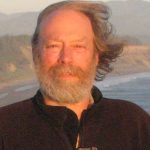 Jim is a multilingual world traveler. Based in Bavaria during the 1970s, Jim spent most of this period in India, Afghanistan and Nepal, where he founded and operated a charitable medical clinic serving Tibetan Refugees. He settled in Oregon in 1983 on a forested ranch in the Umpqua National Forest.
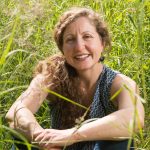 Dr. Micah Hahn is an Associate Professor of Environmental Health in the Institute for Circumpolar Health Studies at the University of Alaska-Anchorage. She received her joint PhD in Epidemiology / Environment and Resources from the University of Wisconsin-Madison and her MPH in Global Environmental Health from Emory University. Subsequently, she was a postdoctoral fellow for the CDC Climate and Health Program, and in this position worked collaboratively with the CDC Division of Vector-borne Diseases and the National Center for Atmospheric Research. Her research focuses on understanding the health impacts of climate change and working with communities to develop locally-relevant adaptation and resilience-building strategies. Dr. Hahn is also on the Management Team of the Alaska Climate Adaptation Science Center.
 Michael is a former Founding Principal of Resilient Cities Catalyst, a global non-profit helping cities and their partners tackle their toughest challenges. He is currently the Executive Director of Climate Resilience Academy at the University of Miami.
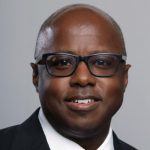 Dr. Quintus Jett is a consultant, educator, and strategist for public causes. He has a doctorate in Organizations & Management from Stanford University, and a two-decade faculty career which spans schools, departments, and programs of business, engineering, liberal studies, divinity, and public and nonprofit management. Following Hurricane Katrina in 2005, Dr. Jett launched a volunteer project in New Orleans, which enlisted residents, students from over a dozen colleges and universities, and hundreds of others to field map the city’s Gentilly district, Lower Ninth Ward, and New Orleans East. Dr. Jett is an innovator in higher education, bridging the divide between academic research and the other priorities of the modern university, including student access and diversity, community engagement, and providing foundations for life-long learning in today’s rapidly changing world.
 Scott is Monfort Professor of Atmospheric Science at Colorado State University. He has written about 100 publications in the peer-reviewed climate literature, is a former editor of the Journal of Climate, and served for five years as founding Science Chair of the North American Carbon Program.
 Linda has many years of experience in disaster preparedness and resilience. She has been an elected official on the Linn County Iowa Board of Supervisors, Chair of the Metropolitan Planning Organization, the East Central Iowa Council of Governments, the statewide Mental Health Developmental Disability and the Linn County Board of Health. Langston is a former president of the National Association of Counties (2013-2014).
 Ken works with families and organizations as a mediator, organizational consultant, trainer and facilitator. Along with his passion for helping people prepare for and reduce climate change, Ken also volunteers as a mediator through Mediation Works and is passionate about supporting youth through mentoring with Boys to Men of Southern Oregon.
 Matthew is a retired high school teacher who was once honored as Oregon High School Social Studies Teacher of the Year. Before his teaching career he was in the restaurant business in Portland. He is also a lawyer who has been a member of the Oregon State Bar Association since 1980.
 Andrea is the Resilience Policy Advisor for the North Carolina Office of Recovery and Resiliency. She works across state agencies and with local governments to increase the state’s resilience to the impacts of climate change.