
Climate change increases stress, need for restoration on grazed public lands
Contact: Robert Beschta: 541-737-4292 or robert.beschta@oregonstate.edu
CORVALLIS, Ore. – Eight researchers in a new report have suggested that climate change is causing additional stress to many western rangelands, and as a result land managers should consider a significant reduction, or in some places elimination of livestock and other large animals from public lands.
A growing degradation of grazing lands could be mitigated if large areas of Bureau of Land Management and USDA Forest Service lands became free of use by livestock and “feral ungulates” such as wild horses and burros, and high populations of deer and elk were reduced, the group of scientists said.
This would help arrest the decline and speed the recovery of affected ecosystems, they said, and provide a basis for comparative study of grazing impacts under a changing climate. The direct economic and social impacts might also be offset by a higher return on other ecosystem services and land uses, they said, although the report focused on ecology, not economics.
Their findings were reported today in Environmental Management, a professional journal published by Springer.
“People have discussed the impacts of climate change for some time with such topics as forest health or increased fire,” said Robert Beschta, a professor emeritus in the College of Forestry at Oregon State University, and lead author on this study.
“However, the climate effects on rangelands and other grazing lands have received much less interest,” he said. “Combined with the impacts of grazing livestock and other animals, this raises serious concerns about soil erosion, loss of vegetation, changes in hydrology and disrupted plant and animal communities. Entire rangeland ecosystems in the American West are getting lost in the shuffle.”
Livestock use affects a far greater proportion of BLM and Forest Service lands than do roads, timber harvest and wildfires combined, the researchers said in their study. But effort to mitigate the pervasive effects of livestock has been comparatively minor, they said, even as climatic impacts intensify.
Although the primary emphasis of this analysis is on ecological considerations, the scientists acknowledged that the changes being discussed would cause some negative social, economic and community disruption.
“If livestock grazing on public lands were discontinued or curtailed significantly, some operations would see reduced incomes and ranch values, some rural communities would experience negative economic impacts, and the social fabric of those communities could be altered,” the researchers wrote in their report, citing a 2002 study.
Among the observations of this report:
– In the western U.S., climate change is expected to intensify even if greenhouse gas emissions are dramatically reduced.
– Among the threats facing ecosystems as a result of climate change are invasive species, elevated wildfire occurrence, and declining snowpack.
– Federal land managers have begun to adapt to climate-related impacts, but not the combined effects of climate and hooved mammals, or ungulates.
– Climate impacts are compounded from heavy use by livestock and other grazing ungulates, which cause soil erosion, compaction, and dust generation; stream degradation; higher water temperatures and pollution; loss of habitat for fish, birds and amphibians; and desertification.
– Encroachment of woody shrubs at the expense of native grasses and other plants can occur in grazed areas, affecting pollinators, birds, small mammals and other native wildlife.
– Livestock grazing and trampling degrades soil fertility, stability and hydrology, and makes it vulnerable to wind erosion. This in turn adds sediments, nutrients and pathogens to western streams.
– Water developments and diversion for livestock can reduce streamflows and increase water temperatures, degrading habitat for fish and aquatic invertebrates.
– Grazing and trampling reduces the capacity of soils to sequester carbon, and through various processes contributes to greenhouse warming.
– Domestic livestock now use more than 70 percent of the lands managed by the BLM and Forest Service, and their grazing may be the major factor negatively affecting wildlife in 11 western states. In the West, about 175 taxa of freshwater fish are considered imperiled due to habitat-related causes.
– Removing or significantly reducing grazing is likely to be far more effective, in cost and success, than piecemeal approaches to address some of these concerns in isolation.
The advent of climate change has significantly added to historic and contemporary problems that result from cattle and sheep ranching, the report said, which first prompted federal regulations in the 1890s.
Wild horses and burros are also a significant problem, this report suggested, and high numbers of deer and elk occur in portions of the West, partially due to the loss or decline of large predators such as cougars and wolves. Restoring those predators might also be part of a comprehensive recovery plan, the researchers said.
The problems are sufficiently severe, this group of researchers concluded, that they believe the burden of proof should be shifted. Those using public lands for livestock production should have to justify the continuation of ungulate grazing, they said.
Collaborators on this study included researchers from the University of Wyoming, Geos Institute, Prescott College, and other agencies.
Contribute
Geos Institute depends on the generous support of caring people who believe we can and must do a better job addressing climate change for our children and those who will follow.
Stay Updated!
Sign up for our eNews to stay updated on our work and receive information you can use to build resilience in your community.
 Robert Macnee, Ph.D. is Deputy Director of Resilience Services at Climate Resilience Consulting, where he helps governments, institutions, and communities reduce climate risk in equitable and practical ways. He holds a Ph.D. in Environmental Management focused on climate change impacts on health and communities, and brings over a decade of experience spanning economic development, resilience planning, and implementation.
 Samantha Medlock is President of Climate Risk Advisors, helping communities and organizations advance equity, sustainability, and resilience. Her career began chasing floods as a local official in Texas Flash Flood Alley—a hands-on experience that still shapes her approach to climate and disaster risk management.
 Arsum is the Senior Adaptation and Coastal Resilience Specialist for the National Wildlife Federation’s Southcentral Region. In this role, she advances climate adaptation efforts, with a focus on nature-based approaches to address the impacts of climate change and extreme events across the Gulf region. She has authored and co-authored numerous publications on climate impact assessments and adaptation solutions. Additionally, she regularly participates in state-based coastal resilience and hazard mitigation planning across the Gulf, collaborating with regional and local stakeholders.
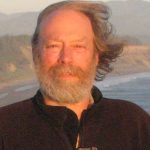 Jim is a multilingual world traveler. Based in Bavaria during the 1970s, Jim spent most of this period in India, Afghanistan and Nepal, where he founded and operated a charitable medical clinic serving Tibetan Refugees. He settled in Oregon in 1983 on a forested ranch in the Umpqua National Forest.
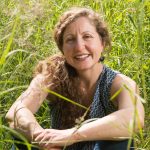 Dr. Micah Hahn is an Associate Professor of Environmental Health in the Institute for Circumpolar Health Studies at the University of Alaska-Anchorage. She received her joint PhD in Epidemiology / Environment and Resources from the University of Wisconsin-Madison and her MPH in Global Environmental Health from Emory University. Subsequently, she was a postdoctoral fellow for the CDC Climate and Health Program, and in this position worked collaboratively with the CDC Division of Vector-borne Diseases and the National Center for Atmospheric Research. Her research focuses on understanding the health impacts of climate change and working with communities to develop locally-relevant adaptation and resilience-building strategies. Dr. Hahn is also on the Management Team of the Alaska Climate Adaptation Science Center.
 Michael is a former Founding Principal of Resilient Cities Catalyst, a global non-profit helping cities and their partners tackle their toughest challenges. He is currently the Executive Director of Climate Resilience Academy at the University of Miami.
 Dr. Quintus Jett is a consultant, educator, and strategist for public causes. He has a doctorate in Organizations & Management from Stanford University, and a two-decade faculty career which spans schools, departments, and programs of business, engineering, liberal studies, divinity, and public and nonprofit management. Following Hurricane Katrina in 2005, Dr. Jett launched a volunteer project in New Orleans, which enlisted residents, students from over a dozen colleges and universities, and hundreds of others to field map the city’s Gentilly district, Lower Ninth Ward, and New Orleans East. Dr. Jett is an innovator in higher education, bridging the divide between academic research and the other priorities of the modern university, including student access and diversity, community engagement, and providing foundations for life-long learning in today’s rapidly changing world.
 Scott is Monfort Professor of Atmospheric Science at Colorado State University. He has written about 100 publications in the peer-reviewed climate literature, is a former editor of the Journal of Climate, and served for five years as founding Science Chair of the North American Carbon Program.
 Linda has many years of experience in disaster preparedness and resilience. She has been an elected official on the Linn County Iowa Board of Supervisors, Chair of the Metropolitan Planning Organization, the East Central Iowa Council of Governments, the statewide Mental Health Developmental Disability and the Linn County Board of Health. Langston is a former president of the National Association of Counties (2013-2014).
 Ken works with families and organizations as a mediator, organizational consultant, trainer and facilitator. Along with his passion for helping people prepare for and reduce climate change, Ken also volunteers as a mediator through Mediation Works and is passionate about supporting youth through mentoring with Boys to Men of Southern Oregon.
 Matthew is a retired high school teacher who was once honored as Oregon High School Social Studies Teacher of the Year. Before his teaching career he was in the restaurant business in Portland. He is also a lawyer who has been a member of the Oregon State Bar Association since 1980.
 Andrea is the Resilience Policy Advisor for the North Carolina Office of Recovery and Resiliency. She works across state agencies and with local governments to increase the state’s resilience to the impacts of climate change.