
April Newsletter: Forest Legacies springs into action!
In this issue:
- Tongass Logging Transition Not Moving Fast Enough
- On the steps of the nation’s capital for permanent protection of the world-class Kalmiopsis area, southwest Oregon
- Celebrating Earth Week by Recognizing Conservation Gains in Northwest Forests
Tongass Logging Transition Not Moving Fast Enough
 At 17 million acres, the Tongass rainforest in southeast Alaska, the nation’s largest national forest, is a global champion at scrubbing the atmosphere of our dangerous carbon dioxide pollution and storing it long term in long-lived trees. Its among the world’s last relatively intact temperate rainforests and supports a world-class salmon fishery. For the past two years, Geos Institute, the Natural Resources Defense Council, retired Deputy Chief of the Forest Service Jim Furnish (Geos Institute board), and Catherine Mater (Mater Engineering) have been asking the Forest Service to speed up its transition out of old-growth logging. The agency claims that it can’t transition fast enough and needs to log old growth for at least another 16 years until young forests are ready to shoulder timber needs.
Geos Institute and partners recently completed the most comprehensive computer mapping and ground-based surveys of young forests initially clearcut in the 1950s, have since regrown, and will soon be ready to offset logging of old-growth rainforests. Our studies show:
- By 2020, there will be more than enough young trees (>55 years) on a much smaller logging footprint than current logging to meet timber demand without relying on irreplaceable old-growth rainforests.
- Alaska mills are ready to participate in an economic study we proposed to determine processing and manufacturing needs of young trees and retooling of mills to accept small logs, which can occur swiftly and at a low cost – much sooner and cheaper than estimated by the Forest Service.
We have been meeting with top level officials in the Obama Administration to show them how the transition can occur quicker than the Forest Service’s plan that, because of carbon dioxide releases from logging old-growth rainforest, is at odds with President Obama’s climate change leadership. The Tongass rainforest is much too valuable as Alaska’s first line of climate change defense. The Forest Service can and should do more to transition rapidly as hundreds of scientists and conservation groups have been urging them to do so.
On the steps of the nation’s capital for permanent protection of the world-class Kalmiopsis area, southwest Oregon
The Kalmiopsis region of southwest Oregon is one of the most biodiverse, unprotected landscapes in the American West. World Wildlife Fund recognized the region as among the top ten temperate conifer forests in the world. It includes the last remaining relatively intact roadless areas along the Pacific Coast from Mexico to Canada and contains continentally important fisheries. Based on studies by Geos Institute the region has been recognized as a potential climate refuge, if protected from its main threat – industrial scale nickel mining in the heart of relatively pristine and endangered waters.

In March, we teamed up with local conservation groups, DC activists, and local businesses (featured in the photo) to make a case to decision makers for permanent protection of the world-class Kalmiopsis area. If successful, our quarter-million acre proposal will become part of a complex of protected landscapes that includes nearby redwood state and national parks, designated wilderness, roadless areas, and the Smith River National Recreation Area.
(In the photo, left to right: Andy Kerr, Dave Strahan, Dominick DellaSala, Alyssa Babin)
Celebrating Earth Week by Recognizing Conservation Gains in the Northwest Forests
 The Northwest Forest Plan was adopted in 1993 as the nation’s first large-scale ecosystem management plan designed to protect imperiled species like the northern spotted owl. It shifted federal lands management from timber dominance to conservation on nearly 25-million acres from the California coast redwoods to the Olympic rainforest. Recent studies by Geos Institute and partners summarized over two-decades of gains made in water quality, recovering riparian areas and old-growth forests, and salmon populations. Both the Bureau of Land Management (currently) and the Forest Service (in 2017) are in the process of revising this landmark plan. Early indications are that the BLM is unfortunately moving away from some of the protective elements of the plan by proposing to increase logging by some 38% in the coming decade. Geos Institute and partners have been engaged in outreach to both the Forest Service and BLM to build on the Northwest Forest plan gains given increased threats from climate change. We recently submitted detailed comments on the Forest Service’s science synthesis, a prelude to revising the plan, and published an opinion piece in the Medford Mail Tribune during Earth Week celebrating the Northwest Forest Plan.
(Photo by D. DellaSala. Streams like this one in the Pacific Northwest are improving due to advances made under the Northwest Forest Plan.)
 Robert Macnee, Ph.D. is Deputy Director of Resilience Services at Climate Resilience Consulting, where he helps governments, institutions, and communities reduce climate risk in equitable and practical ways. He holds a Ph.D. in Environmental Management focused on climate change impacts on health and communities, and brings over a decade of experience spanning economic development, resilience planning, and implementation.
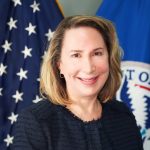 Samantha Medlock is President of Climate Risk Advisors, helping communities and organizations advance equity, sustainability, and resilience. Her career began chasing floods as a local official in Texas Flash Flood Alley—a hands-on experience that still shapes her approach to climate and disaster risk management.
 Arsum is the Senior Adaptation and Coastal Resilience Specialist for the National Wildlife Federation’s Southcentral Region. In this role, she advances climate adaptation efforts, with a focus on nature-based approaches to address the impacts of climate change and extreme events across the Gulf region. She has authored and co-authored numerous publications on climate impact assessments and adaptation solutions. Additionally, she regularly participates in state-based coastal resilience and hazard mitigation planning across the Gulf, collaborating with regional and local stakeholders.
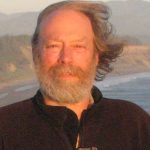 Jim is a multilingual world traveler. Based in Bavaria during the 1970s, Jim spent most of this period in India, Afghanistan and Nepal, where he founded and operated a charitable medical clinic serving Tibetan Refugees. He settled in Oregon in 1983 on a forested ranch in the Umpqua National Forest.
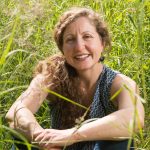 Dr. Micah Hahn is an Associate Professor of Environmental Health in the Institute for Circumpolar Health Studies at the University of Alaska-Anchorage. She received her joint PhD in Epidemiology / Environment and Resources from the University of Wisconsin-Madison and her MPH in Global Environmental Health from Emory University. Subsequently, she was a postdoctoral fellow for the CDC Climate and Health Program, and in this position worked collaboratively with the CDC Division of Vector-borne Diseases and the National Center for Atmospheric Research. Her research focuses on understanding the health impacts of climate change and working with communities to develop locally-relevant adaptation and resilience-building strategies. Dr. Hahn is also on the Management Team of the Alaska Climate Adaptation Science Center.
 Michael is a former Founding Principal of Resilient Cities Catalyst, a global non-profit helping cities and their partners tackle their toughest challenges. He is currently the Executive Director of Climate Resilience Academy at the University of Miami.
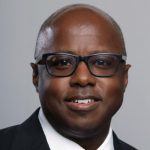 Dr. Quintus Jett is a consultant, educator, and strategist for public causes. He has a doctorate in Organizations & Management from Stanford University, and a two-decade faculty career which spans schools, departments, and programs of business, engineering, liberal studies, divinity, and public and nonprofit management. Following Hurricane Katrina in 2005, Dr. Jett launched a volunteer project in New Orleans, which enlisted residents, students from over a dozen colleges and universities, and hundreds of others to field map the city’s Gentilly district, Lower Ninth Ward, and New Orleans East. Dr. Jett is an innovator in higher education, bridging the divide between academic research and the other priorities of the modern university, including student access and diversity, community engagement, and providing foundations for life-long learning in today’s rapidly changing world.
 Scott is Monfort Professor of Atmospheric Science at Colorado State University. He has written about 100 publications in the peer-reviewed climate literature, is a former editor of the Journal of Climate, and served for five years as founding Science Chair of the North American Carbon Program.
 Linda has many years of experience in disaster preparedness and resilience. She has been an elected official on the Linn County Iowa Board of Supervisors, Chair of the Metropolitan Planning Organization, the East Central Iowa Council of Governments, the statewide Mental Health Developmental Disability and the Linn County Board of Health. Langston is a former president of the National Association of Counties (2013-2014).
 Ken works with families and organizations as a mediator, organizational consultant, trainer and facilitator. Along with his passion for helping people prepare for and reduce climate change, Ken also volunteers as a mediator through Mediation Works and is passionate about supporting youth through mentoring with Boys to Men of Southern Oregon.
 Matthew is a retired high school teacher who was once honored as Oregon High School Social Studies Teacher of the Year. Before his teaching career he was in the restaurant business in Portland. He is also a lawyer who has been a member of the Oregon State Bar Association since 1980.
 Andrea is the Resilience Policy Advisor for the North Carolina Office of Recovery and Resiliency. She works across state agencies and with local governments to increase the state’s resilience to the impacts of climate change.