
The Paradise fire: Could it happen to us?
By Dominick DellaSala and Dennis Odion
Originally published on December 23, 2018 in the Medford Mail Tribune
Smoke from wildfires is gone for now, but this year’s tragic California fires are a stark reminder of what could happen here. There are many take-aways that can help us prepare.
The Camp Fire of Paradise Valley, which took the lives of 88 people and destroyed thousands of structures, had nothing to do with whether the forest was thinned. It was a structure-to-structure fire. Startling images from GoogleEarth reveal surrounding trees untouched while homes burned to the ground. Blown by high winds, embers advanced miles ahead of the flame front, landing on unprepared homes and taking them out in a domino-like fashion.
In Southern California, tornado-force winds are known to spread fire rapidly through shrublands that at one time supported diverse wildlife habitat, but are now sprawling developments. Wildlands were gobbled up by developers during a mid-20th century climate-cool down that made fire suppression effective and created a false sense of security.
California now has unbridled traffic jams and global warming-related fires that destroy entire towns with no end in sight, as over 1 million new homes are planned in harm’s way by 2050. Insurance companies also have taken notice, anticipating increased wildfires related to global warming that will impact everybody’s bottom line.
So, what have we learned that can be applied in the Rogue Valley?
First, we need to start planning our communities for fire safety. Hillside homes in fire-prone areas provide amazing views, but can be unsafe for homeowners and firefighters. Policy makers need to advance growth containment measures in such cases. New fire-risk mapping tools are available to help keep development out of harm’s way.
Second, in order to avoid the domino effect, every homeowner needs to take responsibility for retrofitting their home and clearing brush. If one homeowner ignores this, adjacent homes could be jeopardized. Interestingly, laser technologies on earth-orbiting satellites are now available to produce 3D maps of at-risk homes based on surrounding vegetation and roof type. Using this technology, Geos Institute mapped a shocking number of at-risk homes in the Ashland watershed. Policy makers could speed up risk-reduction measures by providing assistance to homeowners, especially low-income families.
Retired Forest Service fire specialist Jack Cohen says the fire problem is solvable but “it doesn’t have anything to do with controlling wildfire.” His seminal research reveals that even if the nearby forest is on fire, homes are likely to survive if the vegetation nearest the house is properly trimmed, attic vents screened, and homes built with fire-proof roofing. The goal is to stop the fire from igniting the home by working from the home outward, instead of from the wildlands inward. Many DIY “defensible space” guidelines are available online, and fire departments often have programs to help homeowners.
Third, what about thinning? Thinning small-diameter trees under certain conditions can reduce the intensity of a wildfire. But it is unrealistic to expect that to stop fires or smoke in extreme fire weather — high winds, hot temperatures, droughts — the new “abnormal” caused by global warming. This summer, smoke poured into our region from fires in British Columbia, trapped by weather inversions and the surrounding mountains. Stricter regulations that cut air pollution and assistance from health care providers on reducing health effects of wildfire smoke would help us breathe easier.
Thinning is also expensive to carry out, resulting in timber sales where the largest fire-resistant trees are often taken for profit. When large trees are cut down, this can open the forest understory to growth of flammable shrubs. Wide spacing between trees from excessive thinning can cause winds to blow through the forest rapidly, spreading fire into tree crowns. In some cases, thinned forests look more like a modified clearcut, a few scattered trees left with piles of logging slash that provide kindling for the next fire. This is damaging to soils, wildlife habitat and clean water.
What’s needed is more of a surgical strike aimed at dense growth of small trees that resulted from fire-unsafe forestry operations. The most fire-prone areas are tree plantations, salvage-logged clearcuts and, for safety purposes, evacuation corridors. The Rogue Basin Strategy could be made ecologically and fiscally responsible by zeroing in on these priorities, reducing the enormous taxpayer subsidies needed and removing the incentive to log large fire-resistant trees in proposed massive thinning operations. Policy makers also can prohibit clearcutting and post-fire logging that produce “fire-bomb” landscapes, as documented by Oregon researchers.
As planners reconvene for the next fire summit, it is crucial to pivot to public safety. This means having clearly designated escape routes, community fire shelters, and homeowners and builders taking responsibility for fire safety. After all, if our neighborhood isn’t fire safe, then we all are at risk of the dominos falling.
Dominick A. DellaSala, Ph.D, is chief scientist for the Geos Institute. Dennis Odion, Ph.D, is a vegetation ecologist with Southern Oregon University and University of California, Santa Barbara.
Contribute
Geos Institute depends on the generous support of caring people who believe we can and must do a better job addressing climate change for our children and those who will follow.
Stay Updated!
Sign up for our eNews to stay updated on our work and receive information you can use to build resilience in your community.
 Briana Carbajal (they/she) was born and raised in South Central Los Angeles. In 2019, Briana was an active Youth Climate Councilmember working with the City of Los Angeles. Their purpose was to inform Mayor Garcetti of the concerns raised by young voices in their neighborhood and propose solutions to work toward resolving them. Briana holds a dual BA degree in Political Science and Geography/Environmental Studies from the University of California, Los Angeles.
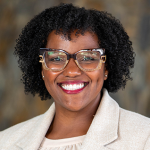 Michelle Lewis is a community engagement and outreach associate for the Heat Policy Innovation Hub. Before her work at the Nicholas Institute, she served as the Agent of Thriving for Climate and Environmental Justice at the Ormond Center at Duke Divinity School. She earned her doctoral degree from Emory University’s Candler School of Theology. Lewis holds a Master of Environmental Science from Yale School of the Environment and a Master of Divinity from Yale Divinity School, along with a certificate from Yale Institute of Sacred Music and the Arts. She studied film at Regent University, where she completed a Master of Arts in communication. Lewis has worked in both rural and urban contexts and has led community-based participatory research. Her research has focused on how faith communities connect with the environment through their existing cosmologies, the effects of green space on patient outcomes, and the environmental theologies of Black coastal communities.
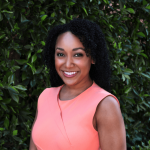 Lauren Graham is a strategic ecosystems thinker and cross-pollinator who creates impact in the areas of climate and democracy by transforming how mission-driven organizations are designed, led, and evolved. She holds Master’s degrees from University of Pennsylvania in Nonprofit Leadership, Yale in Environmental Management, and Stanford University in Sociology and teaches Strategic Management and Leadership for Nonprofits among other courses at the University of Pennsylvania School of Social Policy & Practice. Lauren is founder of Velvet Frame, a social impact strategy and communications consultancy for mission-driven organizations, and has extensive nonprofit experience including roles as Chief of Staff for Hunger Free America and Director of Innovation for Climate Access.
 Robert Macnee, Ph.D. is Deputy Director of Resilience Services at Climate Resilience Consulting, where he helps governments, institutions, and communities reduce climate risk in equitable and practical ways. He holds a Ph.D. in Environmental Management focused on climate change impacts on health and communities, and brings over a decade of experience spanning economic development, resilience planning, and implementation.
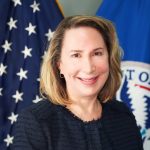 Samantha Medlock is President of Climate Risk Advisors, helping communities and organizations advance equity, sustainability, and resilience. Her career began chasing floods as a local official in Texas Flash Flood Alley—a hands-on experience that still shapes her approach to climate and disaster risk management.
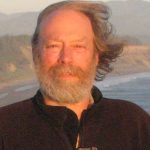 Jim is a multilingual world traveler. Based in Bavaria during the 1970s, Jim spent most of this period in India, Afghanistan and Nepal, where he founded and operated a charitable medical clinic serving Tibetan Refugees. He settled in Oregon in 1983 on a forested ranch in the Umpqua National Forest.
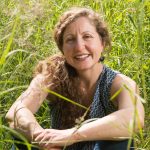 Dr. Micah Hahn is an Associate Professor of Environmental Health in the Institute for Circumpolar Health Studies at the University of Alaska-Anchorage. She received her joint PhD in Epidemiology / Environment and Resources from the University of Wisconsin-Madison and her MPH in Global Environmental Health from Emory University. Subsequently, she was a postdoctoral fellow for the CDC Climate and Health Program, and in this position worked collaboratively with the CDC Division of Vector-borne Diseases and the National Center for Atmospheric Research. Her research focuses on understanding the health impacts of climate change and working with communities to develop locally-relevant adaptation and resilience-building strategies. Dr. Hahn is also on the Management Team of the Alaska Climate Adaptation Science Center.
 Michael is a former Founding Principal of Resilient Cities Catalyst, a global non-profit helping cities and their partners tackle their toughest challenges. He is currently the Executive Director of Climate Resilience Academy at the University of Miami.
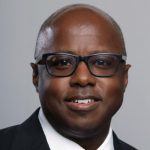 Dr. Quintus Jett is a consultant, educator, and strategist for public causes. He has a doctorate in Organizations & Management from Stanford University, and a two-decade faculty career which spans schools, departments, and programs of business, engineering, liberal studies, divinity, and public and nonprofit management. Following Hurricane Katrina in 2005, Dr. Jett launched a volunteer project in New Orleans, which enlisted residents, students from over a dozen colleges and universities, and hundreds of others to field map the city’s Gentilly district, Lower Ninth Ward, and New Orleans East. Dr. Jett is an innovator in higher education, bridging the divide between academic research and the other priorities of the modern university, including student access and diversity, community engagement, and providing foundations for life-long learning in today’s rapidly changing world.
 Scott is Monfort Professor of Atmospheric Science at Colorado State University. He has written about 100 publications in the peer-reviewed climate literature, is a former editor of the Journal of Climate, and served for five years as founding Science Chair of the North American Carbon Program.
 Linda has many years of experience in disaster preparedness and resilience. She has been an elected official on the Linn County Iowa Board of Supervisors, Chair of the Metropolitan Planning Organization, the East Central Iowa Council of Governments, the statewide Mental Health Developmental Disability and the Linn County Board of Health. Langston is a former president of the National Association of Counties (2013-2014).
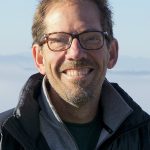 Ken works with families and organizations as a mediator, organizational consultant, trainer and facilitator. Along with his passion for helping people prepare for and reduce climate change, Ken also volunteers as a mediator through Mediation Works and is passionate about supporting youth through mentoring with Boys to Men of Southern Oregon.
 Matthew is a retired high school teacher who was once honored as Oregon High School Social Studies Teacher of the Year. Before his teaching career he was in the restaurant business in Portland. He is also a lawyer who has been a member of the Oregon State Bar Association since 1980.
 Andrea is the Resilience Policy Advisor for the North Carolina Office of Recovery and Resiliency. She works across state agencies and with local governments to increase the state’s resilience to the impacts of climate change.