
Climate change calls for new look at fire, experts say
By Caitlin Fowlkes of the Tidings
Dominick A. DellaSala, chief scientist at the Geos Institute in Ashland, says more scientists agree that forest thinning in the backcountry is futile.
At a presentation he gave Friday during a symposium on fire, DellaSala said that according to a 2017 study, less than 1% of areas that were thinned had a forest fire.
He said thinning doesn’t work well in extreme fire weather, it can increase wind speed and vegetation, it doesn’t last longer than 10 to 15 years before it must be redone, and it can make land more prone to fire.
DellaSala, speaking at the 100th annual meeting of the Pacific Division of the American Association for the Advancement of Science, said there’s just no way to tell where lightening is going to strike.
“A lot of it is in backcountry, in steep areas that you can’t get to it anyway,” DellaSala said. “In many areas you don’t have access, and there’s no way you can treat enough of the landscape to make enough of a difference.”
Joseph Vaile, executive director of the Klamath-Siskiyou Wildlands Center, who also presented at the symposium, said a new tactic is being promoted by a couple of Colorado research centers called PODs, or Potential Operational Delineation. This strategy is used to map potential control lines to help compartmentalize fire and let it burn somewhat naturally in a safer manner as opposed to immediately extinguishing it. These plans are made prior to a fire start, in collaboration with multiple stakeholders.
“If fire hits our area, there’s a pre-identified area for suppression,” Vaile said.
Both Vaile and DellaSala agreed that controlled burning in a strategic way can be helpful to minimize fire risk near residential areas.
“We’ve built in this fire-prone landscape, and this is a place that has burned pretty frequently,” Vaile said. “Jackson and Josephine counties have some of the most wildland-urban interface, where we’ve built up very close to the fire-prone areas.”
DellaSala said more than 80% of wildfires across the U.S. are caused by people.
The more roads you have in an area, the more likely you are to have human-caused ignition, he said.
DellaSala said that creating a defensible space around a home provides a 95% to 100% chance of survival, but the whole neighborhood must participate. An ember can travel two miles and start a new ignition, according to fire officials.
“If you or your neighbor don’t have a defensible space, it creates a domino effect,” DellaSala said.
During his presentation, DellaSala showed images from the Paradise fire and pointed out that the trees, although charred, were still standing, but all the structures had burned to the ground.
DellaSala noted that charred forests are crucial to the natural landscape. Native-Americans used fire to cultivate certain crops, and it wasn’t until settlers began extinguishing fires and developing residential areas within the forests that the severity of wildfires increased.
Add in rising temperatures due to climate change and decreased water supply, and it’s a perfect recipe for longer and more severe wildfires.
DellaSala’s book, “The Ecological Importance of Mixed-Severity Fires: Nature’s Phoenix,” explains that leaving burned forest lands alone to revive is essential for a healthy ecosystem.
“It is nature’s phoenix,” DellaSala. “These forests literally rise out of the ashes.”
Vaile said that a high-severity fire kills the vegetation, while a low-severity fire does little to no harm, and a mixed-severity fire falls between those extremes. The Rogue Valley is a mixed-severity fire region.
This is ideal for a lot of animals and vegetation, DellaSala said.
For example, a new seedling may sprout in the packed soil of the roots of the burned tree from which it fell. Certain pine cones require extreme temperatures to seed, and certain animals such as the spotted owl will nest in the burned areas if they have easy access to green areas to catch food.
DellaSala said we could see 10% of species in this region go extinct this century, and 1 million species go extinct in the next couple of decades.
One negative impact on forest health is logging, especially logging that happens after a fire, because the wood is devalued, but the blackened trees should stay in the forests because “nature is recalibrating,” DellaSala said.
He said logging is a main reason for spotted owl nest abandonment. It also causes more intense burns. He said forest practices need to be reformed, and the government needs to stop politicizing fire.
“The governor said they’re going to put out every fire start, but that is infeasible,” DellaSala said.
Vaile stressed the importance of protecting habitat and refuge. He said this region — and the Klamath-Siskiyou Wilderness Area in particular — has a large number of species not found anywhere else because they were able to survive there through the last ice age.
Because this area has already survived and adapted to climate change in the past, it might be able to again, but protecting that refuge for these endemic species is important. DellaSala called the Klamath-Siskiyou region the “Galapagos of North America.”
Although both experts agreed that climate change is worsening wildfires, DellaSala said data show that we’re currently in a fire deficit.
He said there’s a perception that we have a megafire problem (a fire that burns 100,000 or more acres) and that the forests won’t bounce back, but he said the forests are coming back and are healthier for it.
“The megafire thing is not as big an issue as some people make it out to be,” DellaSala said. “But we must prepare for the chaos of unprecedented climate change.”
“More scientists are saying we need to get to coexistence, and how we get to coexistence is to treat the home as a defensible space and protect the wildlands,” DellaSala said.
Simply put, “Coexisting with fire is hard,” Vaile said.
Contact Tidings reporter Caitlin Fowlkes at cfowlkes@rosebudmedia.com or 541-776-4496. Follow her on Twitter @cfowlkes6.
Originally published June 24th 2019
Contribute
Geos Institute depends on the generous support of caring people who believe we can and must do a better job addressing climate change for our children and those who will follow.
Stay Updated!
Sign up for our eNews to stay updated on our work and receive information you can use to build resilience in your community.
 Robert Macnee, Ph.D. is Deputy Director of Resilience Services at Climate Resilience Consulting, where he helps governments, institutions, and communities reduce climate risk in equitable and practical ways. He holds a Ph.D. in Environmental Management focused on climate change impacts on health and communities, and brings over a decade of experience spanning economic development, resilience planning, and implementation.
 Samantha Medlock is President of Climate Risk Advisors, helping communities and organizations advance equity, sustainability, and resilience. Her career began chasing floods as a local official in Texas Flash Flood Alley—a hands-on experience that still shapes her approach to climate and disaster risk management.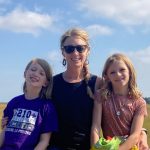
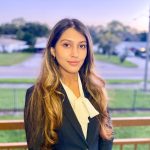 Arsum is the Senior Adaptation and Coastal Resilience Specialist for the National Wildlife Federation’s Southcentral Region. In this role, she advances climate adaptation efforts, with a focus on nature-based approaches to address the impacts of climate change and extreme events across the Gulf region. She has authored and co-authored numerous publications on climate impact assessments and adaptation solutions. Additionally, she regularly participates in state-based coastal resilience and hazard mitigation planning across the Gulf, collaborating with regional and local stakeholders.
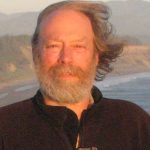 Jim is a multilingual world traveler. Based in Bavaria during the 1970s, Jim spent most of this period in India, Afghanistan and Nepal, where he founded and operated a charitable medical clinic serving Tibetan Refugees. He settled in Oregon in 1983 on a forested ranch in the Umpqua National Forest.
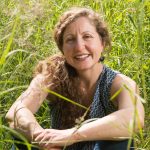 Dr. Micah Hahn is an Associate Professor of Environmental Health in the Institute for Circumpolar Health Studies at the University of Alaska-Anchorage. She received her joint PhD in Epidemiology / Environment and Resources from the University of Wisconsin-Madison and her MPH in Global Environmental Health from Emory University. Subsequently, she was a postdoctoral fellow for the CDC Climate and Health Program, and in this position worked collaboratively with the CDC Division of Vector-borne Diseases and the National Center for Atmospheric Research. Her research focuses on understanding the health impacts of climate change and working with communities to develop locally-relevant adaptation and resilience-building strategies. Dr. Hahn is also on the Management Team of the Alaska Climate Adaptation Science Center.
 Michael is a former Founding Principal of Resilient Cities Catalyst, a global non-profit helping cities and their partners tackle their toughest challenges. He is currently the Executive Director of Climate Resilience Academy at the University of Miami.
 Dr. Quintus Jett is a consultant, educator, and strategist for public causes. He has a doctorate in Organizations & Management from Stanford University, and a two-decade faculty career which spans schools, departments, and programs of business, engineering, liberal studies, divinity, and public and nonprofit management. Following Hurricane Katrina in 2005, Dr. Jett launched a volunteer project in New Orleans, which enlisted residents, students from over a dozen colleges and universities, and hundreds of others to field map the city’s Gentilly district, Lower Ninth Ward, and New Orleans East. Dr. Jett is an innovator in higher education, bridging the divide between academic research and the other priorities of the modern university, including student access and diversity, community engagement, and providing foundations for life-long learning in today’s rapidly changing world.
 Scott is Monfort Professor of Atmospheric Science at Colorado State University. He has written about 100 publications in the peer-reviewed climate literature, is a former editor of the Journal of Climate, and served for five years as founding Science Chair of the North American Carbon Program.
 Linda has many years of experience in disaster preparedness and resilience. She has been an elected official on the Linn County Iowa Board of Supervisors, Chair of the Metropolitan Planning Organization, the East Central Iowa Council of Governments, the statewide Mental Health Developmental Disability and the Linn County Board of Health. Langston is a former president of the National Association of Counties (2013-2014).
 Ken works with families and organizations as a mediator, organizational consultant, trainer and facilitator. Along with his passion for helping people prepare for and reduce climate change, Ken also volunteers as a mediator through Mediation Works and is passionate about supporting youth through mentoring with Boys to Men of Southern Oregon.
 Matthew is a retired high school teacher who was once honored as Oregon High School Social Studies Teacher of the Year. Before his teaching career he was in the restaurant business in Portland. He is also a lawyer who has been a member of the Oregon State Bar Association since 1980.
 Andrea is the Resilience Policy Advisor for the North Carolina Office of Recovery and Resiliency. She works across state agencies and with local governments to increase the state’s resilience to the impacts of climate change.