
How a Small Coastal City Is Turning Community Vision into Climate Resilience Action
Tucked along the winding coast of Georgia, the city of Darien is small in size but big in ambition. In October 2025, community leaders, local organizations, and regional partners came together for a climate resilience workshop that is already shaping the city’s future. Climate preparedness, economic revitalization, and infrastructure upgrades are coming together to build a stronger, more connected community.
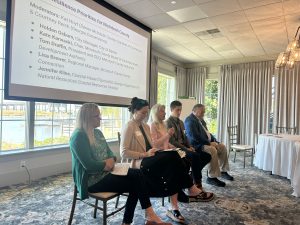
The Darien workshop was led by the Georgia Conservancy and Resilient Cities Catalyst, in collaboration with Partners for a Sustainable McIntosh and McIntosh County Family Connection, and brought over 40 individuals representing dozens of organizations to the table, from grassroots organizers to public officials. The goal was clear: not just to talk about climate resilience, but to take steps toward real, community-led change.
This effort is part of a larger regional Southeast Demonstration Project, led by Geos Institute and supported by the Walmart Foundation. The project is designed to show how the Climate Ready America model of statewide Climate Innovation Centers and hands on Navigators, trained climate resilience experts, can help communities turn big ideas into real action.
“We do not want to have another meeting about resilience,” said Courtney Reich, Coastal Director for the Georgia Conservancy and a Navigator for Climate Ready America. “We want to make sure that at the end of this workshop we have some action items that the community can move forward.”
Darien and its home county of McIntosh have long faced economic challenges. It is one of the more economically constrained counties on Georgia’s coast, being rural, geographically expansive, and often under-resourced. And yet, it also boasts some of the state’s most remarkable natural assets: protected barrier islands, vast conservation lands, and the only remaining intact, non-mainland Gullah Geechee community on Sapelo Island.
That richness is precisely what makes Darien’s future worth investing in, and what made this workshop so timely. “Darien is a really unique community,” Courtney explained. “They also have this new sort of spark for economic development. And how can you capture that and use that to support climate resilience community-wide?”
The workshop did not just focus on climate. Instead, participants zoomed out to consider what whole-community resilience really means and how climate resilience must also include access to housing, job opportunities, social support, and infrastructure that works for everyone.
One of the most visible examples discussed was a long-vacant outlet mall at the entrance to the city. “It has just been this giant vacant lot for years and represents a missed opportunity,” Courtney said. “It is a site that is already developed, already paved over. So rather than develop some new green space, this is an opportunity to redevelop something that right now is providing no value to the community.” That site, and the highway leading into Darien, were seen as key areas for investment – places where housing, pedestrian routes, and commercial opportunities could help Darien reclaim its front door and its economic future.
Ecotourism was another major theme. With such an abundance of conserved lands and natural beauty, community members have long talked about growing the ecotourism industry, but translating that idea into coordinated action has been a challenge. “It takes ownership,” Courtney noted. “And that takes partnership.”
Throughout the day, participants brainstormed ways to turn ideas into action, from pedestrian pathways linking historic and cultural sites to infrastructure investments that can withstand rising seas and heavy storms. The community also explored how to create climate resilience hubs—spaces that can serve during both blue sky days and disasters, providing everything from childcare and community meals to emergency shelter and phone charging stations.
As Courtney put it, “We had some great discussions about resilience hubs … and how to support people before, during, and after extreme events. Can we help NGOs or churches be their own resilience hub in their own facilities? Can they be equipped to provide those services for their immediate community?”
Importantly, the workshop was not a one-off event. It was the latest step in a multi-month collaboration that began with a Georgia Tech student charrette, and it will culminate in a new Downtown Revitalization Plan for Darien. The Georgia Conservancy worked closely with the Darien Downtown Development Authority to submit a grant to fund the plan, which launched in early 2026. “Our hope,” Reich said, “is that we will be able to use the feedback we received at this Resilience Accelerator Workshop to inform that plan. And I think there was a lot of input that will be very helpful.”
The commitment to follow-through is central to how the project has been structured. Local organizations like Partners for Sustainable McIntosh have agreed to play a key role in holding the community accountable to its goals, ensuring that ideas do not just live in workshop reports but make it into policy and practice.
Courtney emphasized that while this work touches on climate resilience, it is grounded in something even broader: community health and long-term strength. “You need a healthy community, with a strong economy, access to housing and jobs, before it can then turn its attention to dealing with some of these future climate issues,” she said. “So we have been trying to meet communities where they are.”
In the future, Navigators like Courtney Reich and the Georgia Conservancy will be supporting communities in every state and territory, bringing long-term support and coordination to the frontlines of climate resilience. This is the promise of Climate Ready America in action, meeting communities not with pre-baked solutions, but with the support to define and pursue their own path forward. In Darien, that path is shaped by the people who live there, the history they carry, and the future they are determined to build, one storefront, one shoreline, and one step at a time.
 Briana Carbajal (they/she) was born and raised in South Central Los Angeles. In 2019, Briana was an active Youth Climate Councilmember working with the City of Los Angeles. Their purpose was to inform Mayor Garcetti of the concerns raised by young voices in their neighborhood and propose solutions to work toward resolving them. Briana holds a dual BA degree in Political Science and Geography/Environmental Studies from the University of California, Los Angeles.
 Michelle Lewis is a community engagement and outreach associate for the Heat Policy Innovation Hub. Before her work at the Nicholas Institute, she served as the Agent of Thriving for Climate and Environmental Justice at the Ormond Center at Duke Divinity School. She earned her doctoral degree from Emory University’s Candler School of Theology. Lewis holds a Master of Environmental Science from Yale School of the Environment and a Master of Divinity from Yale Divinity School, along with a certificate from Yale Institute of Sacred Music and the Arts. She studied film at Regent University, where she completed a Master of Arts in communication. Lewis has worked in both rural and urban contexts and has led community-based participatory research. Her research has focused on how faith communities connect with the environment through their existing cosmologies, the effects of green space on patient outcomes, and the environmental theologies of Black coastal communities.
 Lauren Graham is a strategic ecosystems thinker and cross-pollinator who creates impact in the areas of climate and democracy by transforming how mission-driven organizations are designed, led, and evolved. She holds Master’s degrees from University of Pennsylvania in Nonprofit Leadership, Yale in Environmental Management, and Stanford University in Sociology and teaches Strategic Management and Leadership for Nonprofits among other courses at the University of Pennsylvania School of Social Policy & Practice. Lauren is founder of Velvet Frame, a social impact strategy and communications consultancy for mission-driven organizations, and has extensive nonprofit experience including roles as Chief of Staff for Hunger Free America and Director of Innovation for Climate Access.
 Robert Macnee, Ph.D. is Deputy Director of Resilience Services at Climate Resilience Consulting, where he helps governments, institutions, and communities reduce climate risk in equitable and practical ways. He holds a Ph.D. in Environmental Management focused on climate change impacts on health and communities, and brings over a decade of experience spanning economic development, resilience planning, and implementation.
 Samantha Medlock is President of Climate Risk Advisors, helping communities and organizations advance equity, sustainability, and resilience. Her career began chasing floods as a local official in Texas Flash Flood Alley—a hands-on experience that still shapes her approach to climate and disaster risk management.
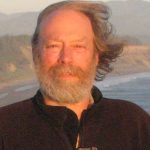 Jim is a multilingual world traveler. Based in Bavaria during the 1970s, Jim spent most of this period in India, Afghanistan and Nepal, where he founded and operated a charitable medical clinic serving Tibetan Refugees. He settled in Oregon in 1983 on a forested ranch in the Umpqua National Forest.
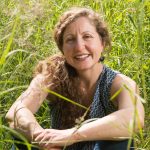 Dr. Micah Hahn is an Associate Professor of Environmental Health in the Institute for Circumpolar Health Studies at the University of Alaska-Anchorage. She received her joint PhD in Epidemiology / Environment and Resources from the University of Wisconsin-Madison and her MPH in Global Environmental Health from Emory University. Subsequently, she was a postdoctoral fellow for the CDC Climate and Health Program, and in this position worked collaboratively with the CDC Division of Vector-borne Diseases and the National Center for Atmospheric Research. Her research focuses on understanding the health impacts of climate change and working with communities to develop locally-relevant adaptation and resilience-building strategies. Dr. Hahn is also on the Management Team of the Alaska Climate Adaptation Science Center.
 Michael is a former Founding Principal of Resilient Cities Catalyst, a global non-profit helping cities and their partners tackle their toughest challenges. He is currently the Executive Director of Climate Resilience Academy at the University of Miami.
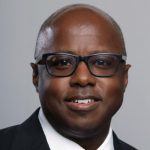 Dr. Quintus Jett is a consultant, educator, and strategist for public causes. He has a doctorate in Organizations & Management from Stanford University, and a two-decade faculty career which spans schools, departments, and programs of business, engineering, liberal studies, divinity, and public and nonprofit management. Following Hurricane Katrina in 2005, Dr. Jett launched a volunteer project in New Orleans, which enlisted residents, students from over a dozen colleges and universities, and hundreds of others to field map the city’s Gentilly district, Lower Ninth Ward, and New Orleans East. Dr. Jett is an innovator in higher education, bridging the divide between academic research and the other priorities of the modern university, including student access and diversity, community engagement, and providing foundations for life-long learning in today’s rapidly changing world.
 Scott is Monfort Professor of Atmospheric Science at Colorado State University. He has written about 100 publications in the peer-reviewed climate literature, is a former editor of the Journal of Climate, and served for five years as founding Science Chair of the North American Carbon Program.
 Linda has many years of experience in disaster preparedness and resilience. She has been an elected official on the Linn County Iowa Board of Supervisors, Chair of the Metropolitan Planning Organization, the East Central Iowa Council of Governments, the statewide Mental Health Developmental Disability and the Linn County Board of Health. Langston is a former president of the National Association of Counties (2013-2014).
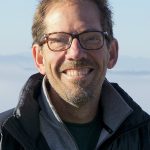 Ken works with families and organizations as a mediator, organizational consultant, trainer and facilitator. Along with his passion for helping people prepare for and reduce climate change, Ken also volunteers as a mediator through Mediation Works and is passionate about supporting youth through mentoring with Boys to Men of Southern Oregon.
 Matthew is a retired high school teacher who was once honored as Oregon High School Social Studies Teacher of the Year. Before his teaching career he was in the restaurant business in Portland. He is also a lawyer who has been a member of the Oregon State Bar Association since 1980.
 Andrea is the Resilience Policy Advisor for the North Carolina Office of Recovery and Resiliency. She works across state agencies and with local governments to increase the state’s resilience to the impacts of climate change.