
Oregon’s Rogue River Basin to face climate-change hurdles
GEOS Institute and University of Oregon’s Climate Leadership Initiative collaborate to look at 2030 & 2080
EUGENE, OR Three major global climate-change projections scaled down to Oregon’s scenic Rogue River watershed point to hotter, dryer summers with increasing wildfire risk, reduced snowpack and more rainy, stormy winters, according to a report coordinated by the University of Oregon’s Climate Leadership Initiative and the GEOS Institute.
Among the report’s recommendations: a gradual relocation of structures and people from areas at most risk of flash flooding and wildfires and a call for governments, private firms and households to prioritize and cooperatively pursue strategies and policies to prepare for the changes.
“Preparing for Climate Change in the Rogue River Basin of Southwest Oregon” is the first of four such reports that, authors say, represent the first such comprehensive scaling down of global models to specific river basins in the United States. The three models involved (Hadley, CSIRO and MIROC) are used by the Intergovernmental Panel on Climate Change, a scientific intergovernmental body established in 1988 by the World Meteorological Organization and United Nations Environment Programme.
Many buildings and infrastructure in the Rogue basin are in flood plains, while many rural populations reside year-round in narrow and steeply sloped canyons. Storms and other climate stresses, the report concludes, could threaten millions of dollars in direct costs and five to 10 times that in indirect costs. There currently are a total of $21.5 billion in taxable properties in Josephine and Jackson counties alone, although not all are considered in harm’s way.
At a policy level, the report urges governments to work with collaborative mindsets. It also will be important that climate preparation become a priority and that any proposed solutions also consider potential impacts on other sectors to assure continued vitality for the region’s population centers and economies. The report focuses on conditions projected for 2040 and 2080.
Our research found that climate change will significantly stress the natural environment of the Rogue basin,” said Bob Doppelt, director of the Climate Leadership Initiative. “These changes will, in turn, have important consequences for the economy, social welfare and quality-of-life in the region. Proactive steps to prepare for climate change should become a priority for every government, private company and household in the basin.”
A bottom line for the Rogue basin, Doppelt said, is that: “It is going to transition into an area that, for comparison purposes, could seem similar to Sacramento, Calif. It gets to 110 degrees in the summer, without much growth of vegetation — and very hot and too dry.” Urban areas at risk include Ashland, Medford, Central Point, Grants Pass and Cave Junction.
A brief preliminary presentation of the report on Dec. 3 was well received by the Rogue Valley Council of Governments, said Craig Harper, manager of the council’s natural resources department. The council co-sponsored the Dec. 16 official release of the report in Medford, Ore.
“Rogue basin communities must take the necessary steps to learn how to cope with the effects of climate change, and to develop the systems that will allow them to recover from its impacts,” Harper said. “Our region is resilient and strong, but to remain so we must begin to respond to these coming changes.”
Forthcoming reports will cover Oregon’s Upper Willamette, Klamath and Umatilla river basins. The four documents are being prepared by the UO’s Climate Leadership Initiative and the Ashland, Ore.,-based GEOS Institute in partnership with the U.S. Forest Service Pacific Northwest Research Station through its Mapped Atmosphere-Plant-Soil System (MAPSS) Team. The reports incorporate findings and recommendations of separate panels of scientists land managers and policy experts.
Widespread risk to industry, species and economies
Agriculture may be hard hit in the Rogue basin, including vineyards that produce much of Oregon’s famous Pinot Noir wine. Pear crops, already are sensitive to temperature variations, also will be at risk, said co-author Roger Hamilton, government program manager for UO’s Climate Leadership Initiative. These crops, he said, “may need to move toward the coast or northward.”
As projected average temperatures in the Rogue basin rise 1-3 degrees Fahrenheit by 2040 and 4-8 degrees by 2080 — and summers heat up 7-15 degrees by 2080 — dramatic impacts are possible for fisheries, forestry, agriculture, hydroelectric power generation, transportation systems (road infrastructure and fuel costs) and water quality, the report concludes. Another major issue will be public health and emergency services, especially in at-risk areas.
A copy of the full report is available at: http://tinyurl.com/6zudsx
“The global climate models forecast increased precipitation at high latitudes and decreased precipitation at desert latitudes,” said Ron Neilson of the USFS Pacific Northwest Research Station MAPSS program. “The Rogue River Basin falls directly in the transition between these two major global bands, rendering future forecasts of precipitation highly uncertain. Most importantly, the models forecast increased severity and variability of precipitation events, particularly in the Rogue basin transition zone between the wet north and the dry subtropics. More severe and variable weather might mean longer and deeper droughts, as well as longer and more severe floods.”
Science panelists addressed the restoration and maintenance of floodplains and fisheries, including the survivability of salmon, steelhead and other native species, as well as protection measures for forests and forest wildlife species. At risk to wildfires will be Port Orford Cedar and Brewer’s Spruce, which are relics from the last ice age, as well as the Marbled Murrelet, an already threatened coastal seabird that nests in old-growth forests, Spotted Owl and fisher, the report noted. High-elevation changes also will threaten other bird species and native vegetation.
Policy and land-management panelists focused on the implications to economic systems, including those related to the timber and agricultural industries, the relocation of structures and human populations, changes necessary to maintain transportation systems, alternative energy sources such as solar and high-efficiency thermal biomass, water allocation and groundwater use, emergency management and ramifications for public health.
The consistent theme of the panels’ recommendations was the call integrated governmental efforts. Specifically, the report calls for plans and policies that focus on a “future range of variability” rather than the long-held approach of management based on historic patterns. It also calls for “expanded planning and decision-making to the landscape level rather than planning at the forest, county, city or project levels in isolation from other regions or interests.”
“Society’s challenge is two-fold,” said Cindy Deacon Williams, senior scientist for the GEOS Institute. “We not only must reduce our emissions, we also must prepare for the climate impacts already on the way. Even if emissions are successfully reduced, it will take 50 to 100 years for the climate to stabilize. During that time we are likely to see significant consequences in the Rogue basin. Communities need to start taking action now to prepare for those impacts.”
Doppelt, Hamilton, Williams and Marni Koopman, a climate scientist with the GEOS Institute wrote the final report.
About the University of Oregon
The University of Oregon is a world-class teaching and research institution and Oregon’s flagship public university. The UO is a member of the Association of American Universities (AAU), an organization made up of 62 of the leading public and private research institutions in the United States and Canada. Membership in the AAU is by invitation only. The University of Oregon is one of only two AAU members in the Pacific Northwest.
About the GEOS Institute
The GEOS Institute is a non-profit conservation science and policy organization working to bridge the gap between sound conservation science and natural resource policy. The National Center translates conservation science for community and government leaders to ensure that policy decisions are based on the best available science.
Media Contacts:
Jim Barlow, director of science and research communications, 541-346-3481; Julie Brown, director of media relations, 541-346-3185;
Dominick DellaSala, executive director of programs, GEOS Institute, 541-482-4459, ext. 302
Sources:
Bob Doppelt, director, Climate Leadership Initiative, University of Oregon’s Institute for Sustainable Environment, 541-346-0687
Roger Hamilton, government program manager, Climate Leadership Initiative, University of Oregon’s Institute for Sustainable Environment, 541-346-1608
Cindy Deacon Williams, senior scientist, GEOS Institute, 541-482-4459
Ron Neilson, bioclimatologist, U.S. Forest Service Pacific Northwest Research Station MAPSS program, Corvallis, 541-750-7303
Craig Harper, manager, department of natural resources, Rogue Valley Council of Governments, 541-423-1369
Links:
UO Climate Leadership Initiative: http://climlead.uoregon.edu/;
UO Institute for a Sustainable Environment: http://www.uoregon.edu/~enviro/;
GEOS Institute: http://www.nccsp.org/;
U.S. Forest Service Pacific Northwest Research Station MAPSS: http://www.fs.fed.us/pnw/mdr/mapss/index.shtml;
Rogue Valley Council of Governments: http://www.rvcog.org/;
PDF copy of the collaborative report: http://tinyurl.com/6zudsx
Contribute
Geos Institute depends on the generous support of caring people who believe we can and must do a better job addressing climate change for our children and those who will follow.
Stay Updated!
Sign up for our eNews to stay updated on our work and receive information you can use to build resilience in your community.
 Briana Carbajal (they/she) was born and raised in South Central Los Angeles. In 2019, Briana was an active Youth Climate Councilmember working with the City of Los Angeles. Their purpose was to inform Mayor Garcetti of the concerns raised by young voices in their neighborhood and propose solutions to work toward resolving them. Briana holds a dual BA degree in Political Science and Geography/Environmental Studies from the University of California, Los Angeles.
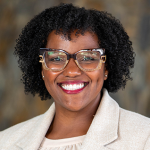 Michelle Lewis is a community engagement and outreach associate for the Heat Policy Innovation Hub. Before her work at the Nicholas Institute, she served as the Agent of Thriving for Climate and Environmental Justice at the Ormond Center at Duke Divinity School. She earned her doctoral degree from Emory University’s Candler School of Theology. Lewis holds a Master of Environmental Science from Yale School of the Environment and a Master of Divinity from Yale Divinity School, along with a certificate from Yale Institute of Sacred Music and the Arts. She studied film at Regent University, where she completed a Master of Arts in communication. Lewis has worked in both rural and urban contexts and has led community-based participatory research. Her research has focused on how faith communities connect with the environment through their existing cosmologies, the effects of green space on patient outcomes, and the environmental theologies of Black coastal communities.
 Lauren Graham is a strategic ecosystems thinker and cross-pollinator who creates impact in the areas of climate and democracy by transforming how mission-driven organizations are designed, led, and evolved. She holds Master’s degrees from University of Pennsylvania in Nonprofit Leadership, Yale in Environmental Management, and Stanford University in Sociology and teaches Strategic Management and Leadership for Nonprofits among other courses at the University of Pennsylvania School of Social Policy & Practice. Lauren is founder of Velvet Frame, a social impact strategy and communications consultancy for mission-driven organizations, and has extensive nonprofit experience including roles as Chief of Staff for Hunger Free America and Director of Innovation for Climate Access.
 Robert Macnee, Ph.D. is Deputy Director of Resilience Services at Climate Resilience Consulting, where he helps governments, institutions, and communities reduce climate risk in equitable and practical ways. He holds a Ph.D. in Environmental Management focused on climate change impacts on health and communities, and brings over a decade of experience spanning economic development, resilience planning, and implementation.
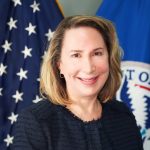 Samantha Medlock is President of Climate Risk Advisors, helping communities and organizations advance equity, sustainability, and resilience. Her career began chasing floods as a local official in Texas Flash Flood Alley—a hands-on experience that still shapes her approach to climate and disaster risk management.
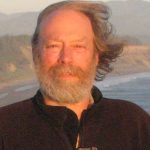 Jim is a multilingual world traveler. Based in Bavaria during the 1970s, Jim spent most of this period in India, Afghanistan and Nepal, where he founded and operated a charitable medical clinic serving Tibetan Refugees. He settled in Oregon in 1983 on a forested ranch in the Umpqua National Forest.
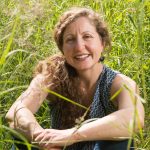 Dr. Micah Hahn is an Associate Professor of Environmental Health in the Institute for Circumpolar Health Studies at the University of Alaska-Anchorage. She received her joint PhD in Epidemiology / Environment and Resources from the University of Wisconsin-Madison and her MPH in Global Environmental Health from Emory University. Subsequently, she was a postdoctoral fellow for the CDC Climate and Health Program, and in this position worked collaboratively with the CDC Division of Vector-borne Diseases and the National Center for Atmospheric Research. Her research focuses on understanding the health impacts of climate change and working with communities to develop locally-relevant adaptation and resilience-building strategies. Dr. Hahn is also on the Management Team of the Alaska Climate Adaptation Science Center.
 Michael is a former Founding Principal of Resilient Cities Catalyst, a global non-profit helping cities and their partners tackle their toughest challenges. He is currently the Executive Director of Climate Resilience Academy at the University of Miami.
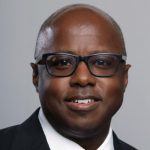 Dr. Quintus Jett is a consultant, educator, and strategist for public causes. He has a doctorate in Organizations & Management from Stanford University, and a two-decade faculty career which spans schools, departments, and programs of business, engineering, liberal studies, divinity, and public and nonprofit management. Following Hurricane Katrina in 2005, Dr. Jett launched a volunteer project in New Orleans, which enlisted residents, students from over a dozen colleges and universities, and hundreds of others to field map the city’s Gentilly district, Lower Ninth Ward, and New Orleans East. Dr. Jett is an innovator in higher education, bridging the divide between academic research and the other priorities of the modern university, including student access and diversity, community engagement, and providing foundations for life-long learning in today’s rapidly changing world.
 Scott is Monfort Professor of Atmospheric Science at Colorado State University. He has written about 100 publications in the peer-reviewed climate literature, is a former editor of the Journal of Climate, and served for five years as founding Science Chair of the North American Carbon Program.
 Linda has many years of experience in disaster preparedness and resilience. She has been an elected official on the Linn County Iowa Board of Supervisors, Chair of the Metropolitan Planning Organization, the East Central Iowa Council of Governments, the statewide Mental Health Developmental Disability and the Linn County Board of Health. Langston is a former president of the National Association of Counties (2013-2014).
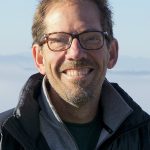 Ken works with families and organizations as a mediator, organizational consultant, trainer and facilitator. Along with his passion for helping people prepare for and reduce climate change, Ken also volunteers as a mediator through Mediation Works and is passionate about supporting youth through mentoring with Boys to Men of Southern Oregon.
 Matthew is a retired high school teacher who was once honored as Oregon High School Social Studies Teacher of the Year. Before his teaching career he was in the restaurant business in Portland. He is also a lawyer who has been a member of the Oregon State Bar Association since 1980.
 Andrea is the Resilience Policy Advisor for the North Carolina Office of Recovery and Resiliency. She works across state agencies and with local governments to increase the state’s resilience to the impacts of climate change.