
Wildfire safety starts at home
By Annette McGee Rasch / for the Mail Tribune
 After such a smoke-filled summer, many are fatigued by wildfire and hope next year’s fire season will be less intense.
But fire officials and scientists say if future impacts are to be minimized, the public must take personal responsibility on their own properties, embrace common-sense rural development plans and support science-based forest policy.
“Especially in the wildland-urban interface zones, people need to become more responsible for their own survivability,” said Illinois Valley Fire District Chief Dennis Hoke. “We can’t look for the government to solve everything. People should ask themselves, ‘What would it take to create the defensible space that can spell the difference between losing or saving my home if a wildfire runs through?’ ”
The Illinois Valley Fire District, which “gets a whole lot done with very little resource,” gets out ahead of wildfires to perform “structural triage” on threatened homes. While Hoke’s firefighters “do a few things to help out,” he emphasized that the district cannot make homes fire safe if residents have not done the work themselves.
“We rate the homes,” Hoke said. “If there’s a cedar-shake roof or a wood pile and trees touching the house, or tall brush throughout, this is not a home we’ll fight to save. We’ll write it off before the fire ever gets there. Same thing goes when driveways are clogged with brush. If we cannot safely turn our apparatus around, we won’t go in. We’re not going to get stuck.”
Hoke wants homeowners to check out the National Fire Protection Association’s “Firewise” program (www.firewise.org), which offers fire-safety tips and techniques to adapt to living with wildfire. Firewise also encourages neighbors to work together to reduce fuels throughout communities before fire season begins.
And fire seasons are getting more intense each year. The top 10 hottest years on record have all occurred since 1998, and in the past three years (looking at global averages), each year’s high temperatures broke records set the previous year, according to NASA. And experts say hotter temperatures contribute to bigger hotter wildfires.
Dominick DellaSala, chief scientist with the Ashland-based Geos Institute, recently testified at a hearing on forest health in the House Natural Resources Subcommittee on Oversight and Investigations in Washington D.C., where Arkansas Congressman Bruce Westerman is promoting a massive logging bill in response to this year’s forest fires.
DellaSala co-wrote a peer-reviewed study that examined 1,500 wildfires over a 40-year period on 23 million acres of forestland in 11 western states.
“What we found was that logging actually increased fire intensity,” he said. “Lands that had been logged burned the hottest.”
“We’ve entered a new fire-climate era,” DellaSala said. “And we just cannot log our way out of an increase in fires related to climate change and human activity. This means we must prepare for more fire activity.”
Both DellaSala and Hoke said support is needed for legislation that provides homeowners with assistance in creating defensible space. They also pointed out that counties should support “smarter growth ordinances, because we are seeing unprecedented urban sprawl” into high-risk areas.
“We don’t build on top of volcanoes, so why are we building in fire-sheds?” DellaSala asks. “Sooner or later it’s going to blow.”
“Fall, winter and spring are the seasons to do fuels reduction on your property and landscape,” said Oregon Department of Forestry public information officer Melissa Cano. “This is the most important way that we can give our homes a fighting chance against wildfires in 2018. Now is the time to clear the flammable material around your home to help your property survive a future wildfire and give firefighters a safe area in which they can work to protect your home.”
“Keep in mind that once underway, a fire follows the fuel, whether it is trees or houses, so it’s critical to minimize human-caused fires and not add to the natural threat,” Hoke said. “That’s why we need the tree thinning close to homes.”
In 2017, the Southwest Oregon District has had 321 fires (compared to 198 fires in 2016). Of these, 102 were lightening-started, while 219 were deemed human-caused, according to Cano. Nationwide, 84 percent of all forest fires are caused by human activity, DellaSala said.
— Annette McGee Rasch is a freelance writer living in Cave Junction. Reach her at annettrasch@yahoo.com.
 Samantha Medlock is President of Climate Risk Advisors, helping communities and organizations advance equity, sustainability, and resilience. Her career began chasing floods as a local official in Texas Flash Flood Alley—a hands-on experience that still shapes her approach to climate and disaster risk management.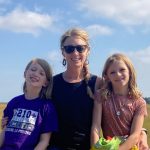
 Arsum is the Senior Adaptation and Coastal Resilience Specialist for the National Wildlife Federation’s Southcentral Region. In this role, she advances climate adaptation efforts, with a focus on nature-based approaches to address the impacts of climate change and extreme events across the Gulf region. She has authored and co-authored numerous publications on climate impact assessments and adaptation solutions. Additionally, she regularly participates in state-based coastal resilience and hazard mitigation planning across the Gulf, collaborating with regional and local stakeholders.
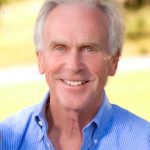 Frank is the former President of the Reinsurance Association of America. Frank currently serves on the Advisory Board of the OECD’s International Network for the Financial Management of Large-Scale Disasters, the RAND Center on Catastrophic Risk Management and Compensation, and the University of Cincinnati’s Carl H. Lindner III Center for Insurance and Risk Management Advisory Board.
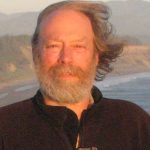 Jim is a multilingual world traveler. Based in Bavaria during the 1970s, Jim spent most of this period in India, Afghanistan and Nepal, where he founded and operated a charitable medical clinic serving Tibetan Refugees. He settled in Oregon in 1983 on a forested ranch in the Umpqua National Forest.
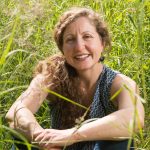 Dr. Micah Hahn is an Associate Professor of Environmental Health in the Institute for Circumpolar Health Studies at the University of Alaska-Anchorage. She received her joint PhD in Epidemiology / Environment and Resources from the University of Wisconsin-Madison and her MPH in Global Environmental Health from Emory University. Subsequently, she was a postdoctoral fellow for the CDC Climate and Health Program, and in this position worked collaboratively with the CDC Division of Vector-borne Diseases and the National Center for Atmospheric Research. Her research focuses on understanding the health impacts of climate change and working with communities to develop locally-relevant adaptation and resilience-building strategies. Dr. Hahn is also on the Management Team of the Alaska Climate Adaptation Science Center.
 Michael is a former Founding Principal of Resilient Cities Catalyst, a global non-profit helping cities and their partners tackle their toughest challenges. He is currently the Executive Director of Climate Resilience Academy at the University of Miami.
 Dr. Quintus Jett is a consultant, educator, and strategist for public causes. He has a doctorate in Organizations & Management from Stanford University, and a two-decade faculty career which spans schools, departments, and programs of business, engineering, liberal studies, divinity, and public and nonprofit management. Following Hurricane Katrina in 2005, Dr. Jett launched a volunteer project in New Orleans, which enlisted residents, students from over a dozen colleges and universities, and hundreds of others to field map the city’s Gentilly district, Lower Ninth Ward, and New Orleans East. Dr. Jett is an innovator in higher education, bridging the divide between academic research and the other priorities of the modern university, including student access and diversity, community engagement, and providing foundations for life-long learning in today’s rapidly changing world.
 Scott is Monfort Professor of Atmospheric Science at Colorado State University. He has written about 100 publications in the peer-reviewed climate literature, is a former editor of the Journal of Climate, and served for five years as founding Science Chair of the North American Carbon Program.
 Linda has many years of experience in disaster preparedness and resilience. She has been an elected official on the Linn County Iowa Board of Supervisors, Chair of the Metropolitan Planning Organization, the East Central Iowa Council of Governments, the statewide Mental Health Developmental Disability and the Linn County Board of Health. Langston is a former president of the National Association of Counties (2013-2014).
 Ken works with families and organizations as a mediator, organizational consultant, trainer and facilitator. Along with his passion for helping people prepare for and reduce climate change, Ken also volunteers as a mediator through Mediation Works and is passionate about supporting youth through mentoring with Boys to Men of Southern Oregon.
 Matthew is a retired high school teacher who was once honored as Oregon High School Social Studies Teacher of the Year. Before his teaching career he was in the restaurant business in Portland. He is also a lawyer who has been a member of the Oregon State Bar Association since 1980.
 Andrea is the Resilience Policy Advisor for the North Carolina Office of Recovery and Resiliency. She works across state agencies and with local governments to increase the state’s resilience to the impacts of climate change.