
Fire management faulted in Calif. disaster
By Marc Heller, E&E News reporter

Originally Published: Friday, October 13, 2017 at E&E: Greenwire
The widespread damage from wildfires in California’s wine country could have been avoided with better fire management policies, researchers say.
A more consistent and thoughtful approach to defensible space around homes would reduce wildfire threats and is a better long-term approach than thinning forests far away from populated areas, said Alexandra Syphard, a senior research scientist at the Conservation Biology Institute.
Syphard, speaking yesterday at a forum sponsored by critics of the timber industry, said policymakers should stick to a “from the house out” strategy to protecting homes and businesses, and not rely on management of wildland areas to control fires.
Defensible space is the area around a home where brush and trees are thinned to slow a fire’s spread.
But the problem isn’t just a shortage of defensible space but rather an excess of space, Syphard said.
That’s because clearing too much vegetation, too far from a house, has no benefit and can make the problem worse if landowners plant exotic grasses that are prone to burn, she said. An area up to 60 feet from homes is usually enough, Syphard said, well short of the 100 to 300 feet California law requires in fire-prone areas.
“They’re taking defensible space to the extreme,” Syphard said.
Syphard spoke at the forum sponsored by the John Muir Project of Earth Island Institute, a research organization openly critical of federal policies that encourage forest thinning and other types of active management to reduce wildfires. Breaking with federal policymakers and many forest scientists, the researchers say their work indicates that increased logging won’t reduce wildfire risk and might make it worse.
That debate is playing out as Congress mulls legislation to relax environmental laws to allow quicker clearing of dead or diseased trees in national forests at risk of fire (E&E Daily, Sept. 28).
While the wine country fires are in a different type of landscape from fires burning in other parts of the West — wine country is rolling, with grasslands interspersed with trees — the need for a better home protection strategy is the same, researchers said. Laws aren’t enforced well everywhere, added Chad Hanson, a forest ecologist and director of the John Muir Project.
Researchers also made a distinction between fires in grassland areas — where suppression and prevention is a better strategy — and forests, which have adapted to fires over centuries.
The Federal Emergency Management Agency recommends three concentric zones of defensible space around homes — one out to 30 feet, and others depending on fire hazard severity zones. Vegetation can be cleared less aggressively in outer zones, FEMA said in a fact sheet on its website.
In Congress, Sen. Michael Bennet (D-Colo.) and other lawmakers have introduced legislation to make FEMA funding available for “fire wise” home projects in areas affected by wildfire. That work could help reduce the risk from subsequent fire, they said (E&E Daily, Oct. 12).
While Hanson and fellow researchers advocate for accepting wildfire as part of nature, “ignoring it would be a mistake,” said Mark Whitmore, a Cornell University cooperative extension associate who is from Washington state and conducted forestry research in the area of California affected by the fires.
Fuel loads need to be reduced in forests, Whitmore said, to make up for decades in which forest policy encouraged putting fires out as soon as they start. That was a flawed approach that ignored fire’s natural role in the ecosystem, but it persists in some people’s minds, Whitmore told E&E News.
“A lot of people live by that — they see fire, they think, ‘Bad,'” Whitmore said.
All sides agree that this year’s fire season has been extreme. More than 8 million acres of forest has burned, including more than 2 million acres of Forest Service land, according to the agency. The Forest Service, assisting with the California fires, spends more than half its annual budget on wildfires.
Fire season has expanded from five months to seven or more, scientists say, driven by a trend toward hotter, drier weather.
Scientists generally blame climate change for the increase in fires, but that aspect of the issue is clouded in politics. Republicans in Congress say fires are worsening carbon emissions by throwing smoke into the air and destroying the forests’ ability to sequester carbon.
Science doesn’t support that view, said Dominick DellaSala, president and chief scientist at the Geos Institute in Ashland, Ore., speaking at yesterday’s event.
What looks like smoke rising from wildfires is largely water vapor, DellaSala said. And while forest thinning works well in some places, he said, in Oregon, logging is responsible for more carbon emissions than wildfire.
“If we’re really concerned about emissions, we’re looking in the wrong place,” he said.
(emphasis added)
Photo by amissphotos via pixabay
 Samantha Medlock is President of Climate Risk Advisors, helping communities and organizations advance equity, sustainability, and resilience. Her career began chasing floods as a local official in Texas Flash Flood Alley—a hands-on experience that still shapes her approach to climate and disaster risk management.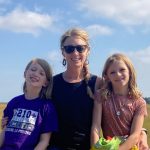
 Arsum is the Senior Adaptation and Coastal Resilience Specialist for the National Wildlife Federation’s Southcentral Region. In this role, she advances climate adaptation efforts, with a focus on nature-based approaches to address the impacts of climate change and extreme events across the Gulf region. She has authored and co-authored numerous publications on climate impact assessments and adaptation solutions. Additionally, she regularly participates in state-based coastal resilience and hazard mitigation planning across the Gulf, collaborating with regional and local stakeholders.
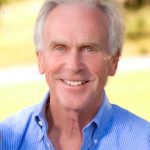 Frank is the former President of the Reinsurance Association of America. Frank currently serves on the Advisory Board of the OECD’s International Network for the Financial Management of Large-Scale Disasters, the RAND Center on Catastrophic Risk Management and Compensation, and the University of Cincinnati’s Carl H. Lindner III Center for Insurance and Risk Management Advisory Board.
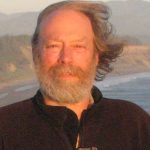 Jim is a multilingual world traveler. Based in Bavaria during the 1970s, Jim spent most of this period in India, Afghanistan and Nepal, where he founded and operated a charitable medical clinic serving Tibetan Refugees. He settled in Oregon in 1983 on a forested ranch in the Umpqua National Forest.
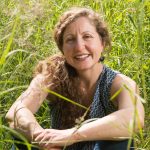 Dr. Micah Hahn is an Associate Professor of Environmental Health in the Institute for Circumpolar Health Studies at the University of Alaska-Anchorage. She received her joint PhD in Epidemiology / Environment and Resources from the University of Wisconsin-Madison and her MPH in Global Environmental Health from Emory University. Subsequently, she was a postdoctoral fellow for the CDC Climate and Health Program, and in this position worked collaboratively with the CDC Division of Vector-borne Diseases and the National Center for Atmospheric Research. Her research focuses on understanding the health impacts of climate change and working with communities to develop locally-relevant adaptation and resilience-building strategies. Dr. Hahn is also on the Management Team of the Alaska Climate Adaptation Science Center.
 Michael is a former Founding Principal of Resilient Cities Catalyst, a global non-profit helping cities and their partners tackle their toughest challenges. He is currently the Executive Director of Climate Resilience Academy at the University of Miami.
 Dr. Quintus Jett is a consultant, educator, and strategist for public causes. He has a doctorate in Organizations & Management from Stanford University, and a two-decade faculty career which spans schools, departments, and programs of business, engineering, liberal studies, divinity, and public and nonprofit management. Following Hurricane Katrina in 2005, Dr. Jett launched a volunteer project in New Orleans, which enlisted residents, students from over a dozen colleges and universities, and hundreds of others to field map the city’s Gentilly district, Lower Ninth Ward, and New Orleans East. Dr. Jett is an innovator in higher education, bridging the divide between academic research and the other priorities of the modern university, including student access and diversity, community engagement, and providing foundations for life-long learning in today’s rapidly changing world.
 Scott is Monfort Professor of Atmospheric Science at Colorado State University. He has written about 100 publications in the peer-reviewed climate literature, is a former editor of the Journal of Climate, and served for five years as founding Science Chair of the North American Carbon Program.
 Linda has many years of experience in disaster preparedness and resilience. She has been an elected official on the Linn County Iowa Board of Supervisors, Chair of the Metropolitan Planning Organization, the East Central Iowa Council of Governments, the statewide Mental Health Developmental Disability and the Linn County Board of Health. Langston is a former president of the National Association of Counties (2013-2014).
 Ken works with families and organizations as a mediator, organizational consultant, trainer and facilitator. Along with his passion for helping people prepare for and reduce climate change, Ken also volunteers as a mediator through Mediation Works and is passionate about supporting youth through mentoring with Boys to Men of Southern Oregon.
 Matthew is a retired high school teacher who was once honored as Oregon High School Social Studies Teacher of the Year. Before his teaching career he was in the restaurant business in Portland. He is also a lawyer who has been a member of the Oregon State Bar Association since 1980.
 Andrea is the Resilience Policy Advisor for the North Carolina Office of Recovery and Resiliency. She works across state agencies and with local governments to increase the state’s resilience to the impacts of climate change.