
Scientists Question Wyden’s O&C Logging Plan
Contacts: Dominick A. DellaSala, Ph.D. (541-482-4459 x 302; 541-621-7223)
Robert Hughes, Ph.D. (208-354-2632)
Two preeminent scientific societies believe plan increases extinction risks for salmon, other threatened wildlife
Washington, DC —Two international scientific organizations, the Society for Conservation Biology (SCB) and the American Fisheries Society (AFS), are questioning the assumptions behind Senator Ron Wyden’s plan to double logging levels on publicly owned Bureau of Land Management (BLM) lands in Western Oregon. In testimony before the Senate Energy and Natural Resources Committee, the organizations raised serious concerns that the Oregon and California Lands Act of 2013 (S. 1784) abandons science-based management of public lands.
“Doubling logging on BLM lands will elevate extinction risks to threatened wildlife, pollute streams with sediment run off, and increase global warming pollution,” said Dominick DellaSala, President of the Society for Conservation Biology (SCB) North America Section. “At a time when President Barack Obama is calling on federal agencies to do more to stem runaway climate change, this bill moves Oregon forests from being part of the solution to part of the problem.”
S.1784 is intended to double logging on O&C lands. It roughly divides 2.1 million acres of BLM lands into “Forestry Emphasis Areas” where logging will be the primary use and “Conservation Emphasis Areas” where a portion of older forests are removed from intensive logging. However, the bill’s ecological impacts have been greatly underestimated as reflected in the reviews by scientists.
The societies found six major scientific flaws in the proposed legislation. It would:
- Eliminate or weakens protective provisions of the scientifically based Northwest Forest Plan;
- Re-write and weakens science-based recovery actions for threatened species, reducing protections under the Endangered Species Act;
- Increase habitat fragmentation and cumulative impacts to fish and wildlife by requiring the functional equivalent of clearcuts over vast acreages;
- Rely on risky, untested “ecological forestry” provisions in the habitat of threatened species to generate funding for county budgets;
- Provide insufficient funds for rigorous effectiveness monitoring; and
- Elevate carbon dioxide emissions by promoting extensive logging.
Robert Hughes, President of the American Fisheries Society, also questioned the provisions of the Wyden plan that would shrink buffers around streams currently protected from logging under the Aquatic Conservation Strategy of the Northwest Forest Plan.
“Water quality and stream-side areas may be recovering from decades of logging because of the science-based Aquatic Conservation Strategy that this legislation abandons,” Hughes said. “With a changing climate and even greater logging on private lands, the science supports increased Northwest Forest Plan stream protections, not narrower buffers.”
The Northwest Forest Plan was established in 1994 by President Bill Clinton to implement science-based management on 25 million acres of America’s public lands. The plan has been widely endorsed by scientists and reaffirmed as the best available science for recovering fish and wildlife dependent on older forests.
It is estimated that approximately 200,000 acres of older forests currently protected by the Northwest Forest Plan would be shifted into logging, including clearcutting, under S.1784. The Societies concluded that such risky changes to the Northwest Forest Plan will intensify conflicts over threatened species on both federal and nonfederal lands, because private landowners, for instance, rely on protections afforded to threatened species on federal lands so they can log in the habitat of threatened species.
Supporting Documents:
Alternative Views to a Restoration Framework
Science Critique of “Ecological Forestry“
Jefferson Public Radio Interview with Dominick DellaSala (February 11, 2014)
Join the Cornerstone Network
Sign up with a monthly donation and become part of our Cornerstone Network. Network members recieve the messages posted here first, delivered directly to your inbox. Your ongoing support is the foundation of our work.
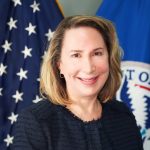 Samantha Medlock is President of Climate Risk Advisors, helping communities and organizations advance equity, sustainability, and resilience. Her career began chasing floods as a local official in Texas Flash Flood Alley—a hands-on experience that still shapes her approach to climate and disaster risk management.
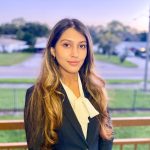 Arsum is the Senior Adaptation and Coastal Resilience Specialist for the National Wildlife Federation’s Southcentral Region. In this role, she advances climate adaptation efforts, with a focus on nature-based approaches to address the impacts of climate change and extreme events across the Gulf region. She has authored and co-authored numerous publications on climate impact assessments and adaptation solutions. Additionally, she regularly participates in state-based coastal resilience and hazard mitigation planning across the Gulf, collaborating with regional and local stakeholders.
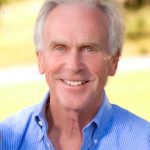 Frank is the former President of the Reinsurance Association of America. Frank currently serves on the Advisory Board of the OECD’s International Network for the Financial Management of Large-Scale Disasters, the RAND Center on Catastrophic Risk Management and Compensation, and the University of Cincinnati’s Carl H. Lindner III Center for Insurance and Risk Management Advisory Board.
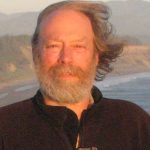 Jim is a multilingual world traveler. Based in Bavaria during the 1970s, Jim spent most of this period in India, Afghanistan and Nepal, where he founded and operated a charitable medical clinic serving Tibetan Refugees. He settled in Oregon in 1983 on a forested ranch in the Umpqua National Forest.
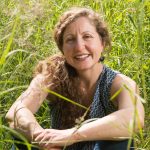 Dr. Micah Hahn is an Associate Professor of Environmental Health in the Institute for Circumpolar Health Studies at the University of Alaska-Anchorage. She received her joint PhD in Epidemiology / Environment and Resources from the University of Wisconsin-Madison and her MPH in Global Environmental Health from Emory University. Subsequently, she was a postdoctoral fellow for the CDC Climate and Health Program, and in this position worked collaboratively with the CDC Division of Vector-borne Diseases and the National Center for Atmospheric Research. Her research focuses on understanding the health impacts of climate change and working with communities to develop locally-relevant adaptation and resilience-building strategies. Dr. Hahn is also on the Management Team of the Alaska Climate Adaptation Science Center.
 Michael is a former Founding Principal of Resilient Cities Catalyst, a global non-profit helping cities and their partners tackle their toughest challenges. He is currently the Executive Director of Climate Resilience Academy at the University of Miami.
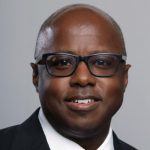 Dr. Quintus Jett is a consultant, educator, and strategist for public causes. He has a doctorate in Organizations & Management from Stanford University, and a two-decade faculty career which spans schools, departments, and programs of business, engineering, liberal studies, divinity, and public and nonprofit management. Following Hurricane Katrina in 2005, Dr. Jett launched a volunteer project in New Orleans, which enlisted residents, students from over a dozen colleges and universities, and hundreds of others to field map the city’s Gentilly district, Lower Ninth Ward, and New Orleans East. Dr. Jett is an innovator in higher education, bridging the divide between academic research and the other priorities of the modern university, including student access and diversity, community engagement, and providing foundations for life-long learning in today’s rapidly changing world.
 Scott is Monfort Professor of Atmospheric Science at Colorado State University. He has written about 100 publications in the peer-reviewed climate literature, is a former editor of the Journal of Climate, and served for five years as founding Science Chair of the North American Carbon Program.
 Linda has many years of experience in disaster preparedness and resilience. She has been an elected official on the Linn County Iowa Board of Supervisors, Chair of the Metropolitan Planning Organization, the East Central Iowa Council of Governments, the statewide Mental Health Developmental Disability and the Linn County Board of Health. Langston is a former president of the National Association of Counties (2013-2014).
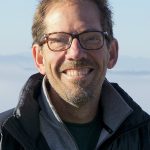 Ken works with families and organizations as a mediator, organizational consultant, trainer and facilitator. Along with his passion for helping people prepare for and reduce climate change, Ken also volunteers as a mediator through Mediation Works and is passionate about supporting youth through mentoring with Boys to Men of Southern Oregon.
 Matthew is a retired high school teacher who was once honored as Oregon High School Social Studies Teacher of the Year. Before his teaching career he was in the restaurant business in Portland. He is also a lawyer who has been a member of the Oregon State Bar Association since 1980.
 Andrea is the Resilience Policy Advisor for the North Carolina Office of Recovery and Resiliency. She works across state agencies and with local governments to increase the state’s resilience to the impacts of climate change.