
Oregon forestry is clearcutting our climate future
For Immediate Release on November 17, 2015
REPORT: INDUSTRIAL FOREST PRACTICES COULD BE OREGON’S SECOND LARGEST SOURCE OF GREENHOUSE GAS EMISSIONS
Despite this, the Oregon Global Warming Commission has failed to track and evaluate the timber industry’s emissions and effects on carbon sequestration capacity
Contacts: Dr. John Talberth, Center for Sustainable Economy: (510) 384-5724, jtalberth@sustainable-economy.org; Dr. Dominick DellaSala, Geos Institute, (541) 482-4459 x302, dominick@geosinstitute.org
PORTLAND – Clearcutting and use of forest chemicals and fertilizers on industrial forestlands could represent Oregon’s second largest source of global warming pollution and are subverting the State’s climate agenda by making landscapes more susceptible to wildfires, landslides, floods and warm waters that kill salmon. And despite legal requirements to do so, the Oregon Global Warming Commission has failed to track and evaluate the greenhouse gas emissions (GHG) from forest practices or follow through on commitments to develop and promote alternative management techniques that can transform these lands from a net source to a net sink for atmospheric carbon. The key culprit: a flawed international greenhouse gas accounting protocol that lumps all forest owners into one aggregate “forest sector” and allows the timber industry to take credit for carbon sequestered on forests protected by non-profits, small landowners, and public agencies.
These are the key conclusions of a new report released today by Center for Sustainable Economy and Geos Institute. The report – Clearcutting our Carbon Accounts – is an analysis of greenhouse gas (GHG) emissions estimated from State and private lands in western Oregon between 2000 and 2014. The report considered emissions associated with timber harvest, which removes carbon stored in forests for decades, clearcutting beyond the rate of forest regrowth and forest chemicals like Atrazine, 2,4 D, and Glyphosate. Oregon has 1.08 million acres less forest cover than it did in 2000 due to controversial clearcut forestry practices that not only degrade water quality, fish and wildlife habitat but also impede attainment of Oregon’s ambitious greenhouse gas reduction targets.
After taking into account carbon stored in longer lived wood products and carbon absorbed by residual forest cover, these emissions were estimated to be 9.75 to 19.35 million metric tons carbon dioxide equivalent (MMT CO2-e) per year. This represents between 16% and 32% of the 60.8 million MMT CO2-e “in-boundary” emissions estimated for the State by the latest (2012) GHG inventory. The timber industry’s operations on its lands in western Oregon are likely one of the State’s largest sources of GHG emissions – second only to transportation. According to Dr. John Talberth, President and Senior Economist at Center for Sustainable Economy, “Oregon’s climate agenda is taking a big hit from industrial forest practices. Yet decision makers continue to look the other way and buy the industry’s rhetoric that since they grow trees, the State should ignore their greenhouse gas emissions and look elsewhere to meet pollution goals for 2020 and beyond. The reality is that reducing the overall rate of timber harvest and promoting alternatives to clearcutting and chemicals are some of the most effective strategies for meeting Oregon’s emissions targets and will help rebuild our forests’
resiliency to fire, floods, and disease.”
In 2007, the Legislature adopted targets for reducing Oregon’s greenhouse gas emissions and charged the Oregon Global Warming Commission with developing strategies to achieve them. Yet the Commission, to date, only tracks emissions associated transportation, electricity use, natural gas use, agriculture, businesses and homes and ignores what happens on timber industry lands altogether. This is despite clear legislative requirements to track and evaluate emissions from all important sectors as well as “carbon sequestration potential of Oregon’s forests” and “alternative methods of forest management that can increase carbon sequestration and reduce the loss of carbon sequestration to wildfire.” Moreover, the Commission’s Roadmap to 2020 merely assumes that “Oregon’s forests are a carbon sink, capturing more carbon than they release. As such, Oregon’s forests and its forest sector have and will continue to contribute to the goal of achieving reductions in greenhouse gas emissions by remaining a robust and sustainable sector in Oregon.”
The CSE-Geos report tells a dramatically different story. According to Dr. Dominick DellaSala of Geos Institute, “Oregon’s clearcut forestry practices are polluting the climate with the equivalent emissions of over 2 million vehicles or 7 coal-fired power plants making forestry one of the biggest polluters in the State at a time when Oregon is seeking to drastically cut its global warming emissions. It’s time for forestry to be proactive like numerous other businesses in the State in being responsible for a safe climate and ecologically healthy future.”
The report was submitted to the Oregon Global Warming Commission, Governor Kate Brown, the Board of Forestry and key legislators. In a letter transmitting the report to the Commission, CSE and Geos have requested a meeting to review the report’s findings and begin the process of enrolling the timber industry in Oregon’s climate agenda.
For a copy of the CSE-Geos report “Clearcutting our Carbon Accounts,” and transmittal letter to the Oregon Global Warming Commission please visit CSE’s Oregon Forest Practices Reform page at: http://sustainable-economy.org/oregon-forest-practices-reform/.
Additional Resources and Information
- View a flyover of the Oregon logging clearcuts.
- On International Day of Forests, a reminder that the U.S. needs to protect its own, by Danna Smith online at Fusion.net, March 21, 2016
Contribute
Geos Institute depends on the generous support of caring people who believe we can and must do a better job addressing climate change for our children and those who will follow.
Stay Updated!
Sign up for our eNews to stay updated on our work and receive information you can use to build resilience in your community.
 Robert Macnee, Ph.D. is Deputy Director of Resilience Services at Climate Resilience Consulting, where he helps governments, institutions, and communities reduce climate risk in equitable and practical ways. He holds a Ph.D. in Environmental Management focused on climate change impacts on health and communities, and brings over a decade of experience spanning economic development, resilience planning, and implementation.
 Samantha Medlock is President of Climate Risk Advisors, helping communities and organizations advance equity, sustainability, and resilience. Her career began chasing floods as a local official in Texas Flash Flood Alley—a hands-on experience that still shapes her approach to climate and disaster risk management.
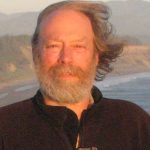 Jim is a multilingual world traveler. Based in Bavaria during the 1970s, Jim spent most of this period in India, Afghanistan and Nepal, where he founded and operated a charitable medical clinic serving Tibetan Refugees. He settled in Oregon in 1983 on a forested ranch in the Umpqua National Forest.
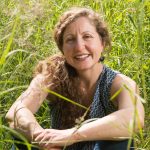 Dr. Micah Hahn is an Associate Professor of Environmental Health in the Institute for Circumpolar Health Studies at the University of Alaska-Anchorage. She received her joint PhD in Epidemiology / Environment and Resources from the University of Wisconsin-Madison and her MPH in Global Environmental Health from Emory University. Subsequently, she was a postdoctoral fellow for the CDC Climate and Health Program, and in this position worked collaboratively with the CDC Division of Vector-borne Diseases and the National Center for Atmospheric Research. Her research focuses on understanding the health impacts of climate change and working with communities to develop locally-relevant adaptation and resilience-building strategies. Dr. Hahn is also on the Management Team of the Alaska Climate Adaptation Science Center.
 Michael is a former Founding Principal of Resilient Cities Catalyst, a global non-profit helping cities and their partners tackle their toughest challenges. He is currently the Executive Director of Climate Resilience Academy at the University of Miami.
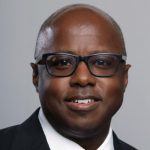 Dr. Quintus Jett is a consultant, educator, and strategist for public causes. He has a doctorate in Organizations & Management from Stanford University, and a two-decade faculty career which spans schools, departments, and programs of business, engineering, liberal studies, divinity, and public and nonprofit management. Following Hurricane Katrina in 2005, Dr. Jett launched a volunteer project in New Orleans, which enlisted residents, students from over a dozen colleges and universities, and hundreds of others to field map the city’s Gentilly district, Lower Ninth Ward, and New Orleans East. Dr. Jett is an innovator in higher education, bridging the divide between academic research and the other priorities of the modern university, including student access and diversity, community engagement, and providing foundations for life-long learning in today’s rapidly changing world.
 Scott is Monfort Professor of Atmospheric Science at Colorado State University. He has written about 100 publications in the peer-reviewed climate literature, is a former editor of the Journal of Climate, and served for five years as founding Science Chair of the North American Carbon Program.
 Linda has many years of experience in disaster preparedness and resilience. She has been an elected official on the Linn County Iowa Board of Supervisors, Chair of the Metropolitan Planning Organization, the East Central Iowa Council of Governments, the statewide Mental Health Developmental Disability and the Linn County Board of Health. Langston is a former president of the National Association of Counties (2013-2014).
 Ken works with families and organizations as a mediator, organizational consultant, trainer and facilitator. Along with his passion for helping people prepare for and reduce climate change, Ken also volunteers as a mediator through Mediation Works and is passionate about supporting youth through mentoring with Boys to Men of Southern Oregon.
 Matthew is a retired high school teacher who was once honored as Oregon High School Social Studies Teacher of the Year. Before his teaching career he was in the restaurant business in Portland. He is also a lawyer who has been a member of the Oregon State Bar Association since 1980.
 Andrea is the Resilience Policy Advisor for the North Carolina Office of Recovery and Resiliency. She works across state agencies and with local governments to increase the state’s resilience to the impacts of climate change.