
We help communities build climate resilience that lasts
The Geos Institute is dedicated to helping communities thrive in a changing climate. We do this by building systems that make it easier for local leaders to get the support they need. Our work is grounded in decades of experience and a commitment to serving those who need help the most. Through partnership, collaboration, and innovation, we ensure no community is left behind.
Our mission
Geos Institute builds innovative systems to help communities access the support services they need to address the climate crisis, regardless of their size, location, or wealth.
Our vision
We envision a world with climate resilient communities, flourishing ecosystems, and equitable societies. In this future, humanity has transformed its relationship with energy and land use, which has limited the extent of the climate crisis and made effective adaptation possible. People are deeply connected to the natural world, appreciate its value, and act to maintain its integrity. Decision-makers consistently center the voices of frontline communities in building Whole Community Resilience. Societies have the skills and capacities needed to ensure a sustainable relationship with energy and implement effective adaptation strategies.
Our Supporters


Annual Reports


Our values
These values govern all our work, both with each other and with our partners.
 Holistic approach
 In resilience planning, the most effective and long-lasting solutions work across multiple sectors of a community and natural ecosystems.
As a team, we recognize the value and insights of all staff and actively seek out feedback and ideas from others, especially those who will be most affected by a decision.
 Science-based
 Rigorous, peer-reviewed scientific information is the basis for effective climate change solutions.
As in our climate planning work, we look to facts and data to help us make informed decisions. Doing research is important for taking prudent risks, and we expect all staff to do their due diligence when making decisions.
 Service-minded
 Our work is geared toward the highest good and best outcomes for the communities we serve and the people we employ.
Successful organizations require committed teams, so we invest in and support our staff as full human beings and encourage everyone involved in our initiatives to bring their full selves to this work.
 Nature matters
 Natural systems and wildlife have intrinsic value and provide important services to people, and should be fully integrated in climate resilience planning efforts.
We also consider the environmental impact of our work. We aim to be paperless and regularly purge unneeded electronic files to reduce the need for storage. When we gather in person, we encourage the use of recycled and sustainable materials.
 Frontline first
 A community’s highest priority actions to build climate resilience should prioritize the needs of those who bear a disproportionate burden of climate change impacts.
In our work, we are often faced with the sad reality of climate impacts on people and nature. We are all human, and this can get overwhelming at times. We support each other in maintaining a healthy work-life balance, and work to create a culture where everyone feels safe to share the hard times.
 Local knowledge
 Effective climate solutions come from engaging diverse stakeholders who have a deep understanding of their community and its unique circumstances.
Similarly, understanding the impact of our work on our colleagues is critical to ensuring mutual respect and understanding within the organization.
 Innovation
 Innovative thinking, idea sharing, and calculated risk-taking are key to long-term success in addressing the climate crisis.
All staff are encouraged to innovate in their roles, within our mission and values as an organization.
 Results driven
 Progress is measured by the real-world change that results from our work.
Our success reflects the changes that result from our actions, big or small. If we are not having the intended impact, we review, assess, and innovate.
 Accountability
 Transparent decision-making, honest communication, and holding ourselves and others accountable are critical to effective action.
We build, foster, and support a culture of open and honest communication to ensure all staff feel safe and able to give and receive constructive feedback.
Our Story
Geos Institute began with a bold premise: climate resilience should not depend on where a person lives, how much money their community has, or how well-connected they are.
Originally founded as Headwaters in 1975 as a grassroots forest protection organization in southern Oregon, the Geos Institute was created through a merger in 2006 with the World Wildlife Fund’s Klamath-Siskiyou field office staff. At that time, we originally focused on forest conservation and river restoration. But as climate change became the defining threat to people and ecosystems alike, our mission expanded.
In 2008 we launched ClimateWise and began working directly with communities to help them understand and adapt to changing conditions using our Whole Community Adaptation planning and implementation framework. In the years since, we have helped hundreds of communities adapt to climate change impacts and build long-term resilience.
In 2019 we launched Climate Ready Communities, a do-it-yourself planning guide with supporting templates and tutorials that distilled all that we learned through our ClimateWise work. These experiences helped us understand how overwhelming it is for communities to find the help they need. And we saw how programs and services struggled to reach the communities that needed them the most.
Informed by a 50-state analysis of climate actors and gaps, we launched Climate Ready America in 2023 to offer scalable, coordinated support through local Climate Innovation Centers, expert Navigators to assist under-resourced communities, and regional collaborations. Our work has always paired science with community wisdom, supporting locally led climate resilience. Below is a timeline of key milestones that helped shape our evolution and impact.
Contact us
Have questions? Interested in partnering with us? Want to support our initiatives? Reach out to our team. We will make sure your inquiry lands in the right place.
Careers
Join a team working at the frontlines of climate resilience. We are always looking for mission-driven professionals who believe in community leadership, climate justice, and systems change.
 Robert Macnee, Ph.D. is Deputy Director of Resilience Services at Climate Resilience Consulting, where he helps governments, institutions, and communities reduce climate risk in equitable and practical ways. He holds a Ph.D. in Environmental Management focused on climate change impacts on health and communities, and brings over a decade of experience spanning economic development, resilience planning, and implementation.
 Samantha Medlock is President of Climate Risk Advisors, helping communities and organizations advance equity, sustainability, and resilience. Her career began chasing floods as a local official in Texas Flash Flood Alley—a hands-on experience that still shapes her approach to climate and disaster risk management.
 Jim is a multilingual world traveler. Based in Bavaria during the 1970s, Jim spent most of this period in India, Afghanistan and Nepal, where he founded and operated a charitable medical clinic serving Tibetan Refugees. He settled in Oregon in 1983 on a forested ranch in the Umpqua National Forest.
 Dr. Micah Hahn is an Associate Professor of Environmental Health in the Institute for Circumpolar Health Studies at the University of Alaska-Anchorage. She received her joint PhD in Epidemiology / Environment and Resources from the University of Wisconsin-Madison and her MPH in Global Environmental Health from Emory University. Subsequently, she was a postdoctoral fellow for the CDC Climate and Health Program, and in this position worked collaboratively with the CDC Division of Vector-borne Diseases and the National Center for Atmospheric Research. Her research focuses on understanding the health impacts of climate change and working with communities to develop locally-relevant adaptation and resilience-building strategies. Dr. Hahn is also on the Management Team of the Alaska Climate Adaptation Science Center.
 Michael is a former Founding Principal of Resilient Cities Catalyst, a global non-profit helping cities and their partners tackle their toughest challenges. He is currently the Executive Director of Climate Resilience Academy at the University of Miami.
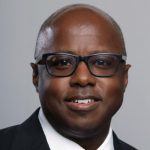 Dr. Quintus Jett is a consultant, educator, and strategist for public causes. He has a doctorate in Organizations & Management from Stanford University, and a two-decade faculty career which spans schools, departments, and programs of business, engineering, liberal studies, divinity, and public and nonprofit management. Following Hurricane Katrina in 2005, Dr. Jett launched a volunteer project in New Orleans, which enlisted residents, students from over a dozen colleges and universities, and hundreds of others to field map the city’s Gentilly district, Lower Ninth Ward, and New Orleans East. Dr. Jett is an innovator in higher education, bridging the divide between academic research and the other priorities of the modern university, including student access and diversity, community engagement, and providing foundations for life-long learning in today’s rapidly changing world.
 Scott is Monfort Professor of Atmospheric Science at Colorado State University. He has written about 100 publications in the peer-reviewed climate literature, is a former editor of the Journal of Climate, and served for five years as founding Science Chair of the North American Carbon Program.
 Linda has many years of experience in disaster preparedness and resilience. She has been an elected official on the Linn County Iowa Board of Supervisors, Chair of the Metropolitan Planning Organization, the East Central Iowa Council of Governments, the statewide Mental Health Developmental Disability and the Linn County Board of Health. Langston is a former president of the National Association of Counties (2013-2014).
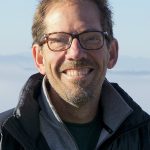 Ken works with families and organizations as a mediator, organizational consultant, trainer and facilitator. Along with his passion for helping people prepare for and reduce climate change, Ken also volunteers as a mediator through Mediation Works and is passionate about supporting youth through mentoring with Boys to Men of Southern Oregon.
 Matthew is a retired high school teacher who was once honored as Oregon High School Social Studies Teacher of the Year. Before his teaching career he was in the restaurant business in Portland. He is also a lawyer who has been a member of the Oregon State Bar Association since 1980.
 Andrea is the Resilience Policy Advisor for the North Carolina Office of Recovery and Resiliency. She works across state agencies and with local governments to increase the state’s resilience to the impacts of climate change.